

























If you’ve tried to meditate “every day” but it never seems to stick, you’re not alone—and you’re not broken. Building any daily practice is less about motivation and more about designing a routine your real life can support. This guide shows you how to create a daily meditation habit with practical, science-informed strategies you can start today. You’ll learn how to start tiny, remove friction, anchor to existing routines, and troubleshoot setbacks without guilt. Brief note: this article is educational and not a substitute for medical advice—if you have health concerns, consult a qualified professional.
Quick answer: To create a daily meditation habit, pick a tiny, specific time you can always keep (e.g., 3 minutes after brushing your teeth), remove friction (mat, timer ready), and protect the routine with simple “if–then” plans for common obstacles. Track your streak weekly and adjust rather than quit.
Fast start checklist (skim & go):
- Choose a 3–5 minute non-negotiable window.
- Anchor it to an existing routine (e.g., after coffee).
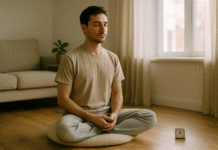
- Set up a friction-free spot with a cushion and timer.
- Pick a method you enjoy (breath, body scan, loving-kindness).
- Use a simple tracker or app and review once a week.
- Create if–then plans for travel, fatigue, or interruptions.
1. Start Tiny With a Non-Negotiable Window (3–5 Minutes)
Begin with the smallest daily session that still feels meaningful—often 3–5 minutes. Starting small works because it’s easier to repeat consistently, and consistency is what trains your brain to run the behavior on autopilot. Rather than chasing long sessions, lock in a short window you never miss, even on chaotic days. Short daily practice accumulates faster than sporadic long sits, and it gives you more “at-bats” to refine your routine and feel early wins. Over weeks, you can expand gradually, but the priority is reliability: a win you can repeat regardless of mood, weather, or workload.
1.1 Why it matters
- Repetition in a stable context is what forms habits; averages from real-world studies suggest habit automaticity builds over weeks and months, not days.
- Small daily wins build identity: “I’m a person who meditates,” which makes showing up easier tomorrow.
- Short sessions reduce friction, which is the main reason habits fail (not lack of information or willpower).
1.2 How to do it
- Pick your minimum: 3, 4, or 5 minutes. Set a single timer.
- Define the trigger: “After I brush my teeth,” or “after I sit down at my desk.”
- Commit to never zero: If life explodes, do 60 seconds. Keep the chain alive.
Mini-checklist
- Exact start time or trigger chosen
- One timer preset saved on your phone
- One place to sit selected
Close with this: Tiny doesn’t mean trivial. It means repeatable—exactly what a habit needs.
2. Anchor It to an Existing Routine (Habit Stacking)
To make meditation automatic, tie it to something you already do every day—your “anchor.” Brushing your teeth, making tea, unlocking your workstation, or sitting on the bus can all become the cue that starts your practice. Anchoring leverages the brain’s cue-routine association: the existing behavior (anchor) fires, then your new routine (meditation) follows, until they fuse. This is how you stop relying on fragile motivation and start relying on reliable context.
2.1 Good anchors to try
- Morning: After brushing teeth, after coffee brews, after making your bed.
- Workday: After opening your laptop, before your first meeting, after lunch.
- Evening: After washing dishes, before reading, after setting your alarm.
2.2 Steps
- Map your day: List 3–5 daily actions you rarely miss.
- Pick one anchor with a stable time and location.
- Write your stack: “After I [anchor], I will sit for 3 minutes.”
- Rehearse once: Close your eyes, imagine the sequence.
Common mistakes
- Choosing anchors with variable timing (e.g., “after dinner” if dinner time swings wildly).
- Stacking too many changes at once (keep it one-to-one).
- Moving the anchor every few days (stability beats novelty).
Anchoring is the bridge from intention to automaticity; cross it once, and your future self thanks you daily.
3. Design a Friction-Free Setup (Make It Obvious, Easy, and Ready)
Most “failed” habits die from friction: can’t find the cushion, timer isn’t set, room is noisy. Remove these micro-barriers ahead of time so sitting down feels like sliding, not climbing. Your environment should cue the behavior and make it easy to start in under 10 seconds. When the setup is “always ready,” you conserve willpower and increase follow-through.
3.1 How to audit and simplify
- Place matters: Pick a consistent spot (corner, chair, balcony).
- Pre-stage tools: Cushion or chair, light blanket, earplugs if needed, phone on Do Not Disturb.
- One-tap timer: Save a 4-minute preset in your clock app or Insight Timer.
- Noise plan: Fan/white noise, or soft instrumental music if silence is stressful.
3.2 Micro-tweaks that help
- Keep the cushion visible; visual cues remind you to sit.
- Put the phone face-down and out of reach.
- Use a small sign to others in the house: “Meditating—back in 5.”
Mini case: A parent with two young kids moved their sit to the car in the driveway before entering the house after work. Door closed, 4 minutes, zero interruptions. Consistency doubled in one week.
When the path is smooth, momentum builds. Make the right action the easy action.
4. Choose a Method You Actually Enjoy (Match Fit > Hype)
The “best” meditation is the one you’ll do. If you dislike breath-focused practice, try a body scan, loving-kindness (metta), counting breaths, noting, or a guided session. Variety is allowed, but pick one default technique so you’re not deciding from scratch every day. Enjoyment and fit drive adherence; adherence drives results.
4.1 Starter methods
- Breath awareness: Gentle attention at the nostrils or belly.
- Body scan: Slow sweep of sensations from head to toe.
- Loving-kindness: Silent phrases of goodwill for yourself/others.
- Counting: Count 1–10 with each exhale, then restart.
- Guided: Short tracks from apps like Insight Timer, Headspace, or Calm.
4.2 Numbers & guardrails
- Start with 3–5 minutes, grow by 1–2 minutes per week if it feels natural.
- If you feel agitated, shorten the session rather than skip.
- If you feel sleepy, try a chair, open eyes, or a morning slot.
Mini-checklist
- One default method selected
- One backup method for tough days
- One guided track saved offline
Enjoyment isn’t a luxury—it’s a compliance tool. Pick a style that feels like a fit, not a fight.
5. Use Timers and Apps Wisely (Co-Pilot, Not Driver)
Apps and timers are fantastic—until they become distractions. Use technology to reduce friction and provide gentle scaffolding, not to gamify yourself into stress. A simple phone timer or a free app with offline tracks is enough. If metrics motivate you, track time; if they stress you, hide them. The point is the sit, not the stats.
5.1 Smart tech setup
- Timer preset: 4-minute default with a soft bell.
- Focus mode: Silence notifications during and 1 minute after.
- Favorite guides: 2–3 short tracks saved for airplane mode.
5.2 Helpful tools (examples)
- Insight Timer (free bell + huge library)
- Headspace/Calm (structured courses)
- Streaks/Loop Habit Tracker (simple habit streaks)
- Apple Health/Google Fit (aggregate “mindful minutes”)
Common pitfalls
- Spending more time browsing than meditating.
- Relying on streaks so heavily that one missed day triggers a quit.
- Chasing badges instead of building presence.
Let technology serve the habit—not define it.
6. Track What Matters and Celebrate Tiny Wins
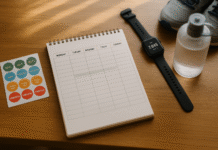
Tracking can boost consistency, but only if you measure the right things. A simple checkmark or “X” on a calendar often outperforms complex dashboards. Track did you show up? and optionally the minutes. Celebrate micro-wins to reinforce the identity you’re building. Consistent reinforcement strengthens the routine far more than occasional self-critique.
6.1 What to track
- Daily: Did I sit? (Y/N)
- Weekly: Total minutes, notes on energy, best/worst time.
- Monthly: What made it easier? What got in the way?
6.2 Ways to celebrate
- Whisper “nice job” after the bell.
- Share a weekly win with a friend.
- Treat yourself to a new cushion after 30 days.
Mini-checklist
- One-line daily log created
- Weekly review reminder set
- Simple reward identified
Celebrate the behavior, not the outcome; you’re wiring the circuit for “I meditate—daily.”
7. Plan for Obstacles Using If–Then Statements
Life will interrupt you—guaranteed. Instead of hoping it won’t, plan for it with if–then statements (“implementation intentions”). You pre-decide what you’ll do when common obstacles show up. This shifts you from willpower to automatic action under pressure and keeps your routine resilient during busy seasons, travel, or low-energy days.
7.1 Build your plan
- If I wake up late, then I’ll do 3 minutes before lunch at my desk.
- If the house is noisy, then I’ll sit in the car with the timer.
- If I miss the morning, then I’ll do 2 minutes before brushing at night.
- If I’m traveling, then I’ll use a 3-minute body scan in bed.
7.2 Tips
- Write 3–5 if–then rules for your top obstacles.
- Keep the “then” small; tiny actions survive chaos.
- Revisit rules monthly; update based on real life.
Mini case: During Ramadan, one practitioner swapped a dawn sit for a 3-minute pre-iftar pause and added a 60-second breath at suhoor on high-fatigue days. Consistency held with minimal strain.
When you plan your “scramble plays,” you stop losing the game to surprises.
8. Build Accountability and Social Support (Light, Not Heavy)
Humans are social. Even light accountability—telling a friend, joining a small group, or checking in via message—can lift follow-through. The trick is to keep it gentle: no shame, no perfectionism. Accountability should feel like a supportive nudge, not a report card.
8.1 Options to try
- Buddy system: Swap a quick “sat” emoji daily.
- Weekly circle: 15-minute Sunday check-in with 2–3 friends.
- Community sits: Drop-in sessions online or at a local studio.
- Family sign: A door note that normalizes your 5-minute practice.
8.2 Guardrails
- Agree: No guilt trips for misses; simply reset.
- Keep stakes low—habit first, performance later.
- Prefer small, consistent check-ins over big, rare ones.
Mini-checklist
- One person identified for check-ins
- Shared definition of “done” (e.g., any sit ≥3 minutes)
- Weekly regroup time set
Social scaffolding keeps you steady, especially when motivation dips.
9. Make It Portable With Micro-Meditations
To truly be “daily,” your practice must travel with you. Micro-meditations—30–120 seconds of deliberate attention—fit into commutes, elevators, queues, and bedtime. They don’t replace your main sit; they stitch attention through your day and rescue consistency when schedules wobble. Portability turns meditation into a lifestyle, not a location.
9.1 Micro-practices you can use anywhere
- 3 breaths: Inhale, exhale, count 1; repeat to 3.
- Label and let go: “Hearing… thinking… feeling…”
- 405 walk: 4 steps in, 0 pause, 5 steps out—repeat.
- Hand scan: Thumb to each finger, noticing sensation.
9.2 How to deploy
- Tie a micro-practice to specific cues: phone unlock, door handles, traffic lights.
- Use them as “reset buttons” before meetings or after tough emails.
- End your day with a 60-second body scan in bed.
Mini-checklist
- Two micro-practices chosen
- One commute or household cue selected
- 60-second bedtime reset saved in notes
Portable practice erases excuses. Wherever you are, you can breathe—so you can practice.
10. Review Weekly and Iterate (Not All Weeks Are Equal)
Consistency improves when you step back weekly to notice patterns. Instead of judging yourself, diagnose. Which days worked? What made them easy? What derailed you? A 10-minute Sunday review lets you adjust anchors, session length, or timing to fit next week’s reality. This is how you keep the habit alive through changing seasons and workloads.
10.1 What to review
- Timing: Did your chosen slot fit the week?
- Energy: Were you alert or groggy?
- Friction: Any recurring blockers to remove?
10.2 Adjustments to try
- Shift from night to morning if you’re often too tired.
- Move from floor to chair if knees complain.
- Drop from 8 to 4 minutes during crunch weeks.
Mini-checklist
- 10-minute weekly review scheduled
- One tweak identified for next week
- Backup “if–then” updated
Iterating turns stumbles into data. With weekly learning, the habit bends—but doesn’t break.
11. Support the Habit With Sleep, Light, and Caffeine Boundaries
Meditation is easier with a brain that’s rested and regulated. You don’t need perfect sleep or a biohacker routine, but a few boundaries make sitting far more pleasant. Aim for a consistent bedtime, morning light exposure, and caffeine that supports attention rather than jitters. These simple supports reduce the “this feels awful” factor that derails consistency.
11.1 Practical guardrails
- Sleep: Target a regular sleep window; park devices 30–60 minutes before bed.
- Light: Get 1–5 minutes of outdoor light soon after waking when possible.
- Caffeine: Delay the first cup ~60–90 minutes after waking to avoid an energy crash; taper by mid-afternoon if evenings are wired.
11.2 What if mornings are impossible?
- Try a post-lunch reset (2–5 minutes).
- Pair with an evening anchor you already keep (tooth brushing).
- Use chair-based sits if the floor makes you sleepy.
Mini-checklist
- One sleep boundary selected
- Morning light cue identified
- Caffeine window chosen
You don’t need a perfect lifestyle to meditate daily—just enough physiological support to make sitting feel doable.
12. Recommit, Don’t Restart: Build Identity and Meaning
Missed a day? Two? The habit isn’t over. The most resilient practitioners see lapses as feedback, not failure. Recommit to your minimum and reconnect to why you sit: calmer reactions with kids, less rumination, better sleep, a steadier baseline. Identity fuels consistency—“I’m a person who meditates”—and meaning keeps it warm, not rigid.
12.1 How to recommit after a gap
- Shrink to win: Return to 2–3 minutes for three days.
- Name your why: Write a 1-sentence benefit you’ve noticed.
- Do a reset week: Same time, same place, all week—no changes.
12.2 Keep it human
- Replace perfection goals with practice goals (show up, not “meditate well”).
- Expect seasons; adjust length and timing without guilt.
- Mark transitions (new job, new semester) with a deliberate reset plan.
Mini-checklist
- One-sentence why posted near your spot
- “Return to 3 minutes” plan saved
- Simple ritual to reopen the habit (light a candle, open a window)
Recommitment keeps momentum alive. You are not starting from zero—you’re continuing a path you’ve already begun.
FAQs
1) How long should I meditate each day to see benefits?
Start with 3–5 minutes to build consistency, then expand if it feels natural. Research suggests mindfulness training can support attention, mood, and stress over weeks of regular practice; many programs use 10–20 minutes per day, but benefits depend more on consistency than hitting a specific number. If your schedule is tight, short daily sits plus micro-meditations still help.
2) Morning or evening—what’s best?
The “best” time is the time you’ll keep. Mornings offer fewer interruptions and a calmer baseline for the day. Evenings can work if you pair meditation with a stable anchor like brushing teeth. If evenings lead to sleepiness, try a chair, open eyes, or a brief post-lunch reset instead.
3) What style should beginners use?
Choose a method that feels approachable—breath awareness, body scan, or guided tracks. Keep one default style and one backup for tough days. If focusing on the breath triggers anxiety, try loving-kindness or a sensory practice (sounds, touch) instead. Comfort increases adherence.
4) Do I need an app to succeed?
No. A phone timer and a quiet corner can take you far. Apps can help with structure and variety, but avoid browsing endlessly for the “perfect” track. Save two or three favorites, preset your timer, and start.
5) What if I miss a day?
Treat it like stepping off a treadmill: step back on. Shrink to 2–3 minutes for a few days, revisit your anchor, and apply an if–then rule for the reason you missed (late start, travel, noise). One miss isn’t a trend—quitting is.
6) How long does it take to form a habit?
In real-world data, habits can take several weeks to months to become automatic; a commonly cited median is around two months, with wide variation person to person. Expect it to take time. That’s normal, not a failure.
7) Can meditation replace therapy or medication?
Meditation can complement—not replace—evidence-based treatments. Meta-analyses show benefits for stress and mood, but if you have a mental health condition, follow your clinician’s guidance and see meditation as an adjunct tool.
8) Is it okay if I get restless or sleepy?
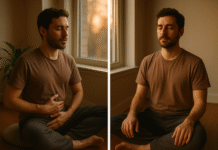
Yes. Restlessness and sleepiness are common early on. Try a different posture (chair instead of floor), a slightly cooler room, a shorter session, or a method with gentle labeling to keep attention engaged. You’re training attention, not auditioning for Zen Olympics.
9) Should I meditate with eyes open or closed?
Either can work. Closed eyes may help internal focus; open or half-open eyes can reduce sleepiness and are useful in public spaces. Pick one for a week and notice which supports steadier attention, then commit to it for a while.
10) What if my space is noisy?
Use white noise, soft instrumentals, or earplugs. Alternatively, lean into sound as the object—label “hearing” without evaluating it as good or bad. If the noise is unpredictable (kids, traffic), choose a time with fewer interruptions or sit in your parked car for 3–5 minutes.
11) How do I know it’s “working”?
Look for downstream signals: slightly calmer reactions, fewer spirals, easier transitions, or better sleep over several weeks. Track a simple weekly note (“more patient with emails,” “fell asleep faster”). Meditation is subtle; consistency makes the effects more noticeable.
12) Can I meditate lying down?
Yes, especially for body scans or restful awareness. If you fall asleep, try a chair, change the time of day, or shorten the session. Lying down is fine if your goal is relaxation; for alertness practice, a seated posture usually helps.
Conclusion
A daily meditation habit is less about heroic discipline and more about thoughtful design. You stack the odds in your favor by starting small, anchoring to a reliable cue, and stripping away friction. You make it resilient by planning for obstacles, keeping social support light but present, and reviewing weekly to iterate. And you keep it humane by celebrating tiny wins and reconnecting to why you practice in the first place. Over weeks and months, these simple moves turn meditation from a nice idea into a lived reality—one bell at a time.
Here’s your next move: pick a 3–5 minute window, anchor it to one daily routine, and sit today. Then do it again tomorrow. Start tiny, stay steady.
References
- Meditation and Mindfulness: Effectiveness and Safety. National Center for Complementary and Integrative Health (NCCIH), June 3, 2022. https://www.nccih.nih.gov/health/meditation-and-mindfulness-effectiveness-and-safety
- Meditation Programs for Psychological Stress and Well-being: A Systematic Review and Meta-analysis. Goyal M. et al., JAMA Internal Medicine, 2014. https://pmc.ncbi.nlm.nih.gov/articles/PMC4142584/
- How are habits formed: Modelling habit formation in the real world. Lally P. et al., European Journal of Social Psychology, published online July 16, 2009 (2010 issue). https://onlinelibrary.wiley.com/doi/abs/10.1002/ejsp.674
- The Neuroscience of Mindfulness Meditation. Tang Y-Y., Hölzel B.K., Posner M.I., Nature Reviews Neuroscience, 2015. https://pubmed.ncbi.nlm.nih.gov/25783612/
- Meditation and Cardiovascular Risk Reduction: A Scientific Statement From the American Heart Association. Levine G.N. et al., Journal of the American Heart Association, 2017. https://www.ahajournals.org/doi/10.1161/jaha.117.002218
- Does mindfulness training help working memory ‘work’ better? Jha A.P., Current Opinion in Psychology, 2019. https://pubmed.ncbi.nlm.nih.gov/30999122/
- Mindfulness Training Improves Working Memory Capacity and GRE Performance While Reducing Mind Wandering. Mrazek M.D. et al., Psychological Science, 2013. https://pubmed.ncbi.nlm.nih.gov/23538911/
- Implementation Intentions and Goal Achievement: A Meta-Analysis of Effects and Processes. Gollwitzer P.M., Advances in Experimental Social Psychology, 2006. https://www.sciencedirect.com/science/article/pii/S0065260106380021
- 8 Things to Know About Meditation and Mindfulness. National Center for Complementary and Integrative Health (NCCIH), (page current as of access). https://www.nccih.nih.gov/health/tips/8-things-to-know-about-meditation-and-mindfulness