

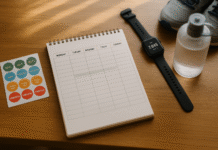





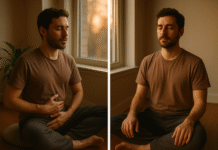



















Stress and anxiety tighten their grip when our minds fixate on threats, losses, and what’s missing. Gratitude loosens that grip by training attention toward what’s working, who helped, and how we’re resourced—even in hard seasons. In simple terms, gratitude reduces stress and anxiety by shifting appraisals (how we interpret events), interrupting rumination, and activating soothing physiological systems so the body can settle. A growing body of trials and reviews supports these effects across ages and contexts, from clinics to everyday life. As a brief note: this article is educational and not a substitute for professional care; if you’re experiencing persistent or severe symptoms, please speak with a qualified clinician. Large systematic reviews and meta-analyses show gratitude practices produce small-to-moderate improvements in mental health and decreases in anxiety and depression symptoms, especially when done consistently.
Quick start (10 minutes today): write three specific things you’re grateful for, send one sincere thank-you message, and take 10 slow breaths while noticing one thing you appreciate about your body. Repeat for a week and track your mood 0–10 daily.
1. Gratitude Reframes Stressors Through Cognitive Appraisal
Gratitude reduces anxiety first by changing the meaning you assign to events. When you deliberately notice benefits, helpers, and progress, your brain tags the situation as more manageable and less threatening. That “appraisal shift” lowers perceived stress, dampens anticipatory worry, and frees up problem-solving. You’re not lying to yourself; you’re including the rest of the truth: support you have, skills you’ve built, and good outcomes that also happened. Over time, this intentional reframing builds an internal narrative of “resourced, not helpless,” which is strongly protective against anxiety. Meta-analyses of gratitude interventions consistently show improvements in mental health and reductions in anxiety symptoms, consistent with this appraisal pathway.
1.1 Why it matters
- Threat calibration: Anxiety spikes when the brain overestimates threat and underestimates capacity. Gratitude highlights capacity (past wins, current resources).
- Attention training: What you repeatedly notice becomes your default filter. Gratitude trains a more balanced filter without denying risks.
- Approach over avoidance: Feeling resourced nudges you toward action, which generally lowers anxiety better than avoidance.
1.2 How to do it (3–step reframe)
- Name the stressor in one sentence (no catastrophizing).
- List three supports you have for this stressor (people, skills, time, tools).
- Note one upside or lesson already evident (even if small).
Mini-checklist: specific > vague, current > general, internal (“what I can do”) + external (“who can help”) balanced.
Synthesis: With repetition, this becomes a reflex that interrupts the stress spiral before it runs away with your day.
2. Gratitude Cuts Rumination and Repetitive Negative Thinking (RNT)
Anxiety feeds on mental loops—what if, why me, replaying mistakes. Gratitude disrupts these loops by redirecting attention to concrete positives and counter-evidence, which weakens the habit strength of rumination. In controlled studies, brief gratitude writing reduced rumination and negative affect compared with distraction or doing nothing; digital gratitude apps that combine photos and notes have shown reductions in repetitive negative thinking as well. This matters because RNT is a maintaining mechanism for both anxiety and depression—change it, and symptoms often follow. PMCScienceDirect
2.1 Tools & examples
- The “3 x 3”: three good things from today; for each, write three reasons it mattered.
- “Thank You, Future Me”: write a short note appreciating one strength you’ll use tomorrow; schedule it to re-read in 24 hours.
- Gratitude + photo roll: one picture per day of something you appreciate; caption with one sentence about why.
2.2 Common mistakes
- Vague entries (“family”) vs. situational specifics (“my sister’s check-in call when I was anxious about the interview”).
- Forcing positivity when you’re flooded; better to pair gratitude with validation: “This is hard and here’s one support I have.”
- Inconsistency: the brain rewires with reps; aim for 3–5 minutes daily for 3–4 weeks.
Synthesis: Gratitude stops rumination not by arguing with it but by starving it of airtime and building a competing mental habit.
3. Gratitude Calms the Body via the Parasympathetic System
Stress and anxiety are not just thoughts—they’re bodily states: tight chest, shallow breathing, jittery energy. Gratitude engages the parasympathetic (“rest-and-digest”) branch, helping heart rate and breath slow. In clinical populations, gratitude journaling has been linked to improvements in biomarkers (e.g., reduced inflammatory indices) and changes in heart rate variability (HRV)—a measure associated with stress resilience—suggesting a shift toward a calmer physiological set point during practice. While more large, active-control trials are needed, these early findings align with what many people feel: the body softens when the mind acknowledges what’s okay. PMC
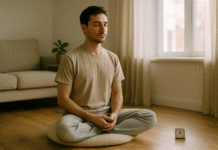
3.1 Gratitude breathing (90 seconds)
- Inhale 4 through the nose; exhale 6 through pursed lips.
- On each exhale, silently note one small, present gratitude (e.g., “this chair supports me”).
- Repeat 6–10 cycles; on the last, unclench your jaw and drop your shoulders.
3.2 Numbers & guardrails
- Timing: 1–3 minutes before meetings, after difficult calls, or when you notice worry rising.
- Cue: pair with a habit (kettle boils → 6 grateful breaths).
- Guardrail: if breathwork spikes anxiety, shorten inhales, extend exhales, or keep your eyes open.
Synthesis: Pairing breath with appreciation recruits body and mind together so physiological arousal has less room to run.
4. Gratitude Improves Sleep, Which Lowers Next-Day Anxiety
Poor sleep amplifies threat perception and emotional volatility; better sleep lowers baseline anxiety. Gratitude reliably improves subjective sleep quality and sleep duration while reducing sleep latency (time to fall asleep), partly by reducing negative pre-sleep cognitions and increasing positive ones. These effects have been observed after controlling for personality traits, suggesting gratitude isn’t just “nice people sleeping better” but a distinct cognitive route to calmer nights—and calmer days after. Greater Good
4.1 Wind-down protocol (15 minutes)
- 5 minutes: list three specifics you appreciated today; write one sentence of “why” for each.
- 5 minutes: write a brief thank-you to someone (you can send tomorrow).
- 5 minutes: light stretch + 10 slow breaths, attention on sensations you’re grateful for (warmth, softness).
4.2 Common pitfalls
- Doing it in bed on a phone (blue light and scroll temptations); use paper by a lamp.
- Grand declarations vs. mundane details (the brain believes specifics).
- Inconsistency: aim for 4+ nights/week for 2–3 weeks to notice change.
Synthesis: Calmer pre-sleep thoughts mean smoother sleep; smoother sleep means a less anxious baseline before stressors even arrive.
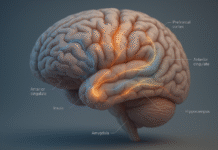
5. Gratitude Strengthens Emotion Regulation Circuits in the Brain
Beyond feelings, gratitude shows neural signatures in regions associated with valuation and regulation. Functional MRI studies find gratitude engages the medial prefrontal cortex (mPFC) and anterior cingulate cortex (ACC)—areas involved in integrating emotion and guiding behavior. In a randomized trial, a gratitude-letter writing intervention increased mPFC sensitivity to gratitude months later, suggesting neural plasticity that may support steadier regulation under stress. While neuroscience is still evolving, these findings map well onto lived experience: gratitude makes it easier to steer emotions rather than get swept away. PMC
5.1 How to “teach” your brain gratitude
- Deepen the moment: after naming a gratitude, savor 20–30 seconds—images, sensations, the person’s face.
- Link to values: ask, “What does this say about what I care about?” (e.g., generosity, competence, belonging).
- Pair with action: express or reciprocate; behavior consolidates the learning.
5.2 Mini case
After 6 weeks of short, daily gratitude notes, Omar reports he “doesn’t spiral as fast” when projects slip. He still notices stress, but it feels “grabbable,” not engulfing—classic signs of stronger top-down regulation.
Synthesis: The more you practice, the more your brain expects and detects reasons to feel safe—handy when anxiety knocks.
6. Gratitude Builds Social Safety Nets That Buffer Stress
Humans regulate stress socially—through reassurance, perspective, and tangible help. Gratitude deepens bonds by signaling that you notice and value others’ efforts; people who feel appreciated are more likely to help again, and relationships feel safer. Experiments also show gratitude can raise interpersonal trust, shifting social environments from “uncertain” to “supportive,” which directly reduces anxiety. In workplaces, families, and caregiving contexts, simple expressions of thanks reliably improve climate and perceived support—two of the most robust protectors against chronic stress. SpringerOpen
6.1 Micro-expressions that matter
- Name the effort: “Thank you for sending those notes so fast.”
- Name the impact: “That saved me 30 minutes—and my stress level.”
- Offer reciprocity: “I’ve got your back on the next one.”
6.2 Region-specific note (South Asia & beyond)
In many households and teams, public praise can feel uncomfortable. Keep it context-aware: a quiet text, a handwritten note, or expressing appreciation to a family elder may carry more weight than a public shout-out.
Synthesis: When trust and support rise, your nervous system downgrades threat—and anxiety has less oxygen.
7. Gratitude Broadens Attention and Builds Resilience Over Time
Gratitude doesn’t just feel good; it broadens and builds. By regularly noticing benefits, you widen attention beyond problems to include resources and possibilities. This supports optimism, goal persistence, and coping flexibility—all linked to lower anxiety over time. Large-scale trials and reviews in positive psychology show gratitude practices increase positive affect and life satisfaction while reducing negative affect. The effects aren’t magic or massive; they’re reliable and accumulative with consistent practice, especially when combined with other skills like mindfulness or behavioral activation.
7.1 “Broaden & build” in practice
- Weekly resilience review: list one skill you used under stress, one support you leaned on, one next step you can take.
- Grateful future-casting: write a 5-sentence email from “future you” thanking present-you for one action you take this week.
- Monthly share: swap a gratitude with a friend; hearing theirs broadens your map too.
7.2 Guardrails
- Gratitude is not permission to ignore harm; pair it with boundaries.
- Expect small, compounding shifts—not fireworks.
- Track progress: a 0–10 stress rating before and after practices keeps you honest.
Synthesis: By widening what you notice and reinforcing agency, gratitude makes setbacks feel survivable rather than fatal.
8. Gratitude Works in the Moment: Grounding During Acute Anxiety
When anxiety spikes right now, you need tools that anchor attention and tell the body “safe enough.” Gratitude is a fast anchor because it attaches attention to concrete, sensory facts that are hard for worry to argue with. Adding a short appraisal—“this is helpful because…”—further recruits the logical brain, which dampens catastrophizing. In randomized studies, brief gratitude exercises have reduced negative affect within sessions, even among highly stressed groups, and expectancy-controlled trials show counting blessings shifts emotion balance toward the positive. SpringerLinkFrontiers
8.1 The “5-Sense Thanks” (2 minutes)
- See: pick one object you appreciate (color, shape, light on it).
- Touch: notice one comforting texture (mug warmth, fabric).
- Hear: name one supportive sound (fan, birds, distant life).
- Smell/Taste: identify a neutral-to-pleasant note (soap, tea).
- Speak: say one thank-you (out loud or silent) and why it helps right now.
8.2 Checklist for acute use
- Keep it physical and specific; avoid abstract platitudes.
- Pair with slow exhalations (see Section 3).
- If panic escalates, scale down: pick one sense + one thank-you.
Synthesis: Gratitude as grounding gives your brain irrefutable, present-tense data that you are resourced in this moment.
9. Gratitude Makes Other Therapies Stick (and Goes Digital)
Gratitude plays well with CBT, mindfulness, and exposure work because it supports cognitive reappraisal (seeing events differently) and behavioral activation (doing small helpful actions). Patients who pair therapy with gratitude writing have shown additional mental-health gains, and internet- or app-based gratitude programs can reduce repetitive negative thinking at scale. As of August 2025, the most defensible summary is: gratitude is not a silver bullet, but as a low-effort adjunct it reliably nudges mood and anxiety in the right direction, especially when combined with evidence-based care. PubMedScienceDirect
9.1 Habit loop: make it automatic
- Cue: morning beverage or commute.
- Routine: 3 specific gratitudes + one message of thanks.
- Reward: note a micro-win (“felt 2/10 calmer”).
9.2 Tools to try
- Paper journal on your pillow (best for sleep).
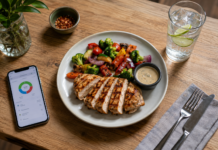
- Notes app + photo widget (visual recall).
- Calendar reminders with a 2-minute timer (keeps it short and consistent).
Synthesis: Gratitude is a glue that helps therapeutic insights stick to daily life—and digital nudges can keep the practice going on busy weeks.
FAQs
1) How quickly can gratitude lower anxiety?
Many people feel a small shift within minutes (e.g., after a 2–10 minute exercise), especially when pairing gratitude with slow exhalations. Larger changes (less rumination, better sleep) usually emerge after 2–4 weeks of consistent, brief practice. If symptoms are severe, gratitude should sit alongside professional care, not replace it.
2) Is there strong evidence, or is this just feel-good advice?
Evidence ranges from lab experiments to randomized trials and meta-analyses. Findings are generally small to moderate but consistent: gratitude practices improve mental health, lower negative affect, and can reduce anxiety and rumination. Effects are larger when exercises are specific, regular, and paired with other skills.
3) What if I’m too anxious to feel grateful?
Start with neutral facts: “this chair holds me,” “I can feel my breath,” “the fan hum is steady.” You don’t need to feel warm and fuzzy; you’re just orienting attention to stabilizing data. Keep entries concrete and brief; pair with five longer exhales.
4) Will gratitude make me ignore real problems or tolerate mistreatment?
Healthy gratitude notices resources while keeping boundaries intact. If a situation is harmful, use gratitude to fuel action (“I’m thankful I have allies and options”)—not to excuse harm. Pair with assertiveness skills and, if needed, professional support.
5) What’s the best time of day for gratitude if my anxiety peaks at night?
Evening gratitude is great for sleep (list specifics from the day), but adding a 60–90 second morning practice can set a calmer tone. Try: three specifics + one “why,” then one thank-you text on your commute (voice-to-text if needed).
6) Does gratitude help social anxiety, or will it feel fake?
For social anxiety, keep gratitude other-focused and specific—appreciating someone’s effort or kindness. Express it privately if public praise feels risky. Over time, this builds trust and safety cues, which reduce anticipatory worry in social settings.
7) Which exercise has the strongest evidence?
Common options with good support include counting blessings (three specifics, daily), gratitude letters (write and, if appropriate, deliver), and gratitude journaling (brief nightly entries). Choose the one you’ll actually do; adherence beats perfection.
8) How does gratitude compare to mindfulness for anxiety?
They complement each other. Mindfulness accepts the present as it is; gratitude selectively highlights what’s supporting you. Many people get the best results by pairing them—mindful breathing plus one specific appreciation.
9) Any cultural or religious concerns?
Gratitude fits secular and spiritual lives. If you have a faith practice, align gratitude with prayer or dua. If not, treat it as attention training and nervous-system regulation—no doctrine required.
10) Can teens or older adults use these tools?
Yes. Teens benefit from photo-based practices and quick text appreciations; older adults often prefer letters and calls. In both groups, keep it short, specific, and regular for best results.
Conclusion
Anxiety thrives on uncertainty, isolation, and a body stuck in high gear. Gratitude counters each: it reframes events to include resources and helpers, restores social safety through appreciation and reciprocity, and nudges physiology toward calm through slower breathing and, in some studies, improved HRV during practice. None of this requires an hourlong ritual. The gains come from brief, consistent reps that make attentional balance and helpful appraisals your new default. Start small—three specifics and one thank-you per day—and stack it with breath or mindfulness. Over weeks, you’ll likely notice fewer spirals, calmer nights, steadier days, and a sturdier sense that you’re resourced enough to meet what comes.
Try this tonight: write three specific gratitudes from today and why each mattered, send one 30-second thank-you, then take ten slow breaths—exhale longer than you inhale.
References
- The effects of gratitude interventions: a systematic review and meta-analysis. BMC Psychology (2023). https://pmc.ncbi.nlm.nih.gov/articles/PMC10393216/
- Gratitude Interventions: Effective Self-help? A Meta-analysis of the Impact on Symptoms of Depression and Anxiety. Journal of Happiness Studies (2021). https://link.springer.com/article/10.1007/s10902-020-00236-6
- A meta-analysis of the effectiveness of gratitude interventions. Proceedings of the National Academy of Sciences (2025). https://www.pnas.org/doi/10.1073/pnas.2425193122
- Gratitude influences sleep through the mechanism of pre-sleep cognitions. Journal of Research in Personality (2009). https://pubmed.ncbi.nlm.nih.gov/19073292/
- Neural correlates of gratitude. Frontiers in Psychology (2015). https://www.frontiersin.org/journals/psychology/articles/10.3389/fpsyg.2015.01491/full
- The effects of gratitude expression on neural activity. Psychiatry Research: Neuroimaging (2016). https://pubmed.ncbi.nlm.nih.gov/26746580/
- Pilot randomized study of a gratitude journaling intervention on heart rate variability and inflammatory biomarkers in patients with stage B heart failure. Psychosomatic Medicine (2016). https://pubmed.ncbi.nlm.nih.gov/27187845/
- Positive psychology and gratitude interventions: A randomized clinical trial. Frontiers in Psychology (2019). https://www.frontiersin.org/journals/psychology/articles/10.3389/fpsyg.2019.00584/full
- Effectiveness of a guided multicomponent internet and app-based gratitude intervention at reducing repetitive negative thinking. Frontiers in Psychology (2024). https://pmc.ncbi.nlm.nih.gov/articles/PMC11615527/
- Gratitude and well-being: A review and theoretical integration. Clinical Psychology Review (2010). https://www.sciencedirect.com/science/article/pii/S0272735810000450