






















Starting a fitness routine shouldn’t feel overwhelming or require a gym membership. This 7-day Full-Body Home Workout Plan for Beginners gives you simple, equipment-light sessions that build total-body strength, improve cardio fitness, and increase mobility—safely and progressively. You’ll know exactly what to do each day, how hard to work (using RPE, the Rate of Perceived Exertion), and how to adjust if you’re brand new or coming back after a break. This guide is educational and not a substitute for medical advice; if you have specific health conditions, talk with a qualified clinician before starting.
In a sentence: a beginner-friendly, 7-day schedule that trains all major muscles and heart-lung fitness in ~25–40 minutes per day, with built-in recovery and easy progression.
Weekly plan at a glance (save this):
- Day 1: Strength — Lower Body + Push
- Day 2: Cardio + Core (low impact)
- Day 3: Strength — Hinge + Pull
- Day 4: Mobility & Recovery Flow
- Day 5: Strength — Unilateral Balance + Shoulders
- Day 6: Mixed Conditioning Circuit
- Day 7: Active Rest + Habit Setup
Intensity guide (RPE 0–10): Easy = 3–4, Moderate = 5–6, Challenging-but-controlled = 6–7. As of August 2025, major public-health guidelines recommend 150–300 minutes of moderate or 75–150 minutes of vigorous activity weekly, plus 2+ days of muscle strengthening; this plan helps you hit those targets over time.
1. Day 1 — Strength Foundation: Lower Body + Push
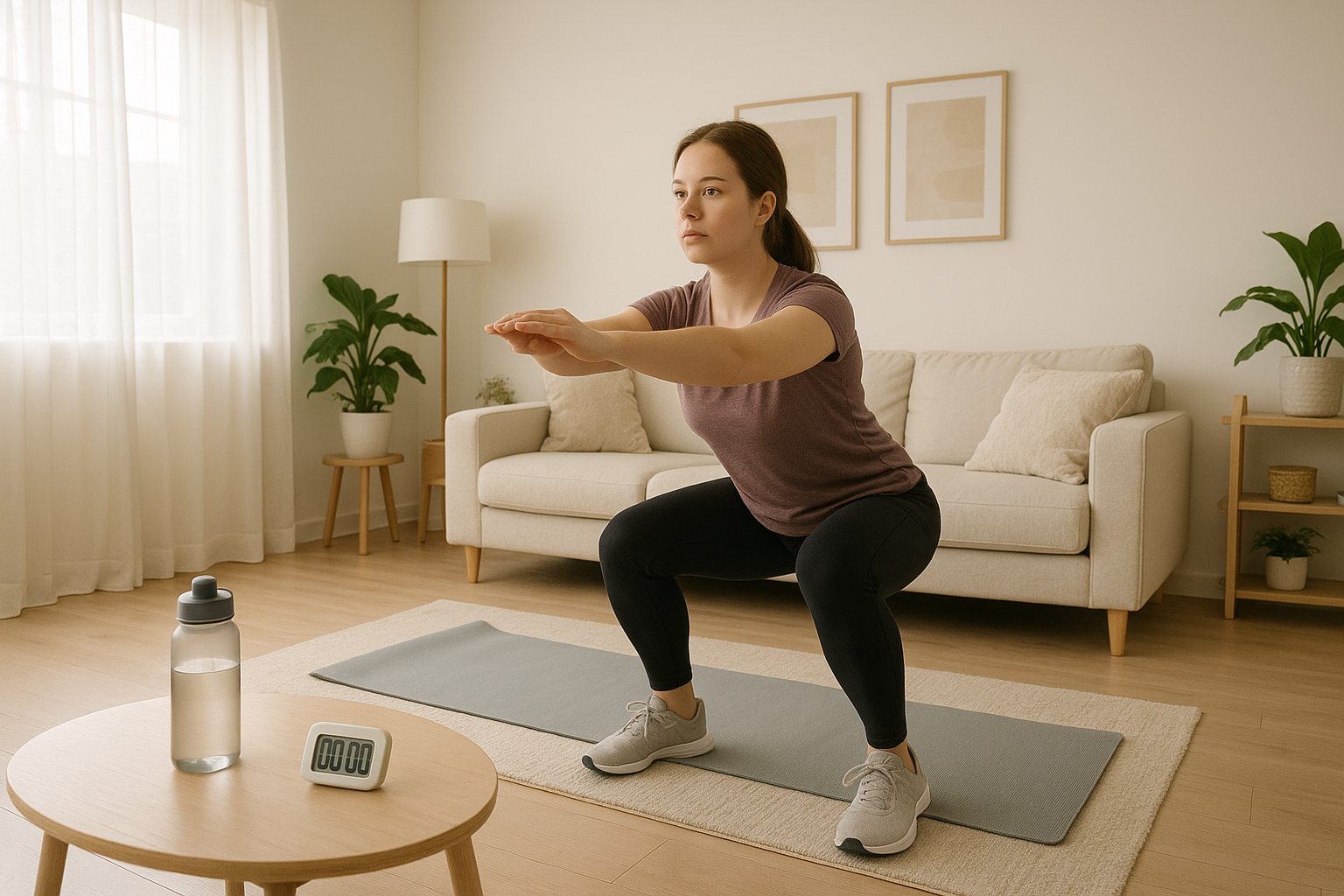
Start by establishing total-body basics with a focus on the legs, glutes, and pushing strength. Today’s session teaches the squat and hip bridge patterns for daily function, and the incline push-up to develop chest and triceps with joint-friendly angles. The aim is controlled reps, not breathless speed; you’ll target RPE 4–6 (moderate) so you leave a little in the tank. Rest 60–90 seconds between sets to keep form crisp. If you’re deconditioned or have knee sensitivity, choose shorter ranges of motion and higher surfaces for pressing (countertop instead of floor). Expect about 30–35 minutes, including a 5–8 minute warm-up and a 3–5 minute cool-down.
- Warm-up (5–8 min): March in place → hip circles → ankle rocks → light air squats → wall push-ups (gradually increase depth).
- Main set (2–3 rounds):
- Bodyweight Squat × 8–12 reps (use a chair tap as a depth guide).
- Glute Bridge × 10–12 reps (2-second squeeze at top).
- Incline Push-Up (hands on counter/bench) × 6–10 reps.
- Calf Raise × 10–15 reps (hold a wall for balance).
- Dead Bug × 6–8 reps/side (slow, keep ribs down).
- Cool-down (3–5 min): Easy walking on the spot, then gentle quads/hamstrings/pec stretches.
1.1 How to do it
Set a timer for 30 minutes. After warming up, move through the exercises in order. Choose a squat depth that lets your knees track in line with your toes and your heels stay down. For the bridge, press through mid-foot and heels, not your lower back. For push-ups, keep a straight line from ears to ankles; if you can’t complete 8 reps cleanly, raise the surface height. Breathe out on effort (standing up, pressing away), and keep a 2–1–2 tempo: two seconds down, brief pause, two seconds up.
1.2 Numbers & guardrails
- Sets & reps: Beginners start with 2 rounds; add a third when RPE stays ≤6.
- Rest: 60–90 seconds between exercises, longer if form degrades.
- Progression: Lower your push-up surface, add a 3–5 second squat pause, or hold water bottles/backpack for squats and bridges.
- RPE target: 4–6. Finish feeling you could do 2–3 more clean reps.
1.3 Common mistakes
Collapsing knees during squats; arching the low back in bridges; letting hips sag in push-ups. Fix by reducing range, elevating hands, and bracing your midsection lightly. End with a sentence you’ll remember: Move smoothly, stop before form slips.
2. Day 2 — Cardio + Core (Low Impact Intervals)
Today builds heart and lung capacity without pounding your joints. You’ll use interval-style brisk walking, stair stepping, or marching that cycles between easier and slightly harder efforts. Intervals are ideal for beginners because you can “dose” intensity, shorten work bouts, and extend recovery to manage fatigue. We’ll finish with three simple core drills that teach bracing and lateral stability—skills that support every lift you’ll do this week. Aim for RPE 4–6 on hard parts and 3–4 on easy parts. If you’re exercising in hot weather (common in many regions), go earlier in the morning or late evening, sip water, and reduce intensity.
- Warm-up (5–7 min): Gentle walking/marching → shoulder rolls → ankle/hip mobility → 2 × 20-second faster bursts.
- Intervals (20 min total):
- Block A (10 min): 1 min moderate (RPE 5–6) + 1 min easy (RPE 3–4) × 5.
- Block B (10 min): 90 sec moderate (RPE 5) + 30 sec brisk (RPE 6–7) + 1 min easy; repeat.
(Choose any modality: outdoor/indoor walk, low step-ups on stairs, marching with arm drive.)
- Core finisher (2 rounds): Side Plank (knees) 20–30s/side → Bird Dog 6–8/side → Dead Bug 6–8/side.
- Cool-down (3–5 min): Slow walk and gentle calf/hip flexor stretch.
2.1 Why it matters
Cardiorespiratory fitness improves mood, sleep, and blood-sugar control. Intervals let beginners enjoy these benefits with shorter total time and better perceived effort. As tolerance grows, extend Block B or add a third round of core.
2.2 Mini-checklist
- Breathe rhythmically (in through nose if possible).
- Keep shoulders relaxed and posture tall.
- If knees ache on step-ups, lower the step height or switch to marching.
Synthesis: Small, sustainable cardio chunks now unlock better recovery and stamina for your strength days.
3. Day 3 — Strength: Hinge + Pull (Backside Power Safely at Home)
Hinging patterns train your glutes and hamstrings, while pulling balances all the pushing you do and supports shoulder health. At home, you can master a hip hinge and perform safe pulling with a loaded backpack or sturdy resistance band if you own one. The goal is to groove form at RPE 4–6, not to max out; feel tension in the back of your legs and mid-back, not your lower spine or neck. Keep rests 60–90 seconds and move deliberately. If you’re unsure about rows, start with a light backpack and test your setup before sets.
- Warm-up (5–7 min): Cat-cow → hip hinge with broomstick along spine (3 points of contact) → shoulder blade squeezes → band pull-aparts (if available).
- Main set (2–3 rounds):
- Hip Hinge Good Morning (hands on hips or light backpack hugged to chest) × 8–12.
- Backpack Bent-Over Row × 8–12 (neutral spine; pull elbows to ribs).
- Glute Bridge March × 8/side (keep pelvis level).
- Towel Face Pull (wrap towel around a pole/door anchor you trust; elbows high) × 10–12 or Band Row if you own a band.
- Front Plank × 20–40 seconds (knees or toes).
- Cool-down: Easy walking, then gentle hamstring/lat stretch.
3.1 Tools/Examples
- Backpack load: 2–10 kg (5–22 lb) using books or water bottles. Increase slowly week to week.
- Row angle: If your low back tires, hinge less (torso more upright) and reduce load.
3.2 Common mistakes & fixes
Rounding the back in hinges (maintain broomstick contact); yanking rows with neck shrug (drive elbows back, pause, then lower). If you feel low-back pressure, shorten the hinge range and focus on glutes driving the return to standing.
Synthesis: Clean hinge and pull mechanics now build resilient hips and shoulders for everything else you’ll do.
4. Day 4 — Mobility & Recovery Flow
Recovery isn’t being idle; it’s proactive work that improves range of motion, reduces soreness perception, and helps you move better on strength days. Today’s flow is 15–25 minutes of gentle mobility and easy breathing. The intensity is RPE 2–3—you should finish feeling looser and more energized, not tired. Warm environments (common in South Asia and the Middle East) can help tissues feel more pliable, but still move slowly and avoid forcing end ranges. If any position is pinchy or sharp, back off and choose a nearby pain-free range.
- Flow (1–2 rounds, 45–60 seconds each move):
- Ankle Rocks (knee over toes, heel down).
- 90/90 Hip Switches (hands behind for support).
- Thoracic Open Book (side-lying rotation).
- World’s Greatest Stretch (lunge + T-spine reach).
- Couch Stretch (hip flexor) — pad the knee.
- Hamstring Floss (gentle straight-leg raise with ankle pumps).
- Pec Doorway Stretch (low and mid angles).
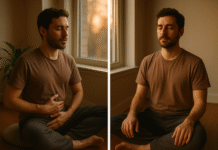
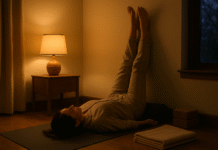
- Breathing finisher (3–5 min): 4 seconds inhale, 6–8 seconds exhale, lying on your back with feet elevated on a couch.
4.1 Why it matters
Consistent mobility practice supports posture, comfortable joint angles, and technique on squats, hinges, and push-ups. Stretch warm muscles, move smoothly, and avoid bouncing. Hold stretches 10–30 seconds and breathe normally.
4.2 Mini-checklist
- No pain, just mild pulling sensations.
- Keep joints “soft” (not locked out).
- Finish with a posture reset: long spine, relaxed shoulders.
Synthesis: You’re investing in movement quality so Friday and Saturday sessions feel stronger and safer.
5. Day 5 — Strength: Unilateral Balance + Shoulders
Unilateral (single-leg) work builds balance, hip stability, and real-world strength. Pairing it with shoulder and core stability creates a compact, athletic session. Expect RPE 5–6 on most sets; quality beats quantity. If lunges bother your knees, shorten stride or switch to a chair-supported split squat. Keep your torso tall, track the front knee over the middle toes, and push through the whole foot.
- Warm-up (5–7 min): Marching with high knees → lateral steps → wall slides → scapular push-ups.
- Main set (2–3 rounds):
- Supported Split Squat × 6–10/side (hold a chair or wall lightly).
- Step-Up (stairs or low stool) × 8–12/side (soft landing).
- Single-Leg Hip Hinge Reach (toe tap to wall for balance) × 6–8/side.
- Wall Slide → Y Raise × 8–10 total reps.
- Shoulder Taps (hands elevated if needed) × 6–10/side (slow).
- Side-Lying Hip Abduction × 10–12/side (control; no swinging).
- Cool-down: Easy walk, figure-4 glute stretch, gentle chest/shoulder stretch.
5.1 Numbers & guardrails
- Sets/reps: Start with 2 rounds. Progress to 3 when RPE ≤6.
- Progression: Add a backpack for step-ups, slow 3-second descents on split squats, or reduce hand support over time.
- Rest: 60–90 seconds between exercises.
5.2 Common mistakes
Letting the front heel lift; collapsing inward knee; rushing shoulder taps and swaying hips. Fix with smaller ranges, slower tempos, and active midline bracing (“zip up your abs” cue).
Synthesis: Friday’s session upgrades balance and shoulder control—the foundation for everyday confidence on stairs, curbs, and lifts.
6. Day 6 — Mixed Conditioning Circuit (Strength + Cardio Blend)
This circuit ties the week together with a simple, full-body conditioning dose—great for heart health and calorie burn without high impact. You’ll rotate through five movements for 4 rounds, working 40 seconds on / 20 seconds off. Intensity should feel RPE 6–7 (challenging but still in control). Keep transitions smooth, scale reps to maintain quality, and modify to low-impact versions if joints feel cranky. Expect 25–30 minutes including warm-up and cool-down.
- Warm-up (5–7 min): Brisk marching → arm circles → squat-to-stand → inchworms to an elevated surface.
- Circuit (4 rounds):
- Squat-to-Chair (sit and stand fast, control the sit).
- Incline Push-Up (hands on couch/counter).
- Hip Hinge Good Morning (hug backpack if available).
- High-Knee March or Low Step-Ups (steady pace).
- Bear Hold (knees hovering; elevate hands if needed).
- Cool-down: Slow walk + long exhales; gentle calf/quad/lat stretches.
6.1 How to pace it
Pick a sustainable pace in round one; your target is to match or slightly beat that rep count in rounds 2–4 without form breakdown. If your RPE exceeds 7, extend rests to 30 seconds or drop to 30s work windows.
6.2 Mini-checklist
- Land softly and keep posture tall on marches/step-ups.
- Keep elbows at ~45° on push-ups.
- Flat back in hinges; feel hamstrings, not low back.
Synthesis: One compact session that blends strength and cardio—perfect for busy weekends and steady progress.
7. Day 7 — Active Rest + Habit Setup (Your Personal Playbook)
Active rest cements gains while keeping you moving. Choose a light, enjoyable activity—easy walk, casual bike ride, gentle yoga—for 30–45 minutes at RPE 3–4. Then take 10–15 minutes to review your week and set up the next one. This isn’t just recovery; it’s how beginners become consistent exercisers. You’ll track wins, troubleshoot barriers (time, space, energy), and tweak the plan to fit your life. If you missed a day, don’t “double up”; roll it forward and keep the rhythm.
- Active rest options: Relaxed walk with a friend, family park time, light mobility flow from Day 4, or housework done briskly but comfortably.
- Weekly review prompts (journal or notes app):
- Which sessions felt easiest/hardest? Why?
- Where did form or pain signals limit you?
- Did you hit RPE targets? Sleep and hydration okay?
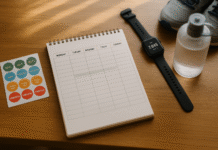
- Set up next week: Block workouts on your calendar, lay out clothes, pre-fill a water bottle, and choose one small progression (see below).
7.1 Simple progressions (choose 1–2 per week)
- Add one set to a strength day.
- Lower your push-up surface by 5–10 cm (2–4 in).
- Add 2–3 reps (while keeping form) to one exercise.
- Extend a cardio interval by 30–60 seconds or add one interval.
- Increase backpack load by 0.5–1 kg (1–2 lb).
Synthesis: Consistency + tiny weekly upgrades = big changes over months. Protect your rest day—it’s part of the plan, not a gap.
FAQs
1) How long should each workout take, realistically?
Most sessions take 25–40 minutes including warm-up and cool-down. Strength days run ~30–35 minutes, the circuit ~25–30, and mobility ~15–25. If you only have 15 minutes, do one round of the strength circuit plus a 3-minute warm-up and 2-minute cool-down. Short but consistent beats long and sporadic.
2) What equipment do I need to start?
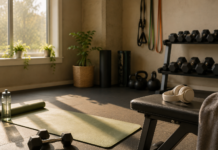
None is required. A sturdy chair/counter, a yoga mat or towel, and a backpack you can load with books/water are enough for meaningful resistance. If you later add a pair of light dumbbells (2–5 kg / 5–12 lb) or a resistance band, progression options multiply, but they’re optional for your first 4–6 weeks.
3) How hard should I work if I don’t track heart rate?
Use RPE (Rate of Perceived Exertion) on a 0–10 scale: easy = 3–4, moderate = 5–6, challenging-but-controlled = 6–7. On strength days, most sets should end with 2–3 reps in reserve. On cardio intervals, you should be breathing faster but still able to speak in short phrases.
4) I have knee discomfort—can I still follow this plan?
Often yes, with adjustments. Choose shallower squats, higher push-up surfaces, shorter step heights, and shorter strides on split squats. Keep knees tracking over the middle toes and emphasize slow descents. If pain persists or sharpens, stop that movement, substitute a pain-free option (e.g., hip hinges instead of deep squats), and consult a qualified clinician.
5) Will this help with weight management?
It can support it, especially when paired with nutrition habits (adequate protein, mostly whole foods, mindful portions). Strength work preserves muscle mass, and cardio increases energy expenditure. Sustainable weight change is gradual; aim for 0.25–0.5 kg (0.5–1 lb) per week if loss is your goal, and track progress over 4–6 weeks, not day to day.
6) How soon will I notice results?
Most beginners feel more energy and better sleep within 1–2 weeks, and see visible changes (firmer muscles, improved posture) in 4–6 weeks with consistency. Strength improves fastest when you add small progressions weekly—one more rep here, a slightly lower push-up surface there—while keeping form pristine.
7) Can older adults use this plan?
Yes—with care. Emphasize balance work, use higher surfaces for push-ups, and keep RPE at 3–5 initially. Add an extra recovery day if needed and prioritize the mobility flow. If you have chronic conditions or take medications affecting heart rate/balance, clear your plan with a healthcare professional.
8) Should I stretch before or after workouts?
Warm up first with dynamic movements similar to the workout (marching, arm circles, easy squats). Save longer static stretches for after, when tissues are warm. Hold stretches 10–30 seconds, breathe normally, and avoid bouncing. The 15–25 minute mobility day covers what most beginners need.
9) Can I swap days if my schedule changes?
Absolutely. Keep the sequence (don’t cram two hard strength days back to back if you’re sore), but you can slide sessions earlier or later. If you miss a day, don’t double up; resume with the next planned session and roll the missed one into the following week.
10) What should I eat around these workouts?
Keep it simple: hydrate, have a light carb + protein snack 1–2 hours before if you’re hungry (fruit + yogurt, toast + eggs), and a protein-rich meal after to support recovery (aim ~20–30 g protein). If training in hot climates, hydrate with water and consider a pinch of salt in food to aid fluid balance unless medically contraindicated.
11) How do I know I’m progressing safely?
You should be able to recover within 24–48 hours—no lingering joint pain, just mild muscle soreness. Weekly, choose one progression lever (more reps, load, or time) and keep RPE ≤7. If form slips or pain shows up, back off and revisit last week’s level.
12) Can I add more cardio if I enjoy it?
Yes—add 10-minute easy walks on strength days or extend Day 2 intervals slightly, staying in RPE 4–6. As of August 2025, public-health guidelines favor accumulating 150–300 minutes weekly of moderate activity; build there gradually while maintaining at least two strength days.
Conclusion
You don’t need a gym, fancy equipment, or perfect conditions to build a strong, capable body. This 7-day plan balances strength, cardio, and mobility so you train every major muscle group, learn foundational movement patterns, and improve stamina while respecting recovery. The RPE targets teach you to listen to your body, and the progression levers help you level up without guessing. Start conservatively, own your form, and make tiny weekly improvements—those add up fast over a month or two. If life gets busy, shorten sessions rather than skipping them entirely; momentum beats perfection.
Next steps: Put your workouts on your calendar, set out your training space tonight, and pick one progression lever for the coming week. Save this plan, and start Day 1 tomorrow.
References
- Physical Activity Guidelines for Americans, 2nd Edition — Executive Summary, U.S. Office of Disease Prevention and Health Promotion (ODPHP), 2018. https://odphp.health.gov/sites/default/files/2019-10/PAG_ExecutiveSummary.pdf
- Adult Activity: An Overview — Physical Activity Basics, Centers for Disease Control and Prevention (CDC), December 20, 2023. https://www.cdc.gov/physical-activity-basics/guidelines/adults.html
- WHO Guidelines on Physical Activity and Sedentary Behaviour, World Health Organization, November 25, 2020. https://www.who.int/publications/i/item/9789240015128
- World Health Organization 2020 Guidelines on Physical Activity and Sedentary Behaviour, British Journal of Sports Medicine (open access), 2020. https://pmc.ncbi.nlm.nih.gov/articles/PMC7719906/
- American College of Sports Medicine (ACSM) Position Stand: Progression Models in Resistance Training for Healthy Adults, Medicine & Science in Sports & Exercise, 2009. https://pubmed.ncbi.nlm.nih.gov/19204579/
- Rating of Perceived Exertion: Borg Scales (6–20 and 0–10), Shirley Ryan AbilityLab/Heart Online resource (PDF), reviewed 2014. https://www.sralab.org/sites/default/files/2018-04/Rating_of_perceived_exertion_-_Borg_scale.pdf
- How to Warm Up Before Exercising, NHS (UK) Live Well, (publication date not listed; accessed August 2025). https://www.nhs.uk/live-well/exercise/how-to-warm-up-before-exercising/
- Warm Up, Cool Down, American Heart Association, January 16, 2024. https://www.heart.org/en/healthy-living/fitness/fitness-basics/warm-up-cool-down
- Aerobic Exercise: How to Warm Up and Cool Down, Mayo Clinic, August 31, 2023. https://www.mayoclinic.org/healthy-lifestyle/fitness/in-depth/exercise/art-20045517
- Current Guidelines Overview, ODPHP — Physical Activity Guidelines, August 24, 2021 (resource maintained; accessed August 2025). https://odphp.health.gov/our-work/nutrition-physical-activity/physical-activity-guidelines/current-guidelines