
























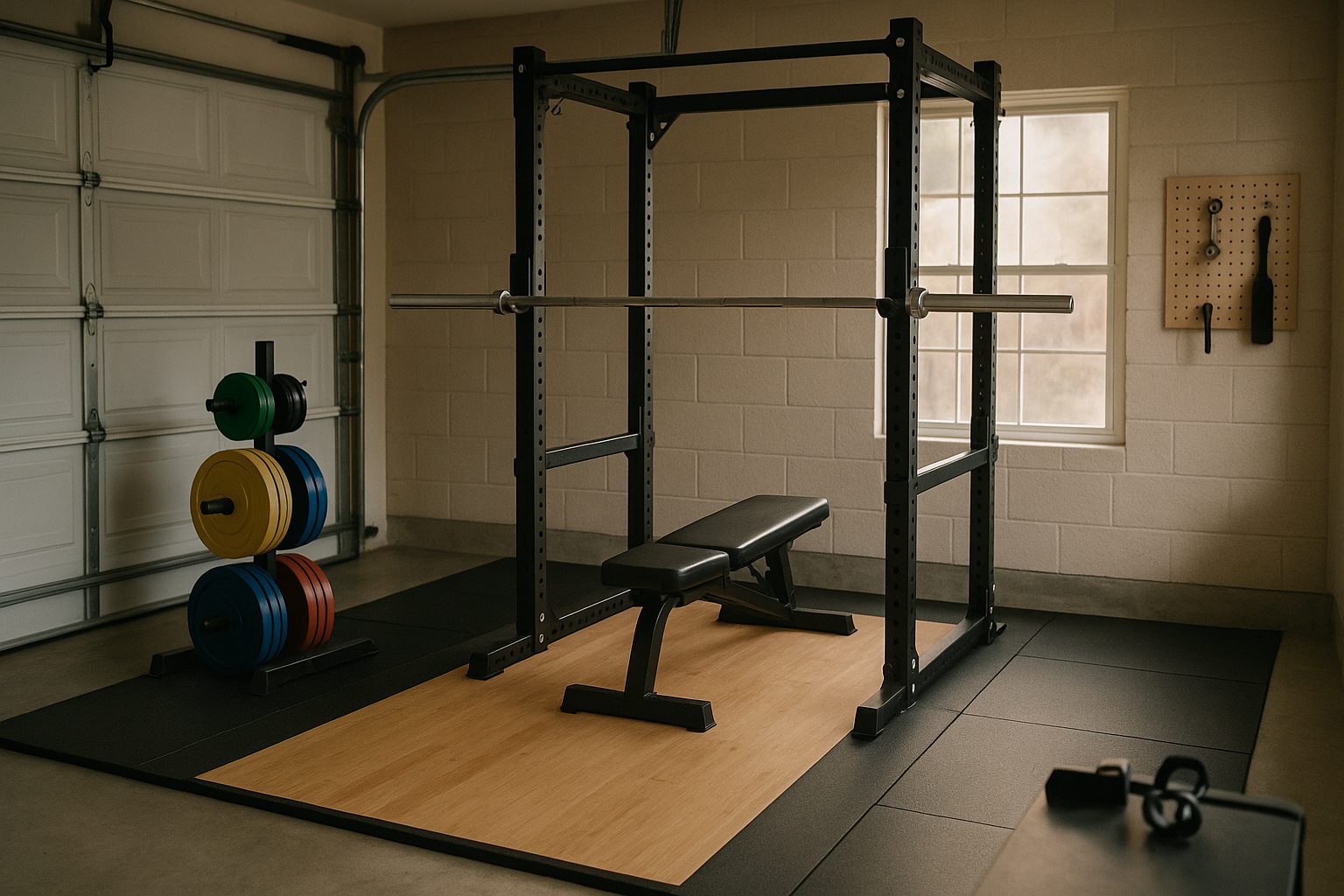
Barbell training is the most space- and cost-efficient way to build full-body strength at home. If you’re wondering what actually matters for performance, safety, and protecting your space, this guide is your blueprint. Barbell training essentials for home gyms are the must-have equipment choices, setup details, and maintenance practices that let you lift safely, progress steadily, and avoid costly mistakes. In short: pick a suitable bar and plates, anchor them with a rack, bench, flooring, and collars, then add safety systems, storage, and a simple progression plan. (General fitness note: this article is informational only—consult a qualified professional if you have medical concerns.)
Quick setup snapshot: choose a primary bar (multi-purpose, weightlifting, or powerlifting), get plates to your current + 1-year goals, use a stable rack with safeties, a firm bench, 3/4″ rubber over a plywood platform where you’ll drop weight, locking collars, fractional plates for micro-progress, chalk for grip, and a simple week-by-week loading plan. Now let’s build it—piece by piece.
1. Choose the Right Barbell (Specs, Knurl, and Spin)
The right barbell matches your lifts and protects your hands, shoulders, and floors. For most home lifters, a 20 kg, 28–29 mm shaft with 50 mm rotating sleeves is standard; women’s weightlifting bars are 15 kg, 25 mm with the same 50 mm sleeves. Weightlifting bars use needle bearings and a more elastic shaft (“whip”) to help with the snatch and clean & jerk; powerlifting bars typically use bushings, are stiffer, and have more aggressive knurl suited to squat/bench/deadlift. Multi-purpose bars split the difference with moderate knurl and controlled spin. Aim for a reputable steel and heat-treatment: ~190,000–215,000 PSI tensile strength is typical for quality bars, balancing durability with not being so brittle that it chips under shock. Start with a generalist bar if you train mixed lifts; specialize later if you commit to a single sport.
1.1 Numbers & guardrails
- Men’s comp bars: 20 kg; women’s: 15 kg; sleeves 50–52 mm; shaft 28–29 mm (IPF/IWF specs).
- Bearings (WL) vs bushings (PL): spin speed and control differ; pick for your lifts. Fit at Midlife
- Tensile strength: ~190k–215k PSI is common in quality bars; extremes can hurt durability or whip.
Mini-checklist: pick a bar that matches your training (WL/PL/multi-purpose), verify shaft diameter and center-knurl preference, confirm rotating sleeve type, and choose a finish you’ll maintain (bare steel grips best; stainless resists rust). Close with a quick wipe after chalk to extend life.
2. Buy Plates You’ll Actually Use (Bumper vs Iron, Calibrated, and Color Codes)
Plates determine how your bar loads, bounces, and sounds. Bumper plates (solid rubber/urethane) are safest for Olympic lifts and reduce noise and impact; cast iron or calibrated steel are thinner, denser, and great for heavy powerlifting in limited sleeve space. If you plan to drop from the hang or overhead, bumpers are non-negotiable; for mostly squat/bench/deadlift, a mix of bumpers for pulls and iron for compact loading works well. For clarity while loading, many sets follow the IWF color code: 25 kg red, 20 kg blue, 15 kg yellow, 10 kg green, 5 kg white (microplates down to 0.5 kg match those colors). In powerlifting, 10 kg can be any color; competition sets still mirror similar coding.
2.1 How much weight to start with?
- New lifter: 100–140 kg (220–310 lb) total capacity covers a year+ of linear progress.
- Intermediate or deadlift-focused: 180–220 kg (400–485 lb) capacity.
- Consider your current 1RMs and projected +10–20% growth over 12 months.
Tips: prioritize plate accuracy (±0.8% for training, tighter for calibrated sets), bumper diameter 450 mm for ≥10 kg discs, and matched pairs for balance; if funds are tight, get 2×25, 2×20, 2×15, 2×10, 4×5, 2×2.5 plus fractional plates.
3. The Rack Is Your Safety Net (Power Rack vs Half Rack)
Your rack prevents accidents and unlocks heavy squats, bench, and presses. Power racks (four uprights) offer the most stability and easy integration of safeties (pins/straps); half racks save space but may need longer spotter arms. Look for 11-gauge (3×3″) uprights, 5/8″ or 1″ hardware, and Westside hole spacing (1″ center-to-center through the bench zone) for fine J-cup/safety height adjustments. Depth affects safety and walkouts: 24–30″ inside depth is standard, more if you plan rack pulls. Anchor the rack to the floor or use a flat-foot design when bolting isn’t possible.
3.1 Why hole spacing matters
- 1″ Westside spacing in the bench zone means precise unrack/spotter alignment.
- 2″ spacing elsewhere keeps costs down without losing function.
- Many modern racks mix both (1″ bench zone, 2″ above/below).
Mini-checklist: confirm ceiling height (rack height is often 90–93″), select safeties (straps reduce bar dings), ensure stable feet/bolting, and choose J-cups with UHMW liners to protect knurl.
4. A Stable Bench You Trust (Dimensions and Feel)
A good bench turns pressing into a repeatable, shoulder-friendly movement. Look for a firm, non-squishy pad with a pad width of ~12″ (30–31 cm), height around 42–45 cm (16.5–17.7″), and a stable base that doesn’t tip under leg drive. Competition-height benches help you learn consistent setup and leg drive; an adjustable (FID) bench adds incline options at the cost of weight and price. If you bench heavy alone, consider a bench with spotter platforms or integrate within your rack’s safeties.
4.1 Mini-checklist
- Height within 42–45 cm window; pad level and firm.
- Wide base or tripod feet for stability and foot placement.
- If using in a rack, confirm bench + safeties clear at your arch height.
Note: If shoulder width is broad, a “wide pad” (12.5–14″) can feel more stable. Test elbow clearance and arch without scapular slide.
5. Flooring & Platform (Protect the House, Reduce Noise)
Flooring is where you win or lose on neighbor-friendliness and equipment lifespan. A proven home setup is 3/4″ (19 mm) rubber stall mats over concrete with an 8×8 ft platform (dual plywood base, wood center, rubber sides). Platforms spread impact, add traction, and protect subfloors; rubber layers absorb shock and reduce noise, especially for deadlifts and Olympic lifts. Build flush if you need multipurpose space; go raised for max noise/impact control. If dropping, never on bare concrete—use mats/wood designed for lifting.
5.1 Build basics
- Traditional size: 8×8 ft; base of two perpendicular plywood layers; wood center + rubber landing strips.
- Noise tweak: add a second rubber layer under the landing zones if needed.
- Safety: screw down edges; avoid diamond-plate rubber on landing zones (unpredictable bounce).
Synthesis: good floors keep bars straight, plates alive, and neighbors happy. If in an apartment, lift during daytime and avoid repeated overhead drops.
6. Collars Are Non-Negotiable (Spring, Locking, Competition)
Collars keep plates from migrating and protect bar, plates, and shins. Spring collars are cheap and fine for slow lifts but can slip during dynamic drops; locking collars (lever, clamp) are faster and more secure for daily training; competition collars weigh 2.5 kg each and lock down on 50 mm sleeves with precision tolerances. The headline: use collars every time you lift—especially with bumpers or overhead work.
6.1 What to buy
- A pair of durable quick-locks for daily training.
- Spring collars as backups.
- Competition collars if you compete or calibrate to exact totals. Strength Shop
Numbers note: IPF/IWF competition setups assume collars; comp collars are 2.5 kg each to make loading math transparent and secure.
7. Safety Systems & Solo Lifting Protocols
Lifting alone means planning the “what if.” Spotter arms or pin/strap safeties should catch failed reps without damaging the bar or you. Set pins just below your deepest squat depth and at or slightly below chest level for bench to allow escape. For overhead work, bail forward safely onto the platform and never inside a too-tight rack. Follow basic facility safety: clear walkways, clean chalk/dust, keep flooring intact, and use appropriate spotting where a bar travels over face or torso.
7.1 Solo-lifter checklist
- Use safeties for any lift you can’t safely bail.
- Keep collars on; check J-cup engagement before every set.
- Don’t bench heavy alone without safeties; know your bar path escape.
- Keep a phone nearby; lift in well-lit space.
Close the loop with a short warm-up and technique rehearsal—accidents drop sharply with mindful setup.
8. Storage & Organization (Plates, Bars, Small Parts)
Good storage protects equipment and speeds sessions. Use plate trees or storage posts close to the rack to reduce carry distance; horizontal gun racks or vertical bar holders keep bars straight and sleeves clean. Store bars unloaded, in a dry, clean indoor climate (18–27°C); brush knurl to remove chalk and wipe down after use. Don’t leave a bar loaded in the rack for days—shafts can take a set over time.
8.1 Mini-checklist
- Unload and rack bars horizontally or vertically.
- Keep humidity low; avoid water/cleaner seepage into sleeves.
- Group collars, fractional plates, and chalk near the rack for fast changes.
Systems beat willpower: if everything has a place, you’ll lift more often and maintain gear longer.
9. Fractional Plates & Microloading (Progress You Can Feel)
Strength gains stall when jumps are too big. Fractional plates (0.5–2.5 kg / 1–5 lb) let you nudge loads by 1–5%, sustaining weekly PRs without form breakdown. They’re essential for presses and single-joint accessories where a 2.5 kg per side jump is too steep. Competitive standards show increments down to 0.5 kg are common, and general guidelines suggest increasing load 2–10% once target reps are exceeded—fractionals make this precise.
9.1 Practical rules
- When you hit the top of your rep target for 2–3 sessions, add 0.5–2.5 kg.
- Prioritize upper-body lifts for microloads; save big jumps for squats/deadlifts.
- Track progression in a log—consistency beats occasional big jumps.
Microloading keeps the gains coming while joints and tendons adapt safely.
10. Chalk, Grip, and Bar Care (Feel + Longevity)
Dry, clean hands and knurl bite equal safer, stronger lifts. Magnesium carbonate chalk reduces moisture and increases friction; liquid chalk helps in shared spaces with less mess. After training, brush the knurl and wipe the shaft to remove chalk and sweat, and avoid getting liquid into the sleeve/shaft junction—moisture in sleeves degrades spin and can corrode components. Drop only loaded bars onto suitable platforms or ≥30 mm rubber, not onto bench pads or rack rails.
10.1 Care checklist
- Nylon brush + mild detergent wipe (horizontal bar position).
- Keep bars dry; store unloaded.
- If sleeves feel gritty, stop and service—don’t keep lifting on a compromised spin.
A bar that feels great gets used; a neglected one gets avoided. Five minutes of care protects a four-figure asset.
11. Simple Programming & Loading (Make the Most of Your Setup)
Equipment is only “essential” if it fuels progressive training. For most lifters, 2–4 sessions/week, multi-joint lifts first, and gradual load increases cover 90% of needs. Evidence-based guidance supports moderate loads (60–80% 1RM) for 6–12 reps for hypertrophy, with heavier sets (1–6 reps) for maximal strength and 2–5 min rests. Increase load ~2–10% when you exceed your rep target by 1–2 reps. Track with a paper log or app; cycle volume and intensity every 4–8 weeks.
11.1 One-barbell week (example)
- Day A: Back squat 5×5, bench press 5×5, row 4×6–8
- Day B: Deadlift 3×5, overhead press 5×5, pull-ups 4×AMRAP
- Progression: when all sets hit the top of the range, add 0.5–2.5 kg next time.
Keep it boring and progressive; your rack, bench, and plates will do the rest.
12. Noise & Neighbor Management (Lift Hard, Live Well)
Home gyms succeed when they cooperate with your living space. Noise comes from impact (bar + plates to platform), vibration (transmitted through joists/concrete), and metal-on-metal (racks/bar). Use the platform build above, avoid repeated overhead drops, and time your loud sets. Strap safeties soften bar contact better than pin-pipes; urethane bumpers are a touch quieter than crumb rubber in many rooms; placing the platform away from shared walls helps. If you’re in a second-story room, limit deadlift volume or pull from blocks to reduce peak impact.
12.1 Quick fixes that work
- Platform + mats (8×8 ft) with thicker rubber on landing zones.
- Strap safeties for rack pulls and failures.
- Liquid chalk instead of loose if dust bothers others; shut the door and ventilate.
Lift strong and be a good neighbor; both are possible with smart setup.
FAQs
1) Olympic bar vs power bar—what should I buy first?
If you train Olympic lifts (snatch, clean & jerk), a 28 mm bearing bar with good spin and whip is ideal. If you focus on squat/bench/deadlift, a 29 mm bushing power bar with aggressive knurl is better. Mixed training? A multi-purpose bar (28.5 mm, moderate knurl, bushings) covers nearly everything until you specialize. Check sleeve diameter (50 mm) and finish you’ll maintain. https://eleiko.com
2) How many plates do I need to start?
Enough to load your current lifts plus a year of progress. Many start with 140 kg/300 lb including the bar; strength-focused lifters often prefer 180–220 kg total. If you’ll drop lifts, prioritize bumpers for the pulls and overhead work; iron or calibrated steel add compact loading for squats and benches. Use fractional plates to bridge jumps.
3) What’s “Westside hole spacing,” and do I need it?
It’s 1″ (25 mm) hole spacing through the bench zone so you can micro-tune J-cups and safeties; the rest of the rack stays at 2″ spacing. It isn’t mandatory, but it makes benching safer and more repeatable for many body types. Most modern 3×3 racks with 5/8″ hardware include it. Garage Gym Lab
4) Do I really need collars at home?
Yes. Collars prevent plate creep, protect your sleeves and shins, and are required in competition. Use locking collars for daily work; consider 2.5 kg competition collars if you want perfectly calibrated totals. https://eleiko.com
5) How high should my bench be?
Competition guidelines center on 42–45 cm (16.5–17.7″) from the floor to pad top. That height supports consistent leg drive while keeping feet flat for most lifters. If you’re shorter, consider foot blocks; taller lifters can still arch and drive well at comp height.
6) What PSI rating should I look for in a bar?
Treat PSI as one factor, not the only one. ~190k–215k PSI is common for durable bars; alloy, heat treat, and yield strength matter, too. Too low may bend; too high can feel brittle. Buy from brands that publish both tensile and yield and back it with testing and warranty.
7) How do I keep my bar from rusting?
Brush chalk out of the knurl after each session, wipe with a light detergent on a cloth (bar horizontal), keep sleeves dry, and store unloaded in a dry, clean room. Avoid getting liquid into the sleeve/shaft junction. If sleeves get gritty, stop and service per manufacturer guidance.
8) Are bumper plates quieter than iron?
Generally yes, especially on a proper platform with rubber landing zones. Rubber reduces impact noise and vibration; calibrated steel is thinner and louder on contact. Platform construction and lifting style matter more than plate brand.
9) How often should I train with a barbell each week?
Most adults progress well on 2–4 sessions/week, focusing on compound lifts first. Use moderate loads (60–80% 1RM) for 6–12 reps for hypertrophy and sprinkle heavier sets for strength. Increase load 2–10% when your reps exceed target.
10) Do I need a deadlift or specialty bar at home?
Not initially. A solid multi-purpose or power bar handles most training. Add a deadlift bar (longer, thinner, more whip) or safety-squat bar later if your programming calls for it or you want specific carryovers. (Specialty bars also add noise and storage needs.) Wikipedia
11) What about ceiling height and overhead lifts?
Standard racks are ~90–93″ tall. For overhead pressing with full plates on a 20 kg bar, 8 ft (2.44 m) ceilings usually work if you stand inside the rack bay; taller lifters may need to press outside the rack or seated. Always test bar + plate clearance before loading heavy. Rogue Fitness
12) How do I make my setup apartment-friendly?
Use an 8×8 flush platform with extra rubber on landings, choose strap safeties, avoid repeated overhead drops, and lift at reasonable hours. Liquid chalk controls dust; a door sweep and soft seals reduce transmitted sound.
Conclusion
A strong, safe home gym isn’t about buying everything—it’s about buying the right things and assembling them into a coherent, durable system. Start with a bar that matches your training style, plates you can actually progress with, and a rack and bench that make every setup repeatable. Protect the room with proper flooring and a platform; lock every load with collars; and make safety, storage, and bar care part of your routine so the gear works the same on day 1,000 as on day one. Then give your equipment purpose: a simple, progressive plan that adds a little weight most weeks and enough variation to stay fresh. Put these 12 essentials in place and you’ll lift harder, lift longer, and lift smarter—without outgrowing your space.
Ready to build? Pick your bar style, list your first-year plate totals, and schedule three lifting days this week.
References
- Technical Rules Book 2024, International Powerlifting Federation (IPF), Jan 23, 2024. Powerlifting Sport
- IWF Technical and Competition Rules & Regulations (TCRR) 2020, International Weightlifting Federation, Jan 1, 2020. IWF
- Why Weightlifting Bars & Discs Are Marked in Colors, IWF (Equipment), accessed 2025. https://iwf.sport/equipment IWF
- British Weight Lifting – Technical & Competition Rules and Regulations, British Weight Lifting, Oct 9, 2020. bucs.org.uk
- Ratamess N.A. et al., Progression Models in Resistance Training for Healthy Adults (ACSM Position Stand), Med. Sci. Sports Exerc., 2009. PubMed: PubMed
- Schoenfeld B.J. et al., Loading Recommendations for Muscle Strength, Hypertrophy, and Local Endurance, Sports Health, 2021. PMC
- NSCA Strength & Conditioning Professional Standards & Guidelines, National Strength and Conditioning Association, 2017. NSCA
- Eleiko, Caring for Your Eleiko Bar (care information), 2025. and user guide PDF. https://eleiko.comEleiko.com
- Rogue Fitness, F-Scale Overview & Research (Barbell Durability), Apr 29, 2024. and https://www.roguefitness.com/theindex/article/f-scale-research Rogue Fitness
- Catalyst Athletics (Greg Everett), How to Build a Weightlifting Platform, Feb 2, 2015. catalystathletics.com
- Rogue Fitness, Monster Lite Racks (Westside hole spacing noted), accessed 2025. Rogue Fitness
- ACSM, Resistance Exercise for Health (infographic), June 6, 2024. ACSM