























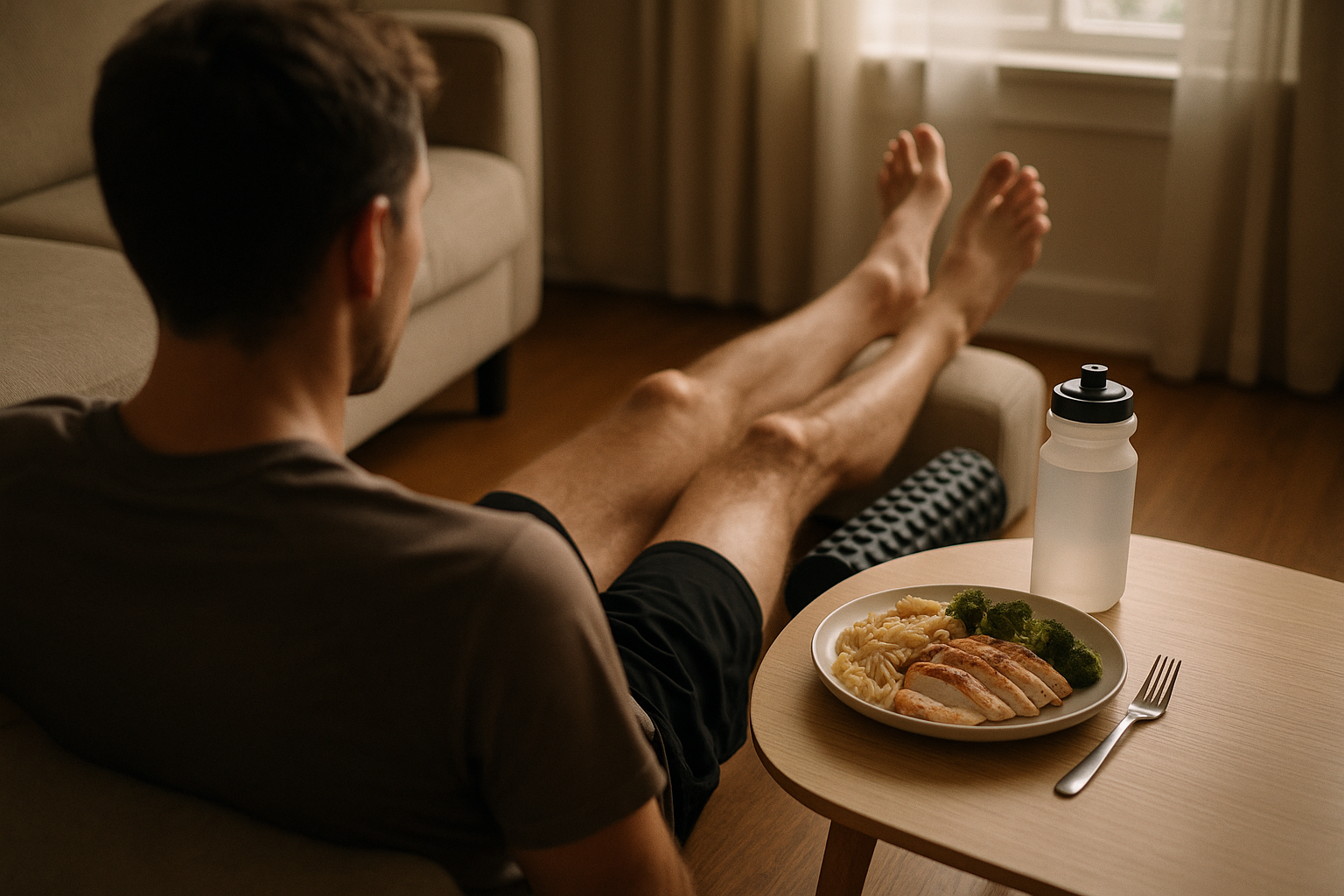
A great workout doesn’t make you fitter by itself—your body adapts during recovery. This guide shows exactly how to build an effective recovery routine you can repeat every week to bounce back faster, reduce injury risk, and make steady gains. It’s written for recreational and competitive athletes, lifters, and anyone training consistently. In one line: an effective recovery routine is a repeatable weekly system that prioritizes sleep, fueling, fluids, light movement, monitoring, and purposeful modalities so you’re ready for your next session. We’ll walk through the 10 steps, with numbers, guardrails, and mini checklists you can use immediately.
Quick-start (skim this first):
1) Lock a consistent sleep window. 2) Hit daily protein and post-training carbs. 3) Replace ~150% of fluid lost and include sodium when you sweat heavily. 4) Use 15–30 minutes of low-intensity movement the day after hard sessions. 5) Add brief mobility/tissue work. 6) Plan rest days and deloads. 7) Track readiness (HRV/RPE/sleep). 8) Use modalities (massage/contrast/cold/compression) with intent. 9) Manage stress (breathing/mindfulness; fix sleep problems with CBT-I). 10) Build a simple week template and iterate.
Friendly disclaimer: This guide is educational and not medical advice. If you have injuries or a health condition, talk to a qualified clinician.
1. Make Sleep Your First Training Block
Sleep is the highest-return recovery tool: aim for ≥7 hours per night and treat it like a scheduled session. Consistent, sufficient sleep improves reaction time, decision-making, endocrine balance, and tissue repair—everything you need to adapt to training. For most adults, 7–9 hours is the recommended range, and many athletes perform better with the upper end or strategic naps in heavy phases. Prioritize regular bed and wake times (including weekends) and a 60–90 minute wind-down that reduces bright light and late caffeine. If you train early, anchor wake time first and shift bedtime earlier over 1–2 weeks. For occasional deficit days, a 20–30 minute early-afternoon nap can restore alertness without grogginess; longer naps can help after heavy or late sessions if timed so you wake from a full cycle. These habits build a protective base that multiplies the effect of every other recovery step. Sleep Health Journal
1.1 Why it matters
- Sleep loss impairs performance and increases perceived exertion, with downstream effects on training quality and injury risk. Reviews of athletes show even modest restriction degrades technical skill and mood.
- Consensus statements recommend ≥7 hours as a baseline for adults; athletes often benefit from the higher end and/or planned naps in hard blocks. AASM
1.2 How to do it (mini-checklist)
- Anchor: fixed wake time; lights-out time that secures 7–9 h in bed.
- Wind-down: 60–90 min low-stimulus routine (dim lights, light snack if needed).
- Environment: 17–19°C (62–66°F), quiet, dark, cool.
- Caffeine cutoff: ~8 hours pre-bed; alcohol minimal.
- Nap rules: 20–30 min early afternoon; or a full 90 min if sleep-deprived and timing allows. Evidence supports performance benefits when naps are used strategically. Dove Medical Press
Synthesis: Protecting sleep is the master lever—if you only fix one thing, fix this.
2. Hit Protein and Post-Training Carbs to Rebuild and Refuel
Your daily protein target and timely carbohydrate intake drive muscle repair and glycogen restoration. A practical daily range for active people is ~1.6–2.2 g/kg/day protein, distributed across 3–5 meals; ~0.4–0.55 g/kg per meal maximizes anabolic signaling. After glycogen-depleting sessions or two-a-days, emphasize early carbohydrate: ~1.0–1.2 g/kg/hour for the first 2–4 hours, then meet a daily 7–12 g/kg target in very heavy endurance phases; otherwise, 3–7 g/kg suits mixed training. Adding ~0.3 g/kg protein post-training supports repair when meals are far away. This combination helps you show up fueled for the next session, especially during blocks with <24 hours between hard efforts.
2.1 Numbers & guardrails
- Protein: 1.6–2.2 g/kg/day; 0.4–0.55 g/kg/meal (e.g., 30–50 g for a 75–90 kg athlete).
- Carbs (quick turnaround): 1.0–1.2 g/kg/h for 2–4 h post; within 24 h, 8–10 g/kg restores stores after exhaustive work. PMC
- Mixed days: Outside of exhaustive endurance, many lifters and team-sport athletes sit closer to 3–7 g/kg/day; scale by volume and intensity.
2.2 Practical meal build
- Plate model (post-hard session): lean protein (chicken/eggs/Greek yogurt/tofu), fast-digesting carbs (rice, pasta, potatoes, fruit), some sodium, fluids.
- Evening lift: full dinner within 1–2 h; if delayed, a 20–40 g protein snack plus fruit.
Synthesis: Hitting daily protein and front-loading carbs after hard sessions accelerates repair and keeps tomorrow’s training on track.
3. Rehydrate Smart: Replace What You Lose (Fluids + Sodium)
Hydration is individualized; the simplest approach is to weigh before and after key sessions. Replace about 150% of body mass lost (e.g., lose 1.0 kg → drink ~1.5 L over the next 2–4 hours) and include sodium—especially in heat or if you’re a salty sweater. Typical sports drink sodium ranges ~460–690 mg/L (20–30 mmol/L), which helps absorption and reduces hyponatremia risk; during prolonged, very sweaty sessions, ~300–600 mg sodium per hour is often appropriate. Plan ahead for hot, humid days and bring fluids you’ll actually drink. In Karachi-style summers or other high-WBGT conditions, combine cooling, shade, and pacing; consider electrolytes during and after.
3.1 How to do it
- Measure: (Pre- minus post-session weight) × 1.5 = liters to drink in next 2–4 h.
- During long/hot sessions: sip regularly; include sodium (~460–690 mg/L) and enough carbohydrate (6–8%) to support fueling. EFSA Journal
- Heavy sweaters: target ~300–600 mg sodium per hour in long events; adjust by sweat rate, taste, and GI comfort. PMC
3.2 Region & heat notes
- In very hot climates, use WBGT-based decisions when possible and err on the cool side of pacing; heat-illness position statements emphasize prevention and rapid cooling.
Synthesis: Replace 150% of fluid losses and include sodium—you’ll feel better now and train better tomorrow.
4. Program Rest Days and Deload Weeks on Purpose
Rest days and deloads are not “lost time”—they’re planned stimuli that allow supercompensation and reduce overuse risk. A simple starting point is 1–2 rest days per week and a deload every 4–6 weeks (about 7 days) where you reduce volume substantially and slightly taper intensity. Coaches commonly cut total work ~30–60% and keep movement quality sharp; some athletes deload after an “impact” microcycle of higher stress. Tether your deloads to life events (travel, exams, deadlines) and to objective signs (poor sleep, rising RPE at usual pace, persistent DOMS) rather than waiting to feel broken. The aim is to finish a deload itching to train, not flat.
4.1 How to structure a deload
- Strength focus: reduce total sets by 40–60%; keep 1–3 hard sets across main lifts; stop 2–4 reps shy of failure.
- Endurance focus: reduce weekly volume 30–50%; include a few short strides or pickups to maintain feel.
- Mixed sports: trim high-impact/change-of-direction volume; keep low-impact skill work.
4.2 Why it works
- Periodization literature underscores planned manipulation of volume and intensity to maximize adaptation and reduce injury risk; deloads operationalize this within mesocycles. PMC
Synthesis: When in doubt, schedule recovery—don’t wait for forced rest.
5. Use Active Recovery (Light Movement) to Feel and Move Better
Light movement the day after a hard session speeds subjective recovery and clears residual fatigue without adding stress. Think 15–30 minutes of easy cycling, brisk walking, or pool work at conversational effort. Physiologically, low-intensity activity enhances lactate clearance compared to passive rest, especially when kept around or slightly below your lactate threshold; practically, that looks like ~30–60% of heart-rate reserve or an RPE of 2–4/10. Active recovery is not a performance enhancer in itself, but it can reduce heaviness and stiffness so you move better in the next workout. Keep it low and short—you should feel better, not tired, when finished.
5.1 Mini-checklist
- Pick one: 20-minute easy spin, 25-minute brisk walk, 15-minute pool walk/jog.
- Intensity: breathe through your nose, hold a full conversation.
- Add gentle mobility: 5–10 minutes of hips/ankles/thoracic spine.
5.2 What the evidence says
- Active vs passive recovery: faster blood lactate decline with appropriately dosed light movement; effects on long-term performance are mixed, so keep it easy and brief. PMCLippincott Journals
Synthesis: Move lightly to feel better—don’t turn your recovery day into another workout.
6. Add Mobility and Tissue Work (Foam Rolling, Stretching) for ROM and Comfort
Mobility and self-massage won’t turn a bad program into a good one, but used well they improve range of motion (ROM) and reduce soreness. Evidence shows foam rolling can meaningfully increase ROM and slightly reduce perceived soreness for 24–48 hours; combining strategies (e.g., light stretch plus brief rolling) often feels best. Stay brief and focused: 30–60 seconds per muscle for 2–3 passes is usually enough; avoid high pressure over joints or acute injuries. Place mobility after your short active recovery or as a standalone 10–15 minute micro-session before bed. Over-rolling is a thing—your tissues should feel easier afterward, not bruised.
6.1 How to do it
- Targets for desk-bound athletes: hip flexors, glutes, calves, mid-back, lats.
- Protocol: 30–60 s per spot × 2–3 passes; gentle sustained stretch 20–30 s after.
- Percussive tools: can feel good; evidence is still emerging—use sparingly. PMC
6.2 Numbers & notes
- ROM improvements with foam rolling show moderate effect sizes; combining with warm-up activities may not add further acute flexibility beyond either alone—keep it simple. ScienceDirect
Synthesis: Short, targeted mobility + light tissue work helps you move freely without taxing recovery.
7. Monitor Readiness with Simple Metrics (HRV, RPE, Sleep)
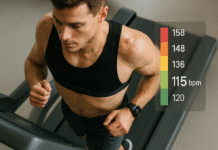
You improve what you measure—lightly. Use session RPE (effort × minutes) to track internal load across weeks, and consider heart-rate variability (HRV) each morning to spot trends. Meta-analyses suggest HRV-guided training can produce slightly better endurance adaptations than fixed plans by auto-adjusting intensity based on your autonomic state. Combine these with sleep duration/quality to flag when to push or back off. Keep monitoring simple and actionable: if HRV is below your normal range for two mornings and your RPE is rising at usual paces, swap a high-intensity session for aerobic base or technique work. Tools like HRV apps, wearables, or a plain spreadsheet all work—choose one, not all.
7.1 Practical system
- Daily: HRV (or “how cooked do I feel?”), morning resting HR, last night’s sleep hours.
- Each session: RPE × minutes → weekly sum.
- Weekly review: If load rises >10–20% and readiness trends down, insert an extra easy day.
7.2 Why it helps
- Session-RPE is a validated way to quantify training stress across modalities; HRV-guided plans show small-to-moderate benefits on endurance markers. PubMed
Synthesis: Track a few metrics you’ll actually use; adjust before fatigue snowballs.
8. Use Modalities Intelligently: Cold, Heat, Contrast, Compression, Massage
Recovery tools work best when matched to your training goal. Massage consistently reduces DOMS and perceived fatigue; cold-water immersion (CWI) reduces soreness and swelling but may blunt strength/hypertrophy if used chronically after lifting blocks focused on muscle growth. Compression can modestly aid strength or power recovery in some contexts, though results vary; contrast water therapy and cryotherapy help soreness for some athletes. Choose the right tool for the right cycle: for example, prioritize massage/compression after tournaments; avoid routine post-lift CWI in hypertrophy blocks; use heat/sauna on easy days for relaxation and ROM. Dose matters more than brand.
8.1 Numbers & guardrails
- CWI (if used): 10–15°C for ~10–15 minutes post-event; avoid after hypertrophy-focused lifting weeks. Evidence indicates potential attenuation of long-term strength/hypertrophy when chronically applied.
- Compression: mixed evidence; small benefits in certain windows and tasks.
- Massage: best for soreness and fatigue perception; pair with light movement.
8.2 Decision mini-tree
- Need to feel fresh tomorrow? CWI or contrast + compression.
- Building muscle now? Skip routine CWI; consider light heat and massage.
- Travel swelling? Compression + walking.
Synthesis: Pick modalities by goal and timing, not hype.
9. Manage Stress and Mental Recovery (Breathing, Mindfulness, Better Sleep Skills)
Training stress adds to life stress—both load your system. Brief daily practices like 5 minutes of slow breathing (~6 breaths/minute) can raise vagal tone and downshift arousal. Mindfulness-based programs in athletes show improvements in stress, mood, and sometimes performance; for persistent sleep problems, CBT-I is an evidence-based first-line treatment that outperforms medications long-term. Combine one brief daily practice with strong sleep hygiene: morning light, consistent schedule, and tech boundaries at night. Small, repeatable habits beat perfect, occasional efforts.
9.1 Two simple tools
- Box or coherent breathing: inhale 4–5 s, exhale 4–5 s, 5 minutes, 1–2×/day (before bed or after training). Evidence supports slow-paced breathing for autonomic balance.
- Mindfulness micro-practice: 10 minutes focusing on breath or body scan after evening shower; expect fidgety starts—consistency wins. PMC
9.2 When to escalate
- Ongoing insomnia, frequent nighttime wakeups, or reliance on sleep meds → consider CBT-I with a trained provider (in-person or telehealth). PMC
Synthesis: Lower the background noise—your body will use that bandwidth to recover.
10. Build Your Weekly Recovery Template (and Iterate)
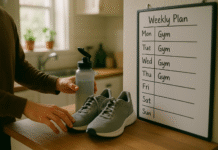
The final step is turning principles into a weekly template you can stick to. Assign recovery actions to specific days, times, and sessions, just like workouts. For example: Sun deload jog + mobility; Mon heavy lower + post-carb meal; Tue easy spin + short breathing; Wed intervals + massage; Thu rest + walk; Fri heavy upper + early bedtime; Sat long run + salts/fluids plan. Keep a recovery budget: two 15-minute blocks on training days (mobility + breathing) and one 30–60 minute block on the weekend (massage, sauna, or long walk). Review metrics every Sunday and adjust one dial: sleep window, carb timing, or next week’s load. By iterating, you’ll converge on the minimal set of habits that delivers maximal readiness for your sport.
10.1 Mini-checklist to operationalize
- Calendar it: sleep window, meal anchors, two 15-min micro-blocks/day.
- Pack it: bottle + electrolyte tabs; protein-rich snack for the ride home.
- Pair it: mobility while watching a show; breathing after brushing teeth.
- Review it: 10-minute Sunday check—what one thing will I improve next week?
10.2 Example numeric target (mix-training athlete, 72 kg)
- Protein: ~130 g/day (4 × 32–35 g).
- Carbs (heavy day): 1.2 g/kg/h for 3 h post (≈260 g total), then balanced meals.
- Hydration: lose 0.8 kg → drink ~1.2 L over 2–4 h with ~600–900 mg sodium total.
- Active recovery: 20 minutes bike @ RPE 3/10 next day.
Synthesis: A repeatable template turns good intentions into reliable readiness.
FAQs
1) What’s the fastest way to recover after an unexpectedly hard session?
Prioritize a carb-rich meal within 1–2 hours, fluids with sodium (replace ~150% of body mass lost), and an early bedtime. If you must perform again within 24 hours, consider brief CWI to reduce soreness—but avoid this routinely during hypertrophy phases. Add 15–20 minutes of easy movement the next day.
2) How much protein do I really need if I train 4–5 days/week?
Most active adults do well at ~1.6–2.2 g/kg/day, split across 3–5 meals with ~0.4–0.55 g/kg per meal to maximize anabolic signaling. Older lifters may benefit from the higher end per meal due to anabolic resistance.
3) Should I foam-roll before or after workouts?
Either. Foam rolling can acutely improve ROM and slightly reduce soreness; many athletes roll briefly in warm-ups (for movement quality) and/or in the evening (for comfort). Keep it short and targeted (2–3 passes of 30–60 seconds).
4) Are compression garments worth it?
They’re not magic, but they can modestly help recovery of strength/power in some contexts and reduce swelling during travel. Don’t expect big performance boosts during the workout itself. Use them as a supportive modality, not a replacement for sleep and fueling. PubMed
5) Is active recovery better than total rest?
For soreness and “heavy legs,” yes—light movement improves lactate clearance and many athletes report better readiness the next day. Keep it easy: conversational pace for 15–30 minutes. PubMed
6) Does cold exposure help or hurt?
CWI can reduce soreness and swelling after tough events but may attenuate strength/hypertrophy gains if used after every lift. Save it for tournaments, two-a-days, or hot-weather turnarounds, and skip it in muscle-gain phases. Cochrane
7) How do I know I need a deload?
Sluggish warm-ups, rising RPE at usual paces, poor sleep, and persistent soreness are classic signals. Many athletes schedule a 7-day deload every 4–6 weeks, cutting volume ~30–60% and slightly reducing intensity while keeping movement quality. PMC
8) What’s the simplest way to track training load?
Use session-RPE: multiply how hard the session felt (1–10) by minutes trained and sum the week. It’s validated across sports and correlates with other load markers. PMC
9) Can breathing or mindfulness really change recovery?
Short daily practices (e.g., 5 minutes at ~6 breaths/min) improve autonomic balance and reduce perceived stress; mindfulness-based interventions in athletes show benefits for fatigue, mood, and sometimes performance. These are low-cost, scalable tools. PMC
10) I train in a hot, humid region—any extra precautions?
Use WBGT-based decisions when possible, build heat acclimatization gradually (7–14 days), increase sodium in fluids, and have a cooling plan. Know heat-illness red flags and prioritize rapid cooling if symptoms occur.
11) Are naps helpful or will they mess up my night sleep?
Early-afternoon naps of 20–30 minutes can boost alertness without harming night sleep. Longer ~90-minute naps may help when sleep-restricted, but time them to wake from a full sleep cycle and avoid late-day naps. British Journal of Sports Medicine
12) What if I follow everything and still feel flat?
Check energy availability (are you under-fueling?), iron status (if applicable), overall life stress, and training monotony. Consider a bigger deload (volume −50%+) and consult a clinician if fatigue persists to rule out medical causes.
Conclusion
Recovery isn’t a mystery—it’s a routine. When you protect sleep, fuel on time, replace fluids and sodium, and move lightly on recovery days, you create the conditions your body needs to adapt. Layer in brief mobility, planned deloads, and simple monitoring so you can adjust before fatigue snowballs. Use modalities to solve specific problems (soreness, swelling, heat) rather than as daily rituals, and lower mental load with short breathing or mindfulness practices. Finally, calendar your recovery just like workouts: two 15-minute blocks on training days and one longer block on the weekend. Start with one or two steps from this guide, review weekly, and iterate. In a month, you’ll feel the difference—in readiness, enjoyment, and performance.
CTA: Pick two actions (sleep window + post-training carbs) and schedule them for the next 7 days—your recovery routine starts now.
References
- Sawka MN et al. American College of Sports Medicine Position Stand: Exercise and Fluid Replacement. ACSM / Med Sci Sports Exerc (2007). PubMed
- Korey Stringer Institute. Hydration. University of Connecticut (accessed 2024–2025). koreystringer.institute.uconn.edu
- Schoenfeld BJ, Aragon AA, Krieger JW. How much protein can the body use in a single meal for muscle-building? J Int Soc Sports Nutr (2018). BioMed Central
- Kerksick CM et al. ISSN exercise & sports nutrition review update. J Int Soc Sports Nutr (2018). BioMed Central
- Craven J et al. Carbohydrate with/without protein during recovery: a systematic review. Sports Med-Open (2021). SpringerOpen
- Dupuy O et al. Recovery methods: a systematic review with meta-analysis. Frontiers in Physiology (2018). https://www.frontiersin.org/articles/10.3389/fphys.2018.00403/full Frontiers
- Piñero A et al. Post-exercise cold water immersion and hypertrophy: systematic review & meta-analysis. Sports Med (2024). PMC
- Petersen AC et al. CWI: effects on training-induced adaptation. Frontiers in Sports and Active Living (2021). https://www.frontiersin.org/articles/10.3389/fspor.2021.660291/full Frontiers
- Wiewelhove T et al. Active recovery after HIIT. Frontiers in Physiology (2018). https://www.frontiersin.org/articles/10.3389/fphys.2018.00415/full Frontiers
- Devlin J et al. Lactate clearance depends on active recovery intensity. Eur J Appl Physiol (2014). Enlighten Publications
- National Sleep Foundation / Watson et al. Recommended Amount of Sleep for a Healthy Adult: Consensus. Sleep (2015). PMC
- Fullagar HHK et al. Sleep and athletic performance: effects of sleep loss. Sports Med (2015). PubMed
- Wilke J et al. Foam rolling training effects on ROM: systematic review & meta-analysis. Sports Med (2022). PMC
- Hill J et al. Compression garments and recovery from EIMD: meta-analysis. Br J Sports Med (2014). PubMed
- Manresa-Rocamora A et al. HRV-guided training: systematic review & meta-analysis. Int J Sports Physiol Perform (2021). PMC
- Roberts WO et al. ACSM Expert Consensus: Exertional Heat Illness. Med Sci Sports Exerc (2023). PubMed