



























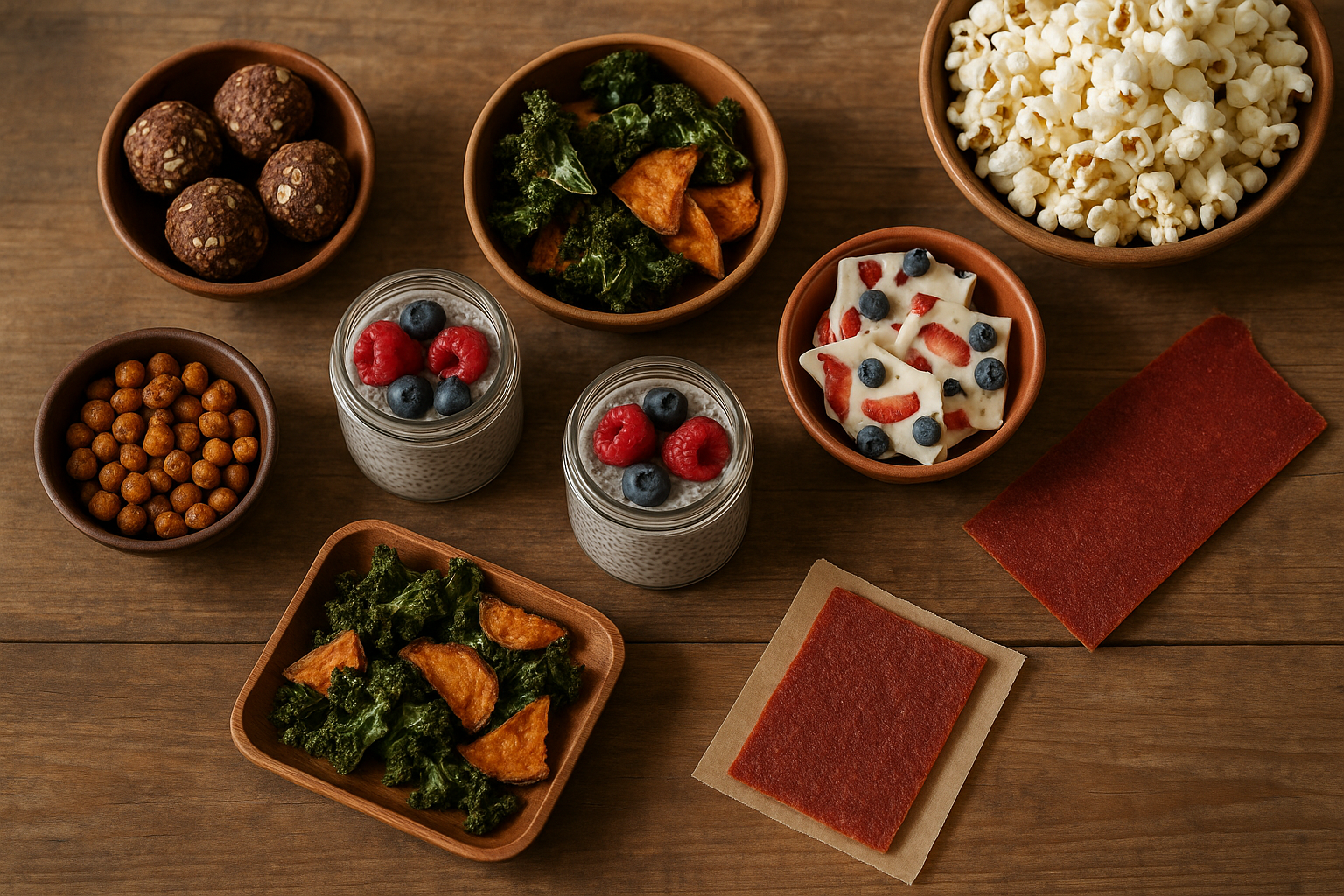
If you want snacks that taste great, actually satisfy hunger, and don’t derail your goals, the most dependable route is to make them yourself. This guide gives you 12 DIY healthy snack recipes that are quick, affordable, and easy to batch-prep for the week. You’ll find crunchy, creamy, sweet, and savory options—from energy balls and veggie chips to high-protein bites and whole-grain crunch. DIY healthy snack recipes are simply nutrient-dense snacks prepared at home with mostly whole foods so you control added sugars, sodium, and oils. As a rule of thumb: combine fiber + protein + healthy fats for fullness, and lean on spices, citrus, herbs, and roasting for big flavor with minimal salt and sugar. (For context, the WHO advises adults to keep sodium under ~2,000 mg/day as of February 2025; the AHA suggests added sugars ≤6% of calories.)
Fast start (5 steps):
- Pick a base (oats, yogurt, chickpeas, tofu, popcorn).
- Add a protein/fiber booster (nuts, seeds, beans).
- Flavor with spices, herbs, citrus, cocoa, vanilla.
- Sweeten lightly, if at all (dates, ripe fruit, a touch of honey).
- Portion smartly (snack-size containers) and store properly (chill perishables within 2 hours).
Quick note: Perishables like yogurt or hummus shouldn’t sit at room temperature beyond ~2 hours (or 1 hour above 32°C/90°F). Keep cold packs handy for lunchboxes. US Dairy
1. No-Bake Energy Balls (Oats, Nuts & Seeds)
No-bake energy balls are the ultimate five-minute, no-mess snack: they’re portable, filling, and endlessly customizable. The basic idea is to bind rolled oats with a nut or seed butter, add chopped nuts or seeds for crunch, and use dates or a small amount of honey for gentle sweetness. Start with a base ratio that rolls well in your hands and firms up in the fridge; the oats and seeds bring fiber, the nut butter brings protein and healthy fats, and the dates help everything stick. Because you’re controlling the mix-ins, you can keep added sugars modest and sodium minimal while getting big flavor from cocoa, cinnamon, or citrus zest. For a budget-friendly option, peanut butter works as well as pricier nut butters and still supports heart-smart eating patterns when used sensibly.
How to make (yields ~18 balls):
- 1½ cups (135 g) rolled oats, ½ cup (120 g) peanut or almond butter, 8 soft medjool dates (pitted, ~150 g) or 3 tbsp honey, ¼ cup (35 g) finely chopped nuts or seeds, 2 tbsp chia or flax, 1 tsp vanilla, pinch salt.
- Pulse dates, nut butter, vanilla, and salt in a processor; add oats and seeds; pulse until clumpy.
- Roll 25–30 g portions into balls; chill 30 minutes.
- Optional coatings: cocoa, coconut, crushed pistachios.
- Store: fridge 1 week; freezer 2–3 months (silicone bag).
1.1 Numbers & guardrails
Aim for ~25–35 g per ball (110–150 kcal depending on add-ins). Use dates or ripe banana in place of syrups if limiting added sugar (AHA recommends ≤6% of calories).
1.2 Common mistakes
Balls that crumble? Add 1–2 tsp water or extra date; too sticky? Mix in 1–2 tbsp oats. Overly sweet? Swap half the dates for grated apple and ½ tsp cinnamon.
Wrap-up: Energy balls balance fiber, protein, and healthy fats in one tidy bite—perfect for pre-workout or mid-afternoon slumps.
2. Oven-Baked Veggie Chips (Kale, Sweet Potato & Zucchini)
Baked veggie chips bring the crunch you want with a fraction of the oil and sodium of packaged chips. Thinly slicing and baking at moderate heat dehydrates vegetables just enough to crisp while keeping flavors vibrant. Kale chips are fast and feather-light; sweet potato slices get caramelized edges; zucchini crisps benefit from a brief salting step to draw moisture. You can season them boldly with smoked paprika, garlic powder, or za’atar, and finish with lemon zest instead of salt to keep sodium in check. If you own an air fryer, it speeds things up and uses little to no added oil for comparable crispness.
How to make (basic method):
- Slice vegetables 1–2 mm thick (mandoline helps).
- Toss lightly with 1–2 tsp olive oil per sheet, plus spices.
- Bake 150–165°C (300–325°F) 12–25 minutes depending on veg; flip once.
- For kale: tear, dry well, oil lightly, bake 10–15 minutes at 150°C/300°F.
- Cool completely on the tray for maximum crisp.
2.1 Why it works
Dry heat removes surface moisture; thin slices minimize water to evaporate. Air-frying uses rapid hot air to mimic deep-fried textures with minimal oil, reducing overall fat load.
2.2 Mini-checklist
- Pat slices bone-dry.
- Don’t crowd pans.
- Season before baking; add citrus/herbs after.
- Store in paper-towel-lined container at room temp up to 24–48 hours for best crunch.
Wrap-up: Veggie chips deliver snack-time crunch with customizable flavors and better control over oil and salt than store-bought versions.
3. Crispy Roasted Chickpeas (Oven or Air Fryer)
Roasted chickpeas are a pantry-to-pan powerhouse—crunchy, savory, and rich in fiber and plant protein. The trick is getting them truly dry before roasting, then baking hot enough to crisp without burning spices. Drying the drained legumes and roasting 20–30 minutes delivers golden, snappy chickpeas you can toss with curry powder, chili-lime, or everything bagel seasoning. They’re fantastic on their own or as a salad topper for added crunch. Air fryers shorten cook time and reduce oil usage while still delivering crispness. WIC Works Resource System
How to make (1 can/400 g drained):
- Rinse, drain, pat dry thoroughly; rest on a towel 10–15 minutes.
- Toss with 1–2 tsp oil, ½ tsp salt, spices.
- Roast 200°C/400°F 20–30 minutes, shaking pan once or twice, until deep golden and crisp.
- Cool on tray; season again lightly if needed.
3.1 Numbers & guardrails
Roast until crisp outside but still tender inside; ovens vary, so watch in the last 5 minutes. For food safety, remember that beans are safe after thorough cooking; heat inactivates lectins that can be present in some legumes.
3.2 Common mistakes
Skipping the dry step leads to steam (chewy, not crisp). Spices burned? Toss warm chickpeas with spices after roasting instead of before.
Wrap-up: With pantry staples and 30 minutes, you get a high-fiber, high-protein, crunchy snack you can season infinite ways.
4. Greek Yogurt Bark with Berries & Nuts
Yogurt bark is a freezer-friendly treat that eats like a creamy popsicle and delivers protein and probiotics. Stir a touch of honey and vanilla into thick Greek yogurt, spread on a lined tray, and sprinkle with berries, chopped nuts, and cacao nibs. Once frozen, you crack it into shards for a snack that’s cool, tangy, and lightly sweet. Because you choose the toppings, you can keep added sugar modest and boost texture with seeds for extra fiber. Remember the “2-hour rule”: keep dairy cold and return leftovers to the freezer quickly to limit time in the temperature danger zone.
How to make (pan of bark):
- 2 cups (450 g) plain Greek yogurt, 1–2 tbsp honey or date syrup, 1 tsp vanilla.
- Spread 5–7 mm thick on parchment; top with ¾ cup mixed berries and 2–3 tbsp chopped nuts/seeds.
- Freeze 2–3 hours; break into pieces; store in freezer container.
4.1 Numbers & guardrails
Portion ~40–50 g pieces (80–120 kcal depending on toppings). Keep at room temp only briefly; yogurt shouldn’t sit out more than ~2 hours total.
4.2 Tools/Examples
Try swirls of berry purée, tahini ribbon, or a dusting of cinnamon-cocoa for cheesecake vibes without the sugar bomb.
Wrap-up: Creamy, crunchy, fruity—and freezer-ready—yogurt bark is a high-protein fix that doubles as a hot-weather dessert.
5. Overnight Chia Pudding Cups
Chia pudding turns tiny seeds into a velvety, spoonable snack using nothing more than milk and time. Chia seeds absorb liquid and form a gel thanks to soluble fiber and mucilage, creating a pudding-like texture without cooking. Stir in unsweetened cocoa or cardamom, top with fruit, and you have a snack that’s rich in fiber and plant omega-3 (ALA). Use dairy or fortified soy/almond milk and adjust thickness by tweaking the seed-to-liquid ratio. For grab-and-go convenience, portion into small jars. The Nutrition Source
How to make (2 servings):
- 5 tbsp (60 g) chia seeds, 1½ cups (360 ml) milk of choice, ½ tsp vanilla, 1–2 tsp maple or 1 mashed date, pinch salt.
- Whisk; wait 10 minutes; whisk again to break clumps; refrigerate 4+ hours or overnight.
- Top with kiwi, berries, or nut-butter drizzle.
5.1 Numbers & guardrails
Chia supplies ~34–40 g fiber per 100 g; 1 tbsp has ~4 g fiber—scale portions to comfort and water intake. If you’re new to high-fiber foods, increase gradually. National Agricultural Library
5.2 Common mistakes
Grainy pudding? Whisk twice in the first 15 minutes. Too thick? Add 2–3 tbsp milk just before serving. Too thin? Use 3 tbsp seeds per ½ cup (120 ml) liquid.
Wrap-up: Minimal effort, maximal fiber—chia pudding is a customizable, make-ahead snack that’s equally good for breakfast or dessert.
6. Classic Hummus with Crunchy Veggie Dippers
Homemade hummus beats store-bought on taste and cost, and it lets you dial in garlic, lemon, and tahini to your preference. Blending chickpeas warm with ice-cold water creates an ultra-smooth emulsion; finishing with lemon zest and paprika gives brightness without extra salt. Pair with crisp veggies—carrots, cucumbers, peppers—for a snack that covers protein, fiber, and micronutrients in one plate. Pre-portion into small containers and keep the vegetable sticks ready in water in the fridge for easy snacking. MyPlate also recommends combining food groups (like vegetables + protein) to build satisfying snacks.
How to make (about 2 cups):
- 1 can (400 g) chickpeas, rinsed; ¼ cup tahini; juice + zest of 1 lemon; 1 small garlic clove; 2 tbsp olive oil; 60–90 ml ice-cold water; ½ tsp cumin; salt to taste.
- Blend tahini + lemon first; add warm chickpeas, garlic, cumin; stream in ice water until silky.
- Drizzle with 1 tsp oil; sprinkle paprika; serve with veggie sticks.
6.1 Numbers & guardrails
Sodium adds up quickly—season boldly with lemon, cumin, sumac, and roasted garlic instead of salt heavy-handedness (WHO target: <2 g sodium/day).
6.2 Mini-checklist
- Peel chickpeas (optional) for extra creaminess.
- Use ice water for a whipped texture.
- Chill portions promptly; don’t leave hummus out >2 hours.
Wrap-up: Silky hummus plus fresh veg equals a snack that’s as nutritious as it is satisfying.
7. Stovetop or Air-Popped Popcorn with Savory Seasoning
Popcorn is a whole grain, naturally high in fiber when prepared without heavy butter or sugary coatings. When you pop it yourself (stovetop with a touch of oil, or air-popped), you get a big, crunchy bowl for relatively few calories and can dress it with umami-rich nutritional yeast, smoked paprika, or a drizzle of olive oil and lemon zest. It’s budget-friendly and endlessly variable—think taco spice one day, garlic-herb the next. As a whole grain, it adds to your daily target of at least 48 g of whole grains with a generous serving.
How to make (serves 2):
- Air-pop ½ cup (100 g) kernels or stovetop-pop in 1 tbsp oil.
- Toss immediately with 2–3 tbsp nutritional yeast, ½ tsp smoked paprika, pinch salt or citrus zest.
- For extra cling, mist lightly with water or add 1 tsp olive oil while tossing.
7.1 Why it matters
Whole grains (including popcorn) deliver fiber and phytonutrients; DIY popcorn avoids the excess sodium/sugar of many bagged snacks.
7.2 Common mistakes
Soggy popcorn happens when steam can’t escape—crack the lid slightly on stovetop; toss seasonings while warm so they adhere.
Wrap-up: Whole-grain, high-volume, and flavor-flexible—popcorn is a smart swap for chips or crackers.
8. Fruit & Nut Trail Mix Clusters (Oven-Baked)
Trail mix is easy, but clusters feel special. Lightly bind nuts, seeds, and chopped dried fruit with whisked egg white (or aquafaba for vegan) and a touch of honey so the mix bakes into snackable clusters. Compared to candy-coated blends, DIY clusters let you keep sugars modest and boost the share of nuts and seeds. Vary the mix by season—apricots and pistachios in spring, cranberries and pecans in winter. Portion into 25–30 g clusters to keep calories predictable and packable.
How to make (about 12 clusters):
- 1 cup mixed nuts, ½ cup seeds, ½ cup chopped unsweetened dried fruit, 1 egg white or 3 tbsp aquafaba, 1 tbsp honey, ½ tsp cinnamon, pinch salt.
- Whisk egg white to froth; toss with mix; scoop mounds on lined tray.
- Bake 150°C/300°F for 18–22 minutes until toasty; cool fully to set.
8.1 Numbers & guardrails
Nuts and seeds provide heart-smart fats and fiber; aim for unsalted varieties and season creatively to limit sodium. Harvard Health
8.2 Common mistakes
Clusters fall apart if under-baked or moved before cooling—wait until fully cool and crisp.
Wrap-up: A portable crunch bomb that’s easy to tailor to your pantry and goals.
9. Homemade Fruit Leather (Oven or Dehydrator)
Fruit leather concentrates ripe fruit into a chewy, portable strip without the additives of commercial rolls. Purée ripe fruit with lemon and a modest sweetener if needed, then spread thinly on lined trays and dry low and slow until pliable. Dehydrators give the most even results, but a low oven with convection also works. For best quality and safety, follow tested guidance on thickness, temperature, and drying times—and be sure leathers are thoroughly dried before storage to avoid mold. The National Center for Home Food Preservation (NCHFP) provides clear, research-based directions for fruit and vegetable leathers.
How to make (1 large sheet):
- Purée 4 cups (600–700 g) ripe fruit with 1–2 tsp lemon juice; sweeten to taste.
- Spread 3–5 mm thick on lined dehydrator tray or parchment-lined sheet.
- Dry at 57°C/135°F (dehydrator) or 70°C/160°F (oven) until no wet spots remain and leather peels cleanly (3–8 hours depending on method).
- Cool; roll in parchment; store airtight in a cool, dark place.
9.1 Numbers & guardrails
Drying is a safe preservation method when done properly; NCHFP gives parameters for prep, drying, and storage to maintain quality.
9.2 Common mistakes
Too thick leads to sticky centers; too hot can crack edges. If leather is tacky after cooling, return to the dryer briefly.
Wrap-up: Naturally sweet, packable, and kid-approved—fruit leather is a zero-waste use for overripe fruit.
10. Chewy Oat Granola Bars (Low Added Sugar)
Homemade granola bars can be chewy, clean-ingredient, and not overly sweet. Start with rolled oats and chopped nuts/seeds; bind with mashed banana, nut butter, and just enough honey to hold together. Bake until set, cool completely, and slice into bars. Compared with many packaged bars, this DIY version keeps added sugars modest, pumps up fiber, and swaps seed and nut fats for heavy syrups. Flavor options include cocoa-orange, tahini-date, or espresso-almond.
How to make (8–10 bars):
- 2 cups (180 g) rolled oats, ½ cup nuts/seeds, ½ cup dried fruit, 1 ripe banana (120 g), ⅓ cup nut/seed butter, 2–3 tbsp honey, 1 tsp vanilla, ½ tsp cinnamon, pinch salt.
- Mix; press firmly into lined 20×20 cm pan.
- Bake 175°C/350°F for 18–22 minutes; cool fully before slicing.
10.1 Numbers & guardrails
Keep added sugars modest (AHA suggests ≤6% of calories). Balance bars with protein (yogurt, milk, or soy) for longer satiety.
10.2 Common mistakes
Crumbling bars usually need more binder or firmer pressing; gummy bars indicate under-baking—return to oven 3–5 minutes.
Wrap-up: A chewy, customizable bar with pantry staples and just-right sweetness.
11. Baked Tofu Bites (High-Protein, Dippable)
Tofu bites are a savory, protein-packed snack that crisp up in the oven or air fryer with minimal oil. Pressing removes excess moisture so the edges turn golden and the inside stays tender. Toss cubes in cornstarch and spices, bake hot, then dunk in a yogurt-herb dip or gochujang-honey sauce. These pack well for work or school and deliver steady energy thanks to a strong protein hit. As with other air-fried items, you’ll use little oil while achieving crunch.
How to make (2–3 snack servings):
- Press 400 g firm tofu 15–20 minutes; cut into 2-cm cubes.
- Toss with 1 tbsp soy or tamari, 1 tbsp cornstarch, 1 tsp sesame oil, garlic powder, pepper.
- Bake 220°C/425°F 20–25 minutes (or air fry 200°C/400°F ~12–15 min), shaking once.
- Serve with lemon-tahini or yogurt-herb dip.
11.1 Numbers & guardrails
High heat + cornstarch = crisp edges. Keep sodium in check by using low-sodium soy sauce and citrus/chile for brightness (remember the WHO sodium target).
11.2 Mini-checklist
- Don’t skip pressing.
- Don’t overload pans/air fryer.
- Toss while hot with spices for best cling.
Wrap-up: Bite-size, dip-ready tofu makes a satisfying alternative to fried nuggets with less oil.
12. Super-Seed Crackers (Flax–Chia Crispbread)
Seed crackers are surprisingly simple: mix seeds with water and seasonings, wait for a gel to form, then bake into a crisp sheet you can snap into pieces. Flax and chia create the natural “glue,” while sunflower and pumpkin seeds add bulk and crunch. These crackers are naturally gluten-free, high in fiber, and perfect with cheese, hummus, or avocado. Because you make them yourself, you set the sodium level and skip refined flours entirely. If you’re new to high-fiber crackers, start with modest portions and sip water alongside.
How to make (1 sheet pan):
- ½ cup ground flax, ⅓ cup chia, ½ cup mixed seeds (sunflower/pumpkin/sesame), ¾ cup (180 ml) water, ½ tsp garlic powder, ½ tsp smoked paprika, ¼ tsp salt.
- Stir; rest 10–15 minutes until gelled.
- Spread thinly (2–3 mm) on lined tray; score squares.
- Bake 160°C/320°F ~45–55 minutes, rotating once, until dry and crisp; cool fully.
12.1 Numbers & guardrails
Flax/chia offer fiber and ALA omega-3s; 1 tbsp chia ≈ 4 g fiber, so a few crackers go a long way for fullness.
12.2 Common mistakes
If edges brown before center dries, reduce heat slightly and extend time; for ultra-crisp crackers, turn off oven and let them sit 10–15 minutes with the door cracked.
Wrap-up: Simple ingredients, big nutrition, and endlessly customizable spices—these crispbreads are a meal-prep win.
FAQs
1) What makes a snack “healthy” in this guide?
We focus on snacks built from whole or minimally processed ingredients, with a core of fiber, protein, and/or healthy fats, and limited added sugars and sodium. That typically means oats, beans, yogurt, tofu, nuts/seeds, vegetables, and fruit—seasoned boldly with herbs, spices, citrus, and small amounts of oil or natural sweeteners. This aligns with public health guidance (e.g., MyPlate’s emphasis on nutrient-dense foods and sensible sodium/sugar).
2) Are air fryers actually a healthier way to cook snacks?
Air fryers use rapid hot air to produce crisp textures with little to no added oil, so they can reduce total fat and calories compared with deep-frying. They’re great for chickpeas, tofu bites, and veggie chips. You still need seasoning, but oil can be minimal. Think of the air fryer as a convenience tool—it helps you make crunchy foods at home without a deep fryer.
3) How can I keep sodium low without losing flavor?
Use acid (lemon, lime, vinegar), fresh herbs, garlic, and spices like smoked paprika, cumin, or chili. Toast spices to bloom flavor. Finish snacks with zest instead of salt. Keep the WHO’s target—<2,000 mg sodium/day—in mind, especially if you enjoy multiple savory snacks daily.
4) How much added sugar is reasonable in snacks?
For context, the American Heart Association suggests keeping added sugars to no more than about 6% of daily calories. In practice that means leaning on ripe fruit and dates for sweetness, using small amounts of honey or maple syrup, and balancing sweet flavors with spices like cinnamon and cardamom.
5) Are popcorn and oats really whole grains?
Yes. Popcorn is a whole grain when the intact kernel pops; rolled oats are made from whole oat groats. Whole grains bring fiber and phytonutrients that support fullness and cardiometabolic health—another reason DIY popcorn and oat-based bars are smart snack options.
6) How long can yogurt-based snacks sit out?
Follow the “2-hour rule” for perishables: refrigerate within 2 hours (1 hour above 32°C/90°F). Keep yogurt bark, chia cups, or dips in a cooler pack if you’re on the go, and return leftovers to cold storage promptly.
7) Are roasted chickpeas safe if I cook them very crisp?
Yes—cooking is what makes them safe and tasty. Dry thoroughly and roast until golden and crisp; legumes’ natural antinutrients like lectins are inactivated by heat. Season before or after roasting depending on spice scorch risk. IAFP
8) I’m watching calories. Which snacks have the most volume for the least energy?
Air-popped popcorn and veggie chips offer lots of volume for relatively few calories, especially when seasoned with herbs, spices, and citrus zest instead of oil/butter. Yogurt bark shards can also feel indulgent while keeping portions small.
9) Any kid-friendly options that travel well?
Energy balls, fruit leather, popcorn, and granola bars are lunchbox-friendly. Keep perishables on ice and pre-portion to match appetites. MyPlate recommends pairing food groups—like fruit + yogurt or veggies + hummus—to build satisfying kid snacks. MyPlate
10) Can I lower costs without losing nutrition?
Absolutely: buy store-brand oats and beans, use peanuts instead of pricier nuts (the nutrition benefits are similar), and lean on seasonal produce. Popcorn kernels are an inexpensive whole grain that yields big batches.
11) What about fiber—how do I get more without digestive discomfort?
Increase fiber gradually and hydrate. Chia, flax, oats, and popcorn all contribute meaningfully; start with modest portions (e.g., 1 tbsp chia in pudding) and build up as comfortable.
12) Is dried fruit okay, or is it too sugary?
Unsweetened dried fruit is fine in small amounts, especially when balanced with nuts/seeds in clusters or bars. It concentrates natural sugars but also provides fiber and micronutrients—just portion thoughtfully and pair with protein/fats for steadier energy. (See Harvard’s guidance on nuts and dried fruit as part of healthful patterns.) The Nutrition Source
Conclusion
Homemade snacks give you control over flavor and ingredients without the premium price tag of many “healthy” packaged options. Across these 12 recipes, the through-line is simple: build snacks from whole foods, emphasize fiber + protein + healthy fats, season boldly with spices and citrus, and keep added sugars and sodium modest. From energy balls and hummus to fruit leather and seed crackers, you can cover every craving and every schedule—prep on Sunday, portion smartly, and you’ll have a full week of choices ready to go. Use the air fryer for crunch with minimal oil, keep perishables cold, and rotate flavors to stay excited. Start with two or three recipes that fit your routine this week, then expand your rotation. Make one recipe today and pack tomorrow’s snacks before you go to bed.
References
- Sodium reduction — World Health Organization, Feb 7, 2025. World Health Organization
- Added Sugars — American Heart Association, Aug 2, 2024. www.heart.org
- Are Air Fryers Actually Healthy? — Cleveland Clinic, Jan 22, 2024. Cleveland Clinic
- Healthy Snacking with MyPlate — USDA MyPlate Tip Sheet, 2022 (PDF). MyPlate
- Whole Grains 101 (Popcorn is a whole grain) — Whole Grains Council, n.d. Whole Grains Council
- How Much Whole Grain is Enough? (48 g/day & popcorn serving examples) — Whole Grains Council, 2016 (PDF). Whole Grains Council
- Fruit Leathers — National Center for Home Food Preservation (University of Georgia), 2025. Home Food Preservation
- Drying (Home Food Preservation overview) — National Center for Home Food Preservation (University of Georgia), n.d. Home Food Preservation
- The “2-Hour Rule” — USDA AskUSDA, n.d. Ask USDA
- How long can you keep dairy products like yogurt… — USDA AskUSDA, n.d. Ask USDA
- Quick-start guide to nuts and seeds — Harvard Health, 2024. Harvard Health
- Nuts for the Heart — Harvard T.H. Chan School of Public Health, n.d. The Nutrition Source
- Peanuts linked to same heart, longevity benefits… — Harvard Health, 2015. Harvard Health
- Food Sources of Dietary Fiber — U.S. Dietary Guidelines (DGAC resource), n.d. Dietary Guidelines
- The Chemical Composition and Nutritional Value of Chia Seeds — Nutrients (NIH/PMC), 2019. PMC
- Food Safety During Power Outage — FoodSafety.gov (USDA/FDA), Aug 8, 2024. foodsafety.gov