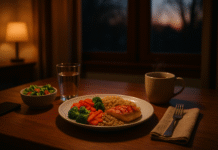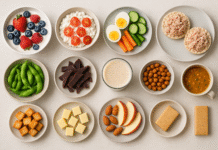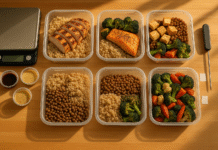





















Snacking for weight loss isn’t about eating less—it’s about eating smart so you stay satisfied while maintaining a calorie deficit. In practice, that means choosing small, intentional mini-meals built around protein, fiber, and lower-energy-density foods, and eating them at times that help you manage hunger. (Quick note: This article is educational, not medical advice. If you have a medical condition or specific nutrition needs, consult a qualified clinician or registered dietitian.)
Fast answer: Snacking for weight loss = planned, protein- and fiber-forward snacks that are portioned and timed to prevent overeating at meals while keeping added sugars and ultra-processed choices in check.
Quick start (5 steps):
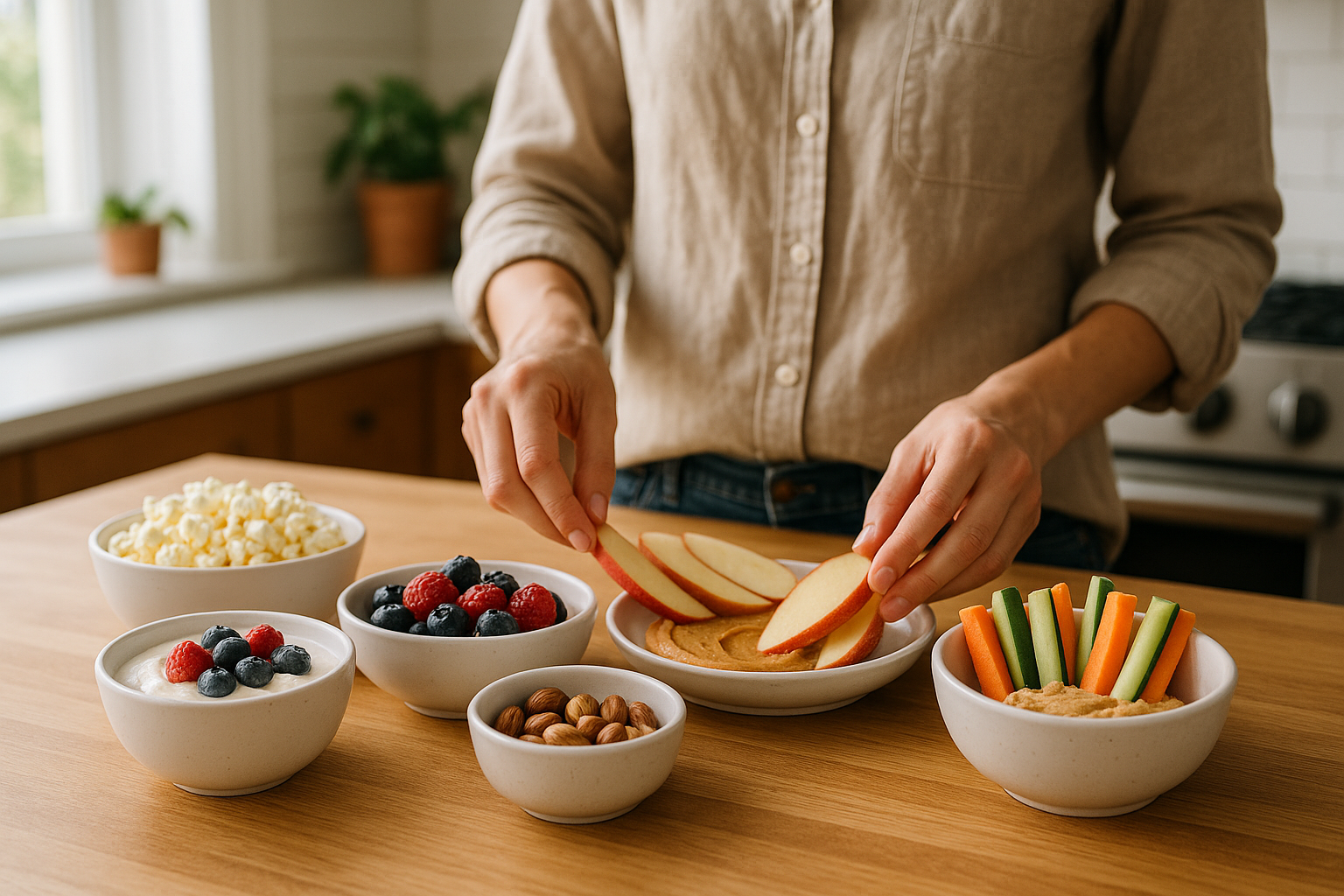
- Pair protein + produce.
- Favor lower-energy-density foods (fruit, veg, soups, popcorn).
- Portion and plate your snack.
- Time it to bridge long gaps (avoid eating close to bedtime).
- Check labels: higher fiber, lower added sugars.
1. Pair Protein + Fiber for Lasting Fullness
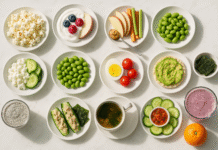
Start by anchoring each snack with a meaningful source of protein and a naturally fiber-rich food. Protein is the most filling macronutrient per calorie, helping moderate hunger hormones and preserve lean mass during weight loss; fiber adds bulk and slows digestion so fullness lasts longer. Together, they create a “satisfy and stay” effect that makes it easier to eat appropriate portions at the next meal. Think Greek yogurt with berries, cottage cheese with pineapple, boiled eggs with cherry tomatoes, tofu skewers with cucumbers, or roasted chickpeas with grapes. This approach isn’t about perfection—just aim for a protein anchor plus plant volume most of the time. If you routinely feel hungry 60–90 minutes after snacking, you likely need a touch more protein, fiber, or both. As of August 2025, research consistently supports higher-protein eating (roughly 1.2–1.6 g/kg/day across meals and snacks) for better satiety and lean-mass preservation during weight management.
1.1 How to do it
- Protein anchors (choose one): Greek yogurt, cottage cheese, eggs, edamame, chickpeas, tuna/salmon, tofu/tempeh, sliced chicken or turkey, soy yogurt.
- Fiber partners (choose one or two): Berries, apples/pears, carrots, cucumbers, bell peppers, cherry tomatoes, whole-grain crackers, popcorn.
- Add “stick-with-you” extras: A few nuts/seeds or a teaspoon of olive oil in dips can extend fullness.
1.2 Numbers & guardrails
- Protein target per snack: 10–20 g is a helpful range for many adults; scale up or down to appetite and daily protein goals. For example, ~170 g (6 oz) nonfat Greek yogurt provides ~17 g protein.
Bottom line: Protein + fiber beats carbs-only snacks for controlling hunger and protecting your calorie budget.
2. Use Low-Energy-Density Foods to Eat More for Fewer Calories
Low-energy-density foods (few calories per gram) let you eat larger, more satisfying portions without overshooting calories—key when your goal is weight loss. Vegetables, most fruits, broth-based soups, and air-popped popcorn are naturally high in water and/or fiber, making them filling at modest calorie cost. Classic research shows that lowering a meal’s energy density—by adding water-rich vegetables or choosing leaner preparations—reduces calorie intake without increasing hunger. It’s the “volumetrics” idea: add volume, not calories. Practically, start snacks with produce (raw veg sticks, fruit) or a small soup; then add your protein anchor. Keep higher-density foods (cheese, nuts) as accents rather than the base. Over time, this pattern lets you feel satisfied on fewer calories, making consistency easier.
2.1 Tools/Examples
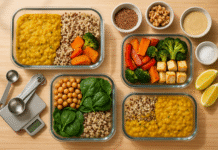
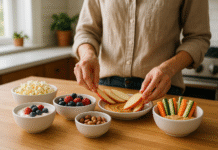
- Veg-forward snack plates: Half plate vegetables, quarter protein, quarter starch (crackers, pita, corn).
- “Volume booster” add-ins: Salsa, sliced cucumbers, lettuce cups, grape tomatoes, broth soups.
- Smart crunchy swaps: Air-popped popcorn, roasted chickpeas, carrots + hummus.
2.2 Mini case
Swapping 1 oz chips (~150–160 kcal) for 3 cups air-popped popcorn (~90–100 kcal) plus baby carrots (~25 kcal) saves ~60–90 kcal while increasing volume and chew time—often translating to better satisfaction. (Energy density concepts and kcal values supported by CDC/peer-reviewed sources.)
Bottom line: Make low-energy-density foods the foundation of snacks, not an afterthought.
3. Pre-Portion and Plate: Outsmart the Package
Portion size powerfully nudges how much we eat—bigger packages and units drive higher intake, even without greater hunger. To protect your goals, pre-portion snacks before you start (small bowls, snack boxes, or single-serve bags), and plate what you plan to eat away from the package. Research shows that reducing portion sizes meaningfully lowers daily energy intake and that larger packages increase snacking; packaging and unit size can nudge both over- and under-eating. You don’t have to micromanage grams; use visual “units” that fit your snack plan—one small tub of yogurt, one piece of fruit, one small handful of nuts in a ramekin, etc. At home, put “snack-ready” containers at eye level and stash family-size bags out of sight. When emotions run high or you’re tired, your future self will thank you for the pre-portioning you did earlier. PMC
3.1 Mini-checklist
- Plate it (don’t eat from the bag).
- Pre-pack 2–3 snack boxes for busy days.
- Use smaller bowls and clear lids so portions feel “complete.”
- Keep veggie sticks and fruit in front; treats in opaque containers.
3.2 Common mistakes
- Buying only family sizes: Great value, tough portions. Re-bag at home.
- “I’ll eyeball it”: We all overpour. A small scoop or scale helps for nuts and trail mix.
Bottom line: Shape the environment so the default portion is the right portion.
4. Time Snacks Strategically (and Avoid Eating Late)
Snacks should bridge long gaps between meals so you arrive at mealtime comfortably hungry—not ravenous. That often means a mid-afternoon protein-and-produce snack to steady appetite before dinner. Evidence on meal frequency and weight is mixed—snacking per se doesn’t automatically cause or prevent weight loss when calories are matched—but timing matters. Rigorous trials show that eating later (vs earlier) can increase hunger, reduce energy expenditure, and shift fat tissue gene expression toward storage, which may add up over time. As a practical rule, finish your last snack at least 2–3 hours before bedtime, and shift more of your intake earlier in the day if late eating fuels overeating. Personalize to your schedule, training, and sleep.
4.1 How to do it
- Plan snack windows (e.g., 11:00 and 4:00) on long workdays.
- If dinner is late, add a 4–5 pm protein + fiber snack to prevent over-ordering.
- For evening cravings, try a hot tea, fiber-rich fruit, or yogurt and call it done.
4.2 Numbers & guardrails
- Keep at least a 2–3-hour food-free buffer before sleep to reduce late-night appetite cascades (as supported by late-eating trials, as of Oct 2022).
Bottom line: Snack on purpose, not by accident—earlier beats later for appetite control.
5. Make Beverages Work for You (Not Against You)
Liquid calories (sodas, sweet teas, fancy coffees) add up quickly and rarely satisfy. Choose low- or no-calorie drinks most of the time—water (still or sparkling), unsweetened tea/coffee, or flavored waters. Dairy or fortified soy milk can be part of a snack, but treat sweetened beverages as occasional treats. If you enjoy fruit juice, pour a small glass and pair it with a protein anchor to slow absorption. Globally, public-health guidance recommends water first and keeping sugary drinks low to support weight management and cardiometabolic health. For many people, simply replacing a daily 12-oz soda with water saves ~140–150 calories—more than many snacks contain.
5.1 Smart sips
- Water or sparkling water with lemon/lime.
- Unsweetened tea or coffee.
- Low-fat milk/fortified soy (watch added sugars in flavored versions).
5.2 Common pitfalls
- “Healthy” smoothies: Portion creep + added sweeteners. Keep portions modest, prioritize protein + whole fruit, skip syrups.
Bottom line: Drink your hydration, not your calories.
6. Read the Label: Fiber Up, Added Sugars Down
A quick label scan can turn a so-so snack into a true helper for your goals. Two lines matter most: Dietary Fiber and Added Sugars. Aim for snacks that provide at least a “good source” of fiber (≥10% Daily Value ≈ ≥2.8 g/serving) from whole foods. Keep added sugars on the low side—many brands now list them clearly. As of August 2025, U.S. guidance recommends <10% of daily calories from added sugars; the WHO recommends <10% (and ideally <5%) of energy from free sugars. You don’t have to hit perfection—just pick the better option in front of you and let those small wins compound.
6.1 Mini-checklist
- Prefer whole-food ingredients you recognize.
- Fiber: look for ≥10% DV per serving (bonus if ≥20%).
- Added sugars: the lower, the better—especially in bars and yogurts.
6.2 Label trap to avoid
- “Fruit-flavored” = added sugars: Check the Added Sugars line; “includes X g added sugars” clarifies what’s added beyond natural sugars.
Bottom line: A 20-second label check saves hundreds of calories each week.
7. Choose Nuts, Seeds, and Yogurt Confidently
Nuts and seeds are calorie-dense—but when eaten in sensible portions, trials show they don’t promote weight gain and can even support better weight outcomes, likely via increased satiety and incomplete fat absorption. Pair a small handful (15–28 g) with fruit or yogurt for crunch and staying power. For dairy eaters, nonfat or low-fat Greek yogurt brings high protein per calorie and pairs easily with fruit and cinnamon for a sweet-leaning snack without heavy added sugars. If sodium is a concern, choose unsalted nuts and plain yogurts, flavoring them yourself. Vegetarian or lactose-free? Try soy skyr-style yogurts or silken-tofu puddings with cocoa and berries. ScienceDirect
7.1 How to do it
- Portion nuts/seeds into small containers (about 1–2 Tbsp or a small palm).
- Greek yogurt base + berries + chia or pumpkin seeds.
- Savory crunch: Roasted chickpeas or edamame instead of chips.
7.2 Common mistakes
- Eating nuts from the bag: Pre-portion.
- Sweetened yogurts: Check Added Sugars and choose plain when possible.
Bottom line: Protein-rich yogurt and portioned nuts/seeds are weight-loss allies, not enemies.
8. Snack Mindfully (Silence the Scroll)
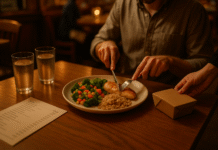
Mindless, distracted snacking—TV, laptop, phone in hand—often leads to higher intake now and more eating later because you miss your own fullness signals. Experiments and meta-analyses show that distraction during eating increases immediate and subsequent intake, whereas eating attentively (noting flavor, texture, satisfaction) reduces overeating. You don’t need a meditation app to benefit—just remove the biggest distraction, sit, and actually taste your food. A two-minute pause halfway through also helps you gauge whether you’re satisfied. If emotional eating drives your snacking, gentle mindful-eating strategies (notice, name, and navigate the feeling) can reduce “urge surfing” without shame.
8.1 Mini-checklist
- Plate it, sit down, and put the phone away.
- Take 3 slow breaths before eating; notice aroma and first bites.
- Mid-snack pause: “Am I satisfied or just chasing flavor?”
8.2 Tools/Examples
- Tea ritual, short walk, or journaling prompt to handle stress cravings.
- Keep a “pause list” on your phone (5 non-food resets you like).
Bottom line: Attention is a powerful portion-control tool you always carry.
9. Build a Personal “Snack System” (Prep, Stock, Stage)
Willpower is unreliable at 4 p.m. Systems aren’t. A simple prep-stock-stage routine makes the better snack the easiest snack. Each week, prep two produce items (e.g., cucumber sticks, washed grapes), stock two proteins (Greek yogurt and eggs; or tofu and edamame), and stage them at eye level in the fridge. Keep single-serve items front and center; stash “sometimes” foods in opaque containers or higher cupboards. Pack a snack box for your bag on busy days so you’re not negotiating with a pastry case later. Over time, small system upgrades beat heroic one-offs and remove guilt from the equation—because your environment does the nudging for you.
9.1 Mini-checklist
- Prep: Wash/portion produce on shopping day.
- Stock: 2 proteins + 2 produce + 1 whole-grain crunch.
- Stage: Eye-level placement for “green-light” snacks; tuck treats away.
9.2 Examples that travel well
- Shelf-stable tuna or salmon + whole-grain crackers.
- Roasted chickpeas, nut/seed packs, or unsweetened soy milk boxes.
Bottom line: Make the right choice the ready choice.
10. Satisfy Cravings with Smart Swaps (Sweet, Salty, Crunchy)
Cravings are normal. The goal isn’t to suppress them but to satisfy them smartly. For sweet, think Greek yogurt with cinnamon and fruit, dark-chocolate-covered almonds (pre-portioned), or a baked apple. For salty/crunchy, try edamame with sea salt, roasted chickpeas, seaweed snacks, or popcorn with nutritional yeast. For creamy, cottage cheese with pineapple or avocado mashed on whole-grain crispbread. If a dessert or chips truly fits your day, portion it, plate it, and pair with protein or produce to blunt the “eat more” cascade. Over time, repeated wins rewire “guilty snack” stories into “I know how to make this work” confidence.
10.1 Mini-checklist
- Name the craving (sweet, salty, crunchy, creamy).
- Pair with protein/produce.
- Portion and enjoy without apology.
10.2 Numbers & guardrails
- Keep any high-sugar add-ins modest; remember Added Sugars guidance (<10% of calories, as of 2025). CDC
Bottom line: You don’t need perfection—just better versions most of the time.
11. Localize Your Snack List (Make It Culturally Easy)
Lean into foods you actually enjoy and can find easily—then tweak portions and pairings. Examples many readers will recognize: roasted chana (chickpeas) with sliced cucumbers; unsalted mixed nuts with dates (1–2 dates, not a handful); dahi (plain yogurt) with fruit and a sprinkle of chia or flax; grilled kebab lettuce wraps; boiled eggs with spice and lemon; air-fried pakora with yogurt dip; masala corn in a small bowl with extra veg. Use the same principles: protein anchor, fiber-rich partner, plate the portion, and keep sugary or fried elements as accents. Cultural fit = consistency—your most effective plan is the one you’ll repeat on autopilot.
11.1 Mini-checklist
- Map favorite flavors to lighter formats.
- Keep spice blends handy to boost satisfaction.
- Pair traditional items with produce; mind the oil and sugary chutneys.
11.2 Example plate
- 1 boiled egg + ½ cup dahi with sliced cucumber and tomato + small handful roasted chana.
Bottom line: Culture is an asset, not a barrier—apply the same smart-snacking rules to the foods you love.
12. Define Your Snack Budget (and Adjust by Feedback)
You don’t need to count every calorie to be intentional. Sketch a snack budget that fits your day. Example: If your meals are ~450 kcal each and your maintenance is ~2,000 kcal, you have ~650 kcal “flex.” Allocate two snacks of ~200–300 kcal each, or one larger mini-meal if that suits you. Use feedback loops: If evening hunger is intense, move more calories earlier; if you’re never hungry for dinner, shrink the afternoon snack slightly. Over weeks, your energy, hunger, and progress will tell you whether to add or subtract. The goal is satisfaction that fits the plan, not rigid rules—so guilt never needs to enter the chat.
12.1 Mini-checklist
- Decide how many snacks you prefer most days.
- Allocate rough calories (or simple portion rules).
- Review weekly: energy, hunger, adherence, progress.
12.2 Numeric example
- 1 yogurt + berries (~180–220 kcal), 1 popcorn + edamame plate (~180–250 kcal) = ~360–470 kcal. Adjust portions to appetite and goals.
Bottom line: A loose budget + weekly tweaks beats “winging it” or rigid restriction.
FAQs
1) Is snacking bad for weight loss?
No. Snacking is neutral—it can help or hinder depending on what and when you eat. Controlled analyses suggest meal/snack timing and quality matter more than frequency per se. Planned, protein- and fiber-forward snacks reduce overeating later; unplanned, ultra-processed grazing tends to raise calories.
2) How late is “too late” to snack?
There’s no magic hour, but eating close to bedtime can increase hunger signals and reduce energy expenditure in controlled studies. As a practical rule, leave 2–3 hours food-free before sleep, and shift more intake earlier if late eating triggers overeating for you.
3) What’s a good protein goal for weight-loss snacks?
Many adults find 10–20 g protein per snack helps. Across the day, evidence supports higher-protein intakes (~1.2–1.6 g/kg/day) for satiety and lean-mass preservation during weight loss. Distribute protein across meals and snacks to make this easier.
4) Do nuts make you gain weight?
Not when portioned. Meta-analyses of nut-feeding trials show no weight gain and potential benefits for weight management, likely from satiety and incomplete fat absorption. Use small portions (15–28 g) and pair with produce.
5) What about yogurt vs. cottage cheese?
Both are protein-rich. Greek yogurt is often lower in lactose and may include probiotics; cottage cheese can provide slightly more protein per serving but watch sodium. Choose plain versions and add fruit or veg. (Check labels for Added Sugars.)
6) How do I read the label fast?
Scan Added Sugars (lower is better) and Fiber (aim ≥10% DV per serving). U.S. labels list Added Sugars; as of 2025, guidance recommends keeping added sugars under 10% of calories; WHO suggests <10% and ideally <5% of energy from free sugars.
7) Are “natural” snack bars healthy?
It depends. Many are high in added sugars (syrups, juices). Prefer bars with more protein and fiber and fewer sweeteners, or make whole-food snack plates (yogurt + fruit; hummus + veg). Check the label’s Added Sugars line. U.S. Food and Drug Administration
8) Will popcorn derail weight loss?
Air-popped popcorn is low-energy-density and fiber-rich, making it a smart crunchy snack—provided you go easy on butter and sugar. Measure portions (e.g., 2–3 cups) and add a protein alongside if you’re very hungry. IIAB Med
9) Do I need to count calories to snack “right”?
No. Some people like numbers; others prefer structures: protein anchor + produce, portioned and plated, at planned times. If progress stalls, briefly track to troubleshoot, then return to your structure.
10) Can mindful eating really help with snacking?
Yes—paying attention during eating reduces distracted overconsumption and can improve regulation of hunger and fullness. Even simple steps (device-free, pause mid-snack) help.
Conclusion
Snacking for weight loss isn’t a morality play—it’s logistics. The winning pattern is simple: protein + fiber, lower energy density, portion and plate, time it well, and keep added sugars in check. You don’t have to overhaul your life or white-knuckle cravings; you only need a snack system that makes the better choice the easy choice. Start with one or two changes—pair your snack with produce, pre-portion nuts, or move your last snack earlier—and let small wins stack. As your environment gets dialed in and your snacks become more intentional, guilt fades, consistency rises, and results follow. Ready to make it real? Pick one tip above and apply it to today’s snack—then repeat tomorrow.
CTA: Save this guide, choose your protein + produce combo, and plate your next snack in under five minutes.
References
- Vujović N, et al. Late isocaloric eating increases hunger, decreases energy expenditure, and modifies metabolic pathways in adults with overweight and obesity. Cell Metabolism. Oct 2022. Cell
- Nunes EA, et al. Systematic review and meta-analysis of protein intake to support healthy adults across the lifespan. Nutrients. 2022. PMC
- Moon J, Koh G. Clinical Evidence and Mechanisms of High-Protein Diet for Weight Loss. J Obes Metab Syndr. 2020. PMC
- Ello-Martin JA, et al. A year-long trial comparing two weight-loss diets—low-energy-density vs. low-fat. Am J Clin Nutr. 2007. PMC
- Rolls BJ. The relationship between dietary energy density and energy intake. Am J Clin Nutr. 2009. PMC
- Haynes A, et al. Reductions to main meal portion sizes reduce daily energy intake. Int J Behav Nutr Phys Act. 2020. BioMed Central
- Steenhuis IHM, Vermeer WM. Portion size: review and framework for interventions. Int J Behav Nutr Phys Act. 2009. PMC
- Reister EJ, et al. Snack package size and variety differentially influence snacking behavior. Int J Environ Res Public Health. 2022. PMC
- FDA. Added Sugars on the Nutrition Facts Label. Updated Mar 2024. U.S. Food and Drug Administration
- WHO. Guideline: Sugars intake for adults and children. 2015 (summaries updated 2023). and https://www.who.int/tools/elena/interventions/free-sugars-adults-ncds World Health Organization
- Guarneiri LL, et al. Intake of nuts or nut products does not lead to weight gain: a systematic review and meta-analysis of trials. Curr Dev Nutr. 2021. PubMed
- Robinson E, et al. Eating attentively: a systematic review and meta-analysis of the effect of food intake memory on later eating. Am J Clin Nutr. 2013. PMC
- USDA MyPlate. Healthy Snacking with MyPlate (Tip Sheet). 2022. and MyPlateMyPlate
- MyFoodData (USDA-based). Nutrition facts: Nonfat Greek Yogurt (per ~170 g). Accessed 2025. My Food Data
- CDC. Healthy eating tips & water/healthy drinks. 2023–2024. and https://www.cdc.gov/healthy-weight-growth/water-healthy-drinks/index.html CDC
- Schwingshackl L, et al. Impact of meal frequency on anthropometric outcomes: systematic review & network meta-analysis. Adv Nutr. 2020. PMC