



























Ending the day with a calm, nourishing dinner sets the tone for better sleep, steadier energy, and fewer late-night cravings. This guide distills mindful eating into practical, repeatable steps you can use tonight—without calorie counting or complicated rules. You’ll learn how to time dinner, build a balanced plate, eat without distractions, and close the kitchen with confidence. Brief reminder: the ideas below are educational, not medical advice. If you live with a health condition (e.g., diabetes, digestive disorders), tailor these steps with a qualified clinician.
In one line: Mindful dinner rituals are repeatable habits that help you eat intentionally—what you need, no more—so you finish the day nourished and ready for restorative sleep.
Quick-start checklist (skim this if you’re short on time): Set a consistent dinner window, plate half vegetables, start with two minutes of slow breathing, go screen-free, lead with veg and protein, portion intentionally, hydrate smartly, protect the social ritual, and finish with a 10–20-minute easy walk before closing the kitchen.
1. Lock a Consistent Dinner Window (3–4 Hours Before Sleep)
Anchoring dinner to a predictable window reduces late-night grazing and helps your body align meals with its natural rhythm. In practice, this means finishing dinner about three to four hours before bedtime so your body has time to digest before sleep. A consistent window also simplifies appetite cues: you begin dinner actually hungry—not ravenous—and you end it satisfied without tipping into a post-meal slump. While exact timing is personal, tightening your window (e.g., 7:00–7:45 p.m.) keeps weeknights simpler and helps you notice patterns, like when a later meal disrupts sleep or triggers heartburn.
1.1 Why it matters
- A later, heavier evening meal can increase hunger the next day and alter metabolic responses; aligning food intake earlier supports more stable energy and sleep quality.
- Predictable timing reduces “decision fatigue” and makes mindful eating easier because you’re not negotiating every night.
- For families, a consistent window improves participation and helps kids anticipate the routine.
1.2 How to do it
- Back-plan from bedtime: If lights out is 11:00 p.m., target finishing dinner by 7:30–8:00 p.m.
- Pick a 45–60-minute serving window: Example: 7:00–7:45 p.m. Monday–Thursday; 7:30–8:15 p.m. Friday–Sunday.
- Schedule prep: Set a recurring reminder 30 minutes before cooking to start chopping/boiling.
- Define a last-call snack rule: If truly hungry later, limit to a small protein-rich option (e.g., yogurt or a boiled egg).
1.3 Numbers & guardrails
- Most adults sleep better with ≥3 hours between the last bite and bedtime.
- If your culture or work pushes dinner later, shrink portions and emphasize vegetables and lean protein to reduce heaviness.
Region note (South Asia): If dinner is commonly after 9 p.m., aim to finish by ~10 p.m. and keep it lighter—e.g., daal, grilled fish, and salad with one roti—then take a short stroll.
Synthesis: A consistent dinner window is the foundation for every other ritual; it’s the single choice that makes dozens of later choices easier.
2. Build a Balanced Plate: Half Vegetables, Quarter Protein, Quarter Whole Grains/Starch
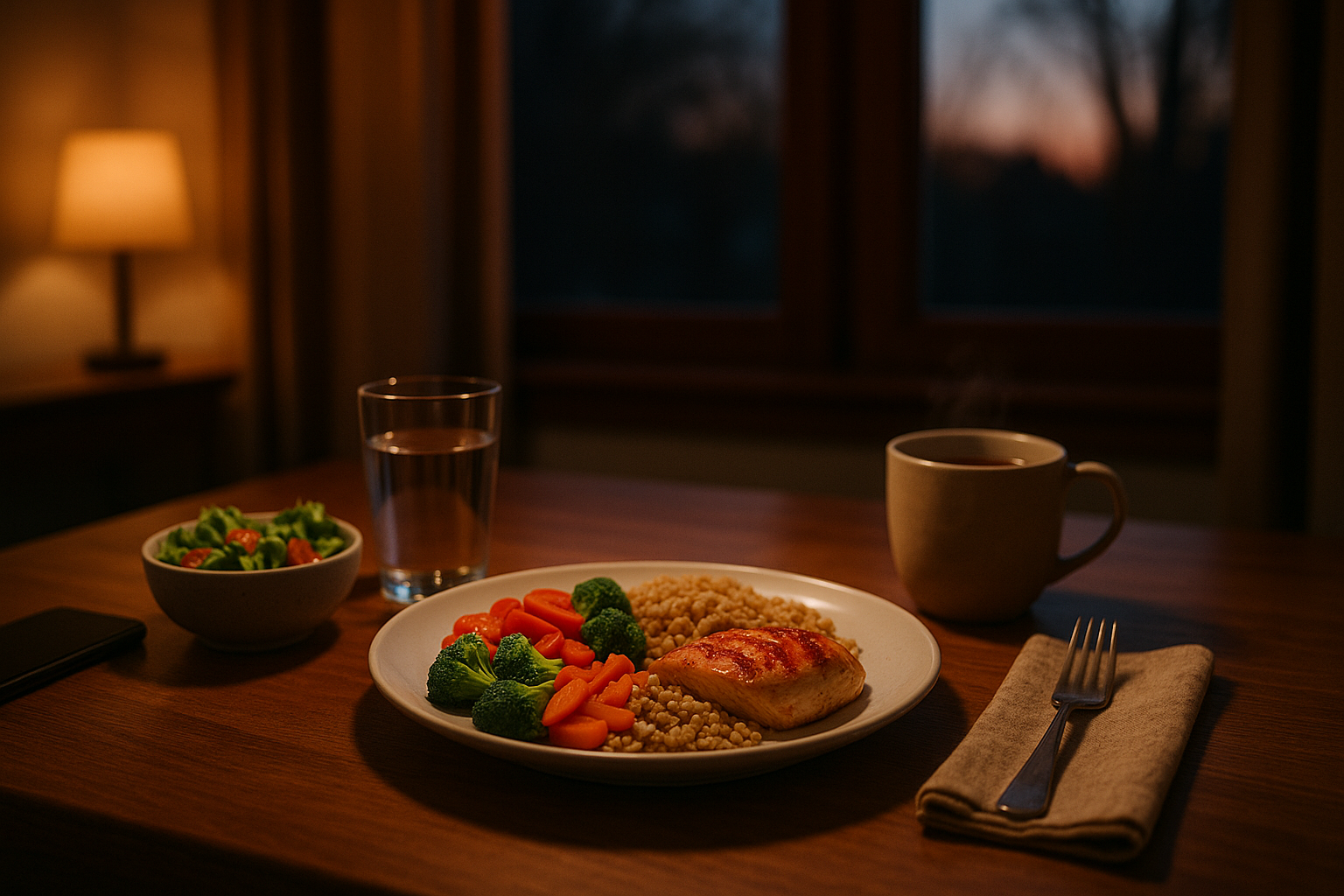
The simplest way to make dinner both mindful and satisfying is to standardize the plate structure: half vegetables, one-quarter lean protein, one-quarter whole grains or starchy veg, plus healthy fats. This pattern delivers fiber, volume, and nutrients without micromanaging calories. It also trims post-meal sluggishness by avoiding an oversized starch portion. Think of the plate as a visual flowchart—once you see the half/quarter/quarter map, your grocery list and weeknight choices become straightforward.
2.1 How to do it
- Vegetable half: Roast, sauté, steam, or salad—aim for 2+ cups cooked or raw non-starchy veg.
- Protein quarter: Palm-sized portion of beans, tofu, eggs, fish, chicken, or lentils (about 20–40 g protein depending on needs).
- Whole-grain/starch quarter: Brown rice, quinoa, whole-wheat roti, potatoes, corn, or millet—fist-sized portion.
- Add fats smartly: 1–2 tsp olive oil, a small handful of nuts/seeds, or avocado slices.
- Flavor keys: Citrus, herbs, garlic, chiles—big flavor without excess sugar/salt.
2.2 Mini examples
- Mediterranean: Lemon herb salmon, farro, and a large Greek-style salad with olives.
- South Asian: Masoor daal, one whole-wheat roti, cucumber-tomato-onion kachumber, and sautéed okra.
- Plant-forward: Tofu-broccoli stir-fry, brown rice, and a side of sesame-ginger slaw.
2.3 Mini-checklist
- Is half the plate non-starchy veg?
- Do I see a clear protein?
- Is the starch portion one quarter—not half—the plate?
Synthesis: The plate method operationalizes “eat a balanced dinner” into a picture you can plate in five minutes—no tracking apps needed.
3. Begin With Two Minutes of Slow Breathing and a Pause
A mindful pause calms the nervous system, improves interoception (awareness of hunger/fullness), and sets a calmer eating tempo. When you’re keyed up from the day, your brain craves fast comfort; slowing down breaks the autopilot loop that leads to overeating. Two minutes of slow nasal breathing (about 6–8 breaths) and a quick check-in—“How hungry am I? What do I need?”—primes you to taste your food and notice satiety sooner. This ritual is short enough to be doable nightly yet potent enough to change the entire meal’s pace.
3.1 How to do it
- Sit, feet on floor, shoulders down. Inhale for 4–5 seconds, exhale for 5–6. Repeat for two minutes.
- Notice signals: Stomach emptiness, mouthwatering, mental tension.
- Set one intention: E.g., “Fork down between bites,” or “Half plate veggies first.”
- Gratitude beat: One sentence of thanks—to the cook, the farmers, the day.
3.2 Mini-checklist
- Did I take two minutes before the first bite?
- Do I have a single eating intention for this meal?
- Are distractions (TV/phone) off?
3.3 Pitfalls
- Treating the pause as optional; it’s the on-ramp to mindfulness.
- Using the pause to judge yourself; keep it neutral and curious.
Synthesis: A two-minute pause costs almost nothing and reliably shifts dinner from “reactive refuel” to “restorative ritual.”
4. Eat Screen-Free to Protect Appetite Awareness (and Enjoyment)
Screens divide attention and weaken memory of what and how much you ate, which often leads to overeating later. A quick clip or endless scroll sounds harmless, but even mild distraction reduces sensory cues—texture, aroma, satiety—so the meal becomes background noise. Screen-free dining is not about perfection; it’s about placing eating back in the spotlight for 20–30 minutes. Couples and families also tend to talk more when devices are parked away, which can increase satisfaction independent of the food itself.
4.1 How to do it
- Create a device dock outside the dining area; silence notifications.
- Put the TV on pause; if music helps, play audio only.
- Make the table inviting: Water poured, plates set, simple centerpiece.
- If you must be alone: Read a short printed page between bites instead of scrolling.
4.2 Mini case
- Before: Dinner with TV on → mindless seconds → snack at 10:30 p.m.
- After (screen-free): Same menu, no TV → ate slower, stopped at satisfied → no late snack.
4.3 Mini-checklist
- Devices docked and silenced?
- Can I describe three flavors or textures from the first five bites?
- Did I notice the moment I moved from hunger to “just enough”?
Synthesis: Protect 20–30 undistracted minutes and you often need fewer calories for the same—or greater—satisfaction.
5. Lead With Vegetables and Protein to Steady Appetite and Energy
Starting the meal with vegetables and protein helps you feel full on fewer calories and can blunt sharp blood-sugar swings. The fiber and water in vegetables add volume, while protein slows gastric emptying and supports post-meal satiety. Practically, that looks like a small salad or veg soup first, or taking a few bites of the protein and veg before touching the starch. This isn’t a rule—it’s a steering cue that emphasizes the parts of dinner that do the most hunger control at the least energy cost.
5.1 How to do it
- Serve a veg starter: Brothy soup, mixed salad, or crudités with yogurt dip.
- Protein first: Take 4–6 mindful bites of fish, tofu, chicken, eggs, or lentils before starch.
- Starch last: Enjoy it, just after veg/protein have a head start.
- Flavor boosters: Vinegar-based dressings, citrus, herbs—big taste without heavy sauces.
5.2 Numbers & guardrails
- Target 20–40 g protein at dinner depending on body size and activity.
- Aim for 8–12 g fiber across the day at dinner if possible (vegetables, legumes, whole grains).
- Sensitive stomach? Keep raw veg modest; choose cooked veg/soups first.
5.3 Mini example
- South Asian plate: Start with cucumber-onion-tomato salad and daal, then add rice or roti.
- Mediterranean plate: Start with a small lentil soup or Greek salad, then fish, then farro.
Synthesis: Front-loading veg and protein is a gentle sequencing trick that supports steadier energy and natural portion control.
6. Portion Intentionally: Plate Once, Pre-Commit, and Pack Leftovers Early
Mindful eating still benefits from simple structure. Plating once (rather than family-style grazing) helps you see a complete meal and decide, “This is enough for me.” Pre-committing to your portion also makes seconds a conscious choice rather than a reflex. If you tend to nibble after dinner, packing leftovers before you sit down creates a natural off-switch—what’s away is out of mind. None of this requires measuring; it’s about upfront decisions that reduce friction later.
6.1 How to do it
- Plate in the kitchen: Half veg, quarter protein, quarter starch; bring only salad and water to the table.
- Use home “hand cues”: Palm-sized protein, fist-sized starch, two fists of veg.
- Pre-portion extras: If serving family-style, place a measured bowl of veg on the table and keep mains on the counter.
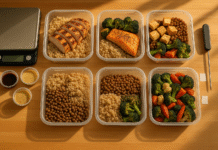
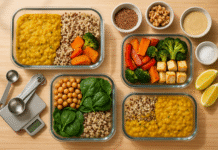
- Pack leftovers immediately: Into containers before eating; label tomorrow’s lunch.
6.2 Pitfalls & fixes
- Big plates = big servings: If helpful, use 9–10-inch dinner plates for everyday meals.
- Seconds by inertia: Set a 10-minute pause before any second helping.
- All-or-nothing thinking: You can always add two mindful bites if still hungry.
6.3 Mini-checklist
- Did I plate once and pre-commit?
- Leftovers packed before the first bite?
- Did I pause before seconds?
Synthesis: Portioning upfront converts mindfulness from an intention into a built-in design feature of the meal.
7. Hydrate Smartly and Right-Size Dessert
Drinking water or unsweetened tea with dinner supports hydration and helps you slow down between bites. Overly sweet drinks add calories without satiety, while late caffeine can compromise sleep quality. If dessert is part of your routine, keep it intentional and modest: think fruit, yogurt, or a small square of dark chocolate instead of a large pastry. You’re not banning treats; you’re choosing the size and timing that fit an evening wind-down, not a sugar rush.
7.1 How to do it
- Drink water first: A full glass at the start of dinner.
- Choose low-sugar beverages: Unsweetened iced tea, sparkling water with citrus, warm herbal blends.
- Set a caffeine curfew: Many people sleep better with no caffeine after mid-afternoon.
- Right-size dessert: Fruit + yogurt, date with nut butter, or a 25–30 g piece of dark chocolate.
7.2 Numbers & guardrails
- Added sugars are best kept within recommended daily limits; a small dessert can fit if the rest of dinner is balanced.
- If reflux is an issue, avoid mint tea, chocolate, and heavy desserts late at night.
- For athletes or those underweight, dessert can be a strategic calorie add—favor yogurt, fruit, nuts.
7.3 Mini-checklist
- Water poured and on the table?
- Sweet drinks swapped for unsweetened options?
- Dessert chosen before dinner so you right-size portions?
Synthesis: Thoughtful drinks and a planned, modest dessert keep dinner satisfying without sabotaging sleep or appetite tomorrow.
8. Make Dinner a Social Ritual: Conversation, Gratitude, and Shared Tasks
Dinner is more than nutrients; it’s a daily anchor for connection. Shared meals are linked with higher diet quality in families and can reduce stress by creating a predictable moment to regroup. Even if you live alone, you can manufacture connection by inviting a friend once a week, calling someone before you eat, or journaling one gratitude line. Shared tasks—one cooks, one sets the table, one washes dishes—spread the effort so dinner feels sustainable on busy weeks.
8.1 How to do it
- Open with a “rose, thorn, bud”: One good thing, one challenge, one thing you’re looking forward to.
- Phones face-down: Keep the conversation front and center.
- Rotate roles: Cook, set, clear—everyone participates.
- Solo diners: Light a candle, play soft music, and write a single gratitude sentence.
8.2 Family rhythm ideas
- Theme nights: Lentil Monday, Fish Wednesday, Leftover Friday—reduces decision fatigue.
- Kid involvement: Let children toss salad or plate veggies; ownership improves acceptance.
- Community table: Monthly potluck with neighbors/friends; keep it simple.
8.3 Mini-checklist
- Did we talk for at least 10 minutes?
- Did everyone have a small job?
- What’s one thing we appreciated about the meal or each other?
Synthesis: Protecting the social dimension of dinner makes mindful eating easier because the meal feels meaningful—not just utilitarian.
9. Close the Kitchen: Light Walk, Quick Tidy, Tomorrow Prep
An intentional end-cap prevents mindless evening nibbling. A 10–20-minute relaxed walk can aid digestion and gently improve post-meal blood sugar, especially after carbohydrate-rich dinners. A five-minute tidy (stack dishes, wipe counters) clears visual cues that trigger grazing later. Finally, prepping tomorrow’s breakfast or lunch—soaking oats, washing greens, portioning fruit—turns the leftover energy of dinner into a head start for the next day. Tooth brushing is a surprisingly strong “kitchen closed” cue.
9.1 How to do it
- Take a light walk within 30 minutes of finishing dinner; keep it conversational.
- Tidy in five: Load dishwasher, wipe surfaces, put snacks out of sight.
- Prep tomorrow: Portion leftovers, pack a lunch box, soak oats, or set out the pan.
- Brush teeth: Signals the end of eating.
9.2 Mini example
- Timeline: Done eating 8:00 → walk 8:10–8:25 → dishes 8:30–8:35 → prep oats and greens 8:35–8:40 → brush teeth 9:00.
- Result: No grazing; easier bedtime; smoother morning.
9.3 Mini-checklist
- Walked at least 10 minutes?
- Counters cleared and leftovers packed?
- Tooth brushed to close the kitchen?
Synthesis: A short walk and a tidy finish slam the door on “accidental” calories and tee up a calmer tomorrow.
FAQs
1) What exactly are “mindful dinner rituals”?
They’re small, repeatable habits that make dinner calmer and more intentional—timing, plate structure, distraction control, and a defined end-cap. The point isn’t perfection; it’s removing friction so you naturally eat the right amount. When you focus on routines you can repeat (not rules you break), your default dinner becomes balanced, satisfying, and sleep-friendly.
2) I can’t eat 3–4 hours before bed—my schedule runs late. What’s the best adjustment?
Shrink the meal and emphasize vegetables and lean protein, keeping starch modest. Finish eating at least 2 hours before sleep if possible, then take a brief stroll. If late dinners are the norm where you live, consistency matters more than clock time: pick a steady window and stick to it most nights.
3) Do I need to count calories or weigh food to eat mindfully?
No. Use the plate method (half veg, quarter protein, quarter whole grains/starch) and hand cues (palm protein, fist starch, two fists veg). Those visual guides deliver balanced energy without math. If you have medical or performance goals with tight targets, you can layer tracking later.
4) Is dessert “allowed” on a mindful plan?
Yes—when it’s deliberate and right-sized. Decide before dinner what dessert will be (e.g., fruit and yogurt or a small square of dark chocolate). The pre-commitment prevents “dessert drift,” where you unconsciously expand portions or add extra sweets.
5) I eat alone—how do I keep dinner from feeling like a chore?
Create a ritual: light a candle, put on calming music, and write one gratitude line in a notebook. Consider phoning a friend before you eat or scheduling a weekly shared meal. Even small cues increase satisfaction and reduce the urge to distract yourself with screens.
6) Are “healthy” drinks with dinner helpful?
Water is the default. Unsweetened tea or sparkling water works well; avoid adding lots of sugar. If caffeine disrupts your sleep, set a mid-afternoon cutoff. Alcohol can fragment sleep and boost appetite for salty/sweet foods, so keep it modest or skip it on weeknights.
7) What’s the fastest way to make weeknight dinners more nutritious?
Standardize the plate template and pre-chop or pre-cook two vegetables every weekend. Keep canned beans, eggs, frozen vegetables, and whole grains on hand. With these building blocks, you can assemble a balanced dinner in 10–15 minutes without a recipe.
8) How do I stop going back for seconds?
Plate once in the kitchen and pack leftovers before you sit down. During the meal, take a 10-minute pause before considering more. Ask, “Am I still hungry for protein and vegetables—or just for more starch or sweetness?” Often you’ll discover satisfaction has already arrived.
9) Does a short walk after dinner really help?
A relaxed 10–20-minute walk can aid digestion and modestly improve post-meal glucose, particularly after higher-carb dinners. Keep the pace easy and conversational; the goal is gentle movement, not a workout that revs you up before bed.
10) How can families with picky eaters use these rituals?
Offer a “safe” food at each meal (e.g., rice or roti) and keep pressuring low. Involve kids in one task—washing greens or tossing salad. Use theme nights to cut negotiation and build predictability. Over time, exposure and participation tend to expand acceptance.
Conclusion
Mindful dinner rituals aren’t about rigid rules; they’re about designing your evenings so the default choice is the better choice. When you lock a consistent window, plate half vegetables, pause to breathe, and eat without screens, you get full on real food rather than noise. Sequencing veg and protein first, portioning once, and choosing smart drinks and modest desserts make it easy to stop at “just enough.” The social ritual—conversation, gratitude, shared tasks—adds meaning so dinner feels restorative. And closing the kitchen with a short walk, quick tidy, and a tooth-brushing cue prevents the “snack spiral” that can derail sleep. Pick two rituals to implement tonight, add one more next week, and let the routine compound.
Copy-ready next step: Choose your dinner window for this week and write it on your calendar—then set a reminder 30 minutes before that window to start cooking.
References
- Dietary Guidelines for Americans, 2020–2025 — U.S. Departments of Agriculture and Health and Human Services; December 2020. https://www.dietaryguidelines.gov/
- Healthy Eating Plate — Harvard T.H. Chan School of Public Health; page updated 2024. https://www.hsph.harvard.edu/nutritionsource/healthy-eating-plate/
- Sutton EF, Beyl R, et al. Early Time-Restricted Feeding Improves Insulin Sensitivity, Blood Pressure, and Oxidative Stress Even Without Weight Loss — Cell Metabolism; July 2018. https://doi.org/10.1016/j.cmet.2018.04.010
- Scheer FAJL, Kelly EE, et al. Late Isocaloric Eating Increases Hunger, Decreases Energy Expenditure, and Modifies Metabolic Pathways in Adults — Proceedings of the National Academy of Sciences; October 2022. https://www.pnas.org/doi/10.1073/pnas.2214627119
- Mindful Eating — Harvard Health Publishing; June 2023. https://www.health.harvard.edu/staying-healthy/mindful-eating
- Robinson E, Aveyard P, et al. Eating Attentively: A Systematic Review and Meta-Analysis of the Effect of Food Intake Memory and Awareness on Later Eating — Appetite; September 2013. https://doi.org/10.1016/j.appet.2013.07.008
- The Diabetes Plate Method — Centers for Disease Control and Prevention (CDC); updated 2024. https://www.cdc.gov/diabetes/managing/eat-well/meal-plan-method.html
- Shukla AP, Iliescu RG, et al. Food Order Has a Significant Impact on Postprandial Glucose and Insulin Levels — Diabetes Care; July 2015. https://doi.org/10.2337/dc14-2751
- How Much Sugar Is Too Much? — American Heart Association; September 2023. https://www.heart.org/en/healthy-living/healthy-eating/eat-smart/sugar/how-much-sugar-is-too-much
- The Importance of Family Meals — American Academy of Pediatrics (HealthyChildren.org); August 2022. https://www.healthychildren.org/English/family-life/family-dynamics/Pages/The-Importance-of-Family-Meals.aspx