




















Mindful snacking means choosing and eating snacks with awareness—on purpose, not on autopilot—so you feel satisfied without overeating. It combines two ideas: (1) paying attention to hunger, fullness, and taste, and (2) shaping portions, ingredients, and timing to fit your goals. This guide distills mindful snacking into 12 practical rules you can use immediately at home, at work, and on the go. It’s educational—not medical advice. If you manage a condition such as diabetes or an eating disorder, personalize these ideas with your clinician or a registered dietitian.
In a hurry? Here’s the mindful-snacking snapshot you can start today:
- Pause for 10–20 seconds before eating; name your hunger (true hunger, habit, stress, or thirst).
- Portion first, then eat: plate or bowl every snack.
- Build a “P+F+V” snack (Protein + Fiber + Veg/Fruit).
- Sit down, slow down, and give the first 3 bites full attention.
- Stop at a comfortable 6–7/10 fullness and save the rest.
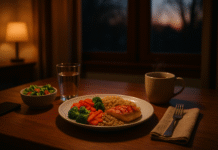
- Log quick notes (what, why, how much) for a week to learn your patterns.
1. Pause Before You Snack: Name the Need
Pausing before a snack is the fastest way to turn intention into action. In the first 10–20 seconds, you’re checking whether you’re physically hungry, just bored, stressed, thirsty, or simply responding to a cue (like seeing food). This micro-pause interrupts autopilot, helps you choose the right food and amount, and often reduces overeating. A simple tool is the Hunger–Fullness Scale (1–10): snack around a 3–4 (stomach starting to feel empty, energy dipping) and stop near a 6–7 (comfortably satisfied, not stuffed). The pause also lets you plan: Will a protein + fiber option keep you satisfied until your next meal? Would a glass of water first help? By naming the need, you match the snack to the job—fuel, comfort, or a brief break—and you’ll feel better afterward.
1.1 How to do it
- Breathe in for 4, hold 2, out for 6; then ask, “What do I need right now?”
- Rate hunger (1–10). If ≤2, start with water or tea and recheck in 10 minutes.
- Decide on a purpose: energy, recovery, or taste enjoyment.
- Pick a portion that fits the purpose (see Rule 3 for guardrails).
- Sit down and give the first 3 bites your full attention.
1.2 Numbers & guardrails
- Hunger start point: 3–4/10; stop point: 6–7/10.
- If it’s stress or boredom, try a 5-minute alternative (walk, stretch, message a friend) and reassess.
Synthesis: A 20-second pause is the lowest-effort habit that turns snacking from reflex to intention.
2. Portion First, Then Eat
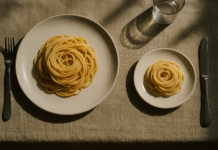
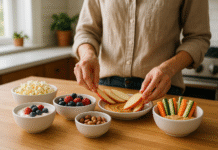
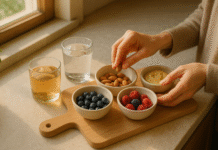
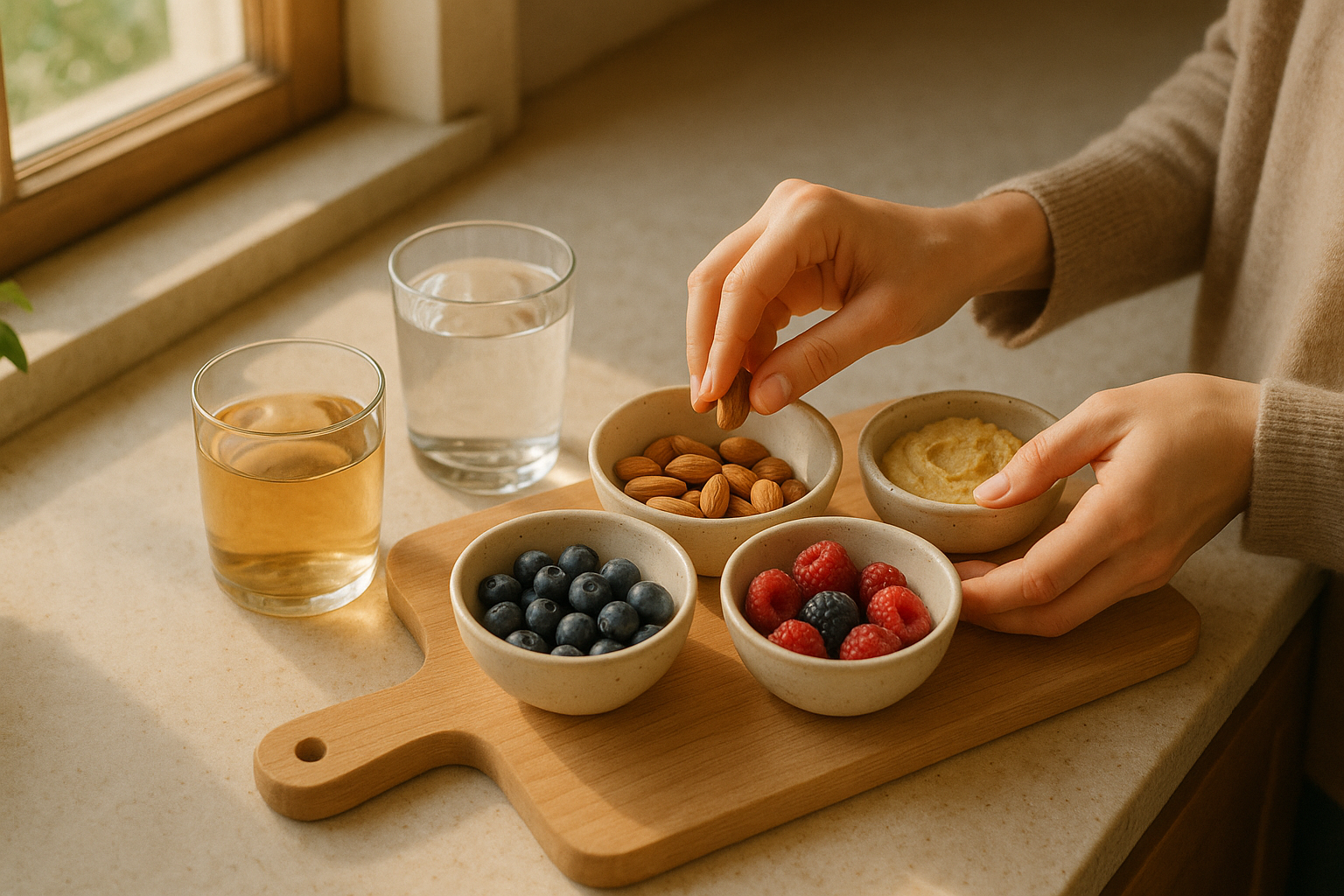
Portioning before you take a bite is the simplest structural fix for overeating. Packages are designed for convenience, not your needs, and “hand-to-bag” eating makes it hard to notice how much you’ve had. By pre-portioning into a small bowl, ramekin, or bento compartment, you create a natural stopping point and make it easy to save the rest. This doesn’t require a scale (though one can help); visual anchors—like a small bowl for nuts or a ramekin for dips—are enough. Portioning first also reinforces your intention: you chose this amount on purpose. If you want more, you can always decide again, rather than sliding into mindless refills.
2.1 Tools & examples
- Small bowls (150–250 ml) for nuts, granola, or chocolate.
- Ramekins (60–120 ml) for hummus, guac, nut butter.
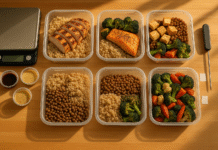
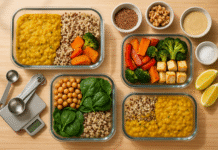
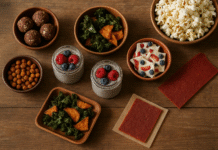
- Bento boxes to separate protein, veg/fruit, and carbs.
- Zip bags (snack size) for on-the-go pre-portions.
- Keep a measuring cup (½ cup) handy for cereals/popcorn.
2.2 Mini-checklist
- Pour → plate → put package away.
- Sit to eat (no standing at the counter).
- Ask at halfway: “Still hungry or just finishing?”
- Save leftovers in a clear container at eye level.
Synthesis: Portioning ahead makes stopping natural and guilt-free—because the choice was yours from the start.
3. Build Satisfying Snacks with Protein + Fiber + Produce
Satisfaction—not restriction—is the engine of portion control. Pairing protein and fiber with a vegetable or fruit blunts rapid hunger return, steadies energy, and supports smaller portions. Protein slows digestion and supports fullness; fiber adds volume and promotes satiety; produce contributes water and micronutrients with relatively low energy density. Aim for a snack that feels substantial enough to carry you 2–4 hours without triggering a crash.
3.1 How to build it (P+F+V)
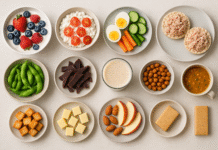
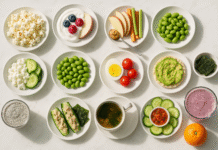
- Protein (about a palm or 10–20 g): yogurt, cottage cheese, eggs, edamame, tofu, chicken, tuna, milk.
- Fiber source (3–6 g): whole-grain crackers, oats, beans, chia, raspberries, popcorn.
- Veg/Fruit (1 cup / 150–200 g): carrots, cucumbers, cherry tomatoes, apples, berries, citrus.
3.2 Quick combos
- Greek yogurt + berries + 1 tbsp chia.
- Hummus + sliced peppers + whole-grain crackers.
- Apple slices + peanut butter (1 tbsp) + cinnamon.
- Edamame + orange + a few whole-grain pretzels.
Synthesis: When a snack is built for satiety, portions shrink themselves because you actually feel done.
4. Use Energy Density to Your Advantage
Energy density is calories per gram of food. Lower energy-dense foods (think vegetables, fruits, broth-based soups, air-popped popcorn) provide more volume for fewer calories, making smaller portions feel larger. Strategically leading with low energy-dense foods helps you control portions without white-knuckling hunger. It’s not about labeling foods “good” or “bad”—it’s about sequencing and balance.
4.1 How to apply it
- Lead with a crunchy veg/fruit (1 cup) before higher-density items.
- Add water-rich sides: salsa, cucumber, citrus, broth-based soup.
- “Popcorn principle”: 3 cups air-popped as a base, then add a small portion of nuts or seeds.
4.2 Numeric example
- 1 cup sliced cucumber (~100 g) + 1 cup strawberries (~150 g) + 20 g almonds. The produce adds volume and fiber so 20 g almonds feels like enough (instead of 40 g).
Synthesis: Shape the plate’s volume with produce first; then a modest amount of calorie-dense foods satisfies, not spills over.
5. Respect High-Calorie-Density Foods with Measured Moments
Nuts, chocolate, cheeses, granola, dried fruit, and oils are nutritious—but compact in calories. Treat them as measured moments inside a snack rather than the whole snack. This mindset preserves enjoyment while keeping portions intentional. Decant from the package, plate a specific amount, savor slowly, and stop at the portion you set.
5.1 Numbers & guardrails
- Nuts/seeds: 20–28 g (about a small handful).
- Cheese: 30 g (2 fingers wide).
- Dark chocolate: 10–20 g (2–4 small squares).
- Granola/dried fruit: 30 g (¼ cup) sprinkled on yogurt, not eaten like cereal.
5.2 Savor strategy
- Pair with lower-density volume (Rule 4).
- Use a small bowl and a chair, not the couch.
- Engage senses: aroma, snap/texture, melt, aftertaste.
- End with a palate cleanser (mint tea or water).
Synthesis: Measured moments turn rich foods into highlights—memorable, satisfying, and contained.
6. Time Your Snacks to Your Day’s Demand
Mindful timing reduces “emergency eating.” Plan predictable windows based on meals, activity, and work blocks so you avoid long gaps that invite overeating. Most people do well with one to two snacks spaced 2–4 hours from meals, but your schedule matters more than rules. The goal is rhythmic energy: fewer peaks and crashes, more steady focus.
6.1 How to set timing
- Sketch your day (wake, commute, meetings, workout).
- Anchor meals first; then place snacks to avoid >4–5 hour gaps.
- Add a protein-forward snack 60–90 minutes before intense exercise.
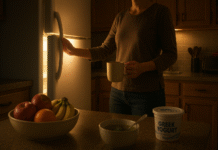
- Avoid “drift snacking” late at night—decide a stop time.
6.2 Mini-case
- 8:00 breakfast → 12:30 lunch → 3:30 snack → 7:30 dinner.
- The 3:30 snack (Greek yogurt + berries + 1 tbsp nuts) prevents a 6:00 ravenous raid and reduces dinner overshoot.
Synthesis: When snack times are predictable, portions stay moderate because urgency disappears.
7. Make Eating a Sensory Activity, Not a Side Quest
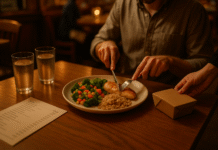
Eating while scrolling, driving, or standing dilutes satisfaction signals, so portions creep up. Turn snacks into brief sensory activities—sit down, plate it, notice aroma, temperature, texture, and the first three bites. Slowing down doesn’t mean dragging; it means giving your brain time to register food so you naturally stop earlier.
7.1 How to do it
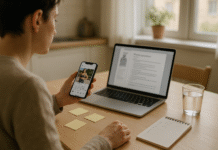
- Sit at a table; put the phone away for 5 minutes.
- First 3 bites: slow, detailed attention.
- Put utensil/food down between bites.
- Check in at halfway: “Still hungry, or is this taste now enough?”
7.2 Mini-checklist
- Plate it → Sit → Sense → Pause at halfway → Decide.
- If satisfaction drops (taste fatigue), stop and save the rest.
Synthesis: Sensory attention is a portion-control tool—pleasure rises, quantity falls.
8. Read the Label: Serving Size, Added Sugars, and Sodium
Labels translate packages into portions. The Serving size shows how the numbers map to real amounts; Added Sugars and Sodium help you judge frequency and portion. Use the 5% / 20% Daily Value rule as a quick guide: ~5% DV is low, ~20% DV is high. When a snack is high in added sugars or sodium, you can still enjoy it—just plan a smaller portion or pair it with low-sugar, low-sodium sides.
8.1 How to scan fast
- Start at Serving size (and Servings per container).
- Check Added Sugars (g) and %DV; compare brands.
- Scan Sodium (mg) and %DV.
- Confirm protein and fiber.
- Decide: smaller portion, different brand, or pair with produce/protein.
8.2 Practical example
- Two granola bars: both 190 kcal. One has 11 g added sugar (22% DV); the other 6 g (12% DV) and +2 g fiber. Choose the lower-sugar bar or eat half of the higher-sugar one with Greek yogurt.
Synthesis: Labels let you pick portions and products that fit your goals before the first bite.
9. Drink First, Then Decide
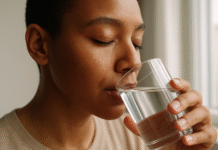
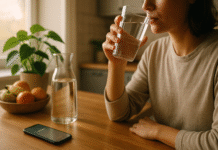
Thirst often masquerades as hunger, especially in hot weather or after long meetings. Drinking water or unsweetened tea first is a quick way to recheck hunger and trim portions without feeling deprived. Sugary drinks, in contrast, add calories without much fullness; keeping them “sometimes foods” helps you maintain smaller snack portions with less effort.
9.1 How to apply it
- Keep water at arm’s reach; sip regularly through the day.
- Before a snack, drink a glass (200–300 ml), wait 5–10 minutes, and reassess hunger.
- Prefer water, sparkling water, or unsweetened tea/coffee for most snacks.
- If choosing a sweet drink, portion it (small can or half-glass) and pair with protein.
9.2 Numbers & notes
- Many sweet drinks deliver 20–40 g added sugar per serving; that’s 5–10 tsp—easy to exceed daily limits if not portioned.
- Sparkling water + citrus slices offers the sensory “pop” without sugar.
Synthesis: Hydration clarifies true hunger and leaves your snack to do the satiety work.
10. Swap Emotional Eating for Short, Specific Alternatives
Emotions drive many snacks—and that’s human. The mindful move is not to ban comfort eating, but to separate support from portions. Create a short list of alternatives you can do for 5 minutes when the urge is emotional, not physical; then, if you still want the snack, portion it and enjoy. This two-step approach protects both your feelings and your goals.
10.1 Try these 5-minute swaps
- Step outside for fresh air or a short walk.
- Message a friend with one good thing from today.
- Box breathing (4-4-4-4) or a quick body scan.
- Put on one favorite song and stretch.
- Make herbal tea and sit quietly.
10.2 Mini-case
- Stress spike at 9:45 p.m. You brew mint tea, stretch for 5 minutes, then choose two squares of dark chocolate on a small plate and stop at that portion.
Synthesis: Emotional needs get care; snacks get boundaries.
11. Pack a Portable Snack Kit for Work and Travel
Environments matter. A portable snack kit stops costly, high-sugar convenience grabs and puts you back in control of portions. Think small containers for nuts and dips, a piece of fruit or two, shelf-stable proteins, and one “treat” portioned in advance. For travel, add a collapsible container and a plastic spoon/fork to turn grocery finds into instant, portion-controlled snacks.
11.1 What to pack
- Protein: tuna pouch, jerky (lower sodium), roasted chickpeas, yogurt (when available).
- Fiber/produce: apples, citrus, baby carrots, cherry tomatoes.
- Crunch: whole-grain crackers, popcorn, seed crisps.
- Rich highlight: 20 g dark chocolate or 20–25 g nuts in a mini-container.
- Gear: snack-size bags, small containers, napkins, hand wipes.
11.2 Region-smart tips
- Airport: buy yogurt + fruit; add your portioned nuts.
- Road: pack a small cooler; pre-portion hummus and veg in jars.
- Office: keep a drawer kit with shelf-stable items and a bowl.
Synthesis: When your kit travels with you, your portions follow your plan—not the vending machine.
12. Design Your Home for Easy, Right-Sized Snacks
Your home setup quietly shapes portions every day. Make the easy choice the right-sized choice: keep produce washed and visible, move snack bowls to the table (not the couch), use smaller bowls for richer foods, and store family-size packages out of sight. Decant snacks into clear, labeled containers with measured scoops; what you see first and how you serve it often matters more than willpower.
12.1 Setup checklist
- Wash and cut veg/fruit; place at eye level in the fridge.
- Keep small bowls/ramekins within reach; large mixing bowls elsewhere.
- Decant bulk snacks into clear jars with a ¼-cup scoop.
- Make a visible “P+F+V” snack shelf (protein, fiber, veg/fruit).
- Keep sweets and rich snacks off counters; bring them out for measured moments.
12.2 Habit stacking
- Pair the evening kitchen tidy with prepping tomorrow’s snack (yogurt jar, veg bag, nut ramekin).
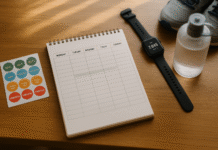
- Track snacks for 7 days (what/when/why/how hungry) to spot patterns and adjust.
Synthesis: A smart kitchen does the portion control for you—no drama, just design.
FAQs
1) What is mindful snacking, in one sentence?
Mindful snacking is choosing foods and portions on purpose—guided by hunger, satisfaction, and context—so you feel fueled and comfortable afterward. It’s not a diet; it’s a way of paying attention so smaller, right-sized portions feel natural, not forced.
2) How many calories should a snack have?
There’s no single “right” number, but many adults land around 150–300 kcal when snacks sit between balanced meals and support 2–4 hours of steady energy. If you’re very active or have long gaps between meals, you may need more; if meals are close together, less is fine. Let hunger (start at 3–4/10, stop at 6–7/10) and satisfaction be your main guides.
3) Are late-night snacks always bad?
No, but they’re easier to overeat. Decide a kitchen close time, keep portions small, and choose protein + fiber (e.g., yogurt + berries) to avoid heartburn and next-day sluggishness. If the urge is emotional or habitual, try a 5-minute alternative first, then portion a small, satisfying snack if you still want it.
4) How do I snack mindfully at work when meetings run long?
Pre-portion snacks in a drawer kit or bag the night before. Lead with water, then use a P+F+V combo (e.g., roasted chickpeas + fruit). If you missed lunch, eat a more substantial protein-forward snack and push the next meal slightly later to avoid a 6 p.m. binge.
5) What about sugary snacks—do they have a place?
Yes, as measured moments. Use the label to compare Added Sugars and pick a smaller portion, then pair with protein or produce so satisfaction rises and total quantity stays modest. Keeping sweet drinks as “sometimes” choices helps your portions elsewhere stay steady.
6) How do I stop mindless grazing at home?
Design the kitchen to help: decant snacks with scoops, keep rich items out of sight, use small bowls, and prep fruit/veg at eye level. Commit to “portion first, then eat,” sit to snack, and track for 7 days to spot triggers (time, mood, place) you can preempt.
7) What if I get hungry shortly after a snack?
Add protein and fiber, and consider sequencing (Rule 4). For example, eat produce first for volume, then a smaller portion of richer foods. If hunger returns within 45–60 minutes, your snack was likely too small on protein or too light on volume.
8) Are “100-calorie packs” a good idea?
They can help with portion awareness, but many are low in protein and fiber, so hunger returns fast. If you use them, pair with yogurt, cheese, or nuts; or build your own nutrient-dense 100–200 kcal packs so satisfaction matches the calories.
9) How do athletes or very active people snack mindfully?
Time snacks around training: 60–90 minutes pre-workout choose easily digestible carbs + some protein; post-workout include protein for recovery. Portions will be larger on training days; the principle of intention remains—portion first, choose purposefully, and stop at comfortable fullness.
10) Can mindful snacking help with weight management?
It can support weight management indirectly by reducing autopilot eating, improving satisfaction, and smoothing energy—factors that make consistent, right-sized portions easier. It’s not a magic trick; it’s a reliable framework that pairs well with balanced meals, movement, sleep, and stress care.
Conclusion
Mindful snacking isn’t about rules you can fail; it’s about structure that supports satisfaction. When you pause to name the need, portion before you eat, and build protein-and-fiber snacks framed by produce, you remove the chaos that leads to overeating. Energy stabilizes, cravings cool, and you feel more in charge of when and how much you eat. The beauty of this approach is that it scales: you can use it for a 10 a.m. yogurt, a 3 p.m. office break, or a measured moment of chocolate after dinner. Start with one or two rules this week—portion first, and P+F+V—and layer the rest as they become second nature. Your portions will shrink to fit the real job of a snack: to help you feel better, not worse.
Your next step: Pick tomorrow’s two snacks tonight, portion them now, and put them where you’ll see them first.
References
- Dietary Guidelines for Americans, 2020–2025. U.S. Departments of Agriculture and Health and Human Services, 2020. https://www.dietaryguidelines.gov/sites/default/files/2020-12/Dietary_Guidelines_for_Americans_2020-2025.pdf
- The New Nutrition Facts Label. U.S. Food & Drug Administration, n.d. https://www.fda.gov/food/nutrition-education-resources-materials/new-nutrition-facts-label
- Rethink Your Drink. Centers for Disease Control and Prevention, reviewed 2023. https://www.cdc.gov/healthyweight/healthy_eating/drinks.html
- Guideline: Sugars intake for adults and children. World Health Organization, 2015. https://www.who.int/publications/i/item/9789241549028
- The Nutrition Source – Fiber. Harvard T.H. Chan School of Public Health, n.d. https://www.hsph.harvard.edu/nutritionsource/carbohydrates/fiber/
- Protein. Harvard T.H. Chan School of Public Health, n.d. https://www.hsph.harvard.edu/nutritionsource/what-should-you-eat/protein/
- Healthy Snacks for Adults. Academy of Nutrition and Dietetics (EatRight), n.d. https://www.eatright.org/food/nutrition/eating-as-a-family/healthy-snacks-for-adults
- Portion Sizes. British Dietetic Association, n.d. https://www.bda.uk.com/resource/portion-sizes.html
- Mindful eating may help you lose weight. Harvard Health Publishing, 2014. https://www.health.harvard.edu/blog/mindful-eating-may-help-with-weight-loss-201401297044
- Changing Your Habits for Better Health. National Institute of Diabetes and Digestive and Kidney Diseases (NIDDK), reviewed 2016. https://www.niddk.nih.gov/health-information/weight-management/changing-habits-for-better-health